

Key Takeaways
- Pasta water contains dissolved starch that helps sauces cling to noodles and emulsify into a silky texture.
- Reserve at least half a cup before draining — once it's gone, you can't get it back.
- A small splash added gradually is more effective than pouring in a large amount at once.
- Properly salted pasta water also seasons the sauce without extra salt shakers.
- The technique works with oil-based, cream, and tomato sauces alike.
What you will need
Why Pasta Water Actually Matters
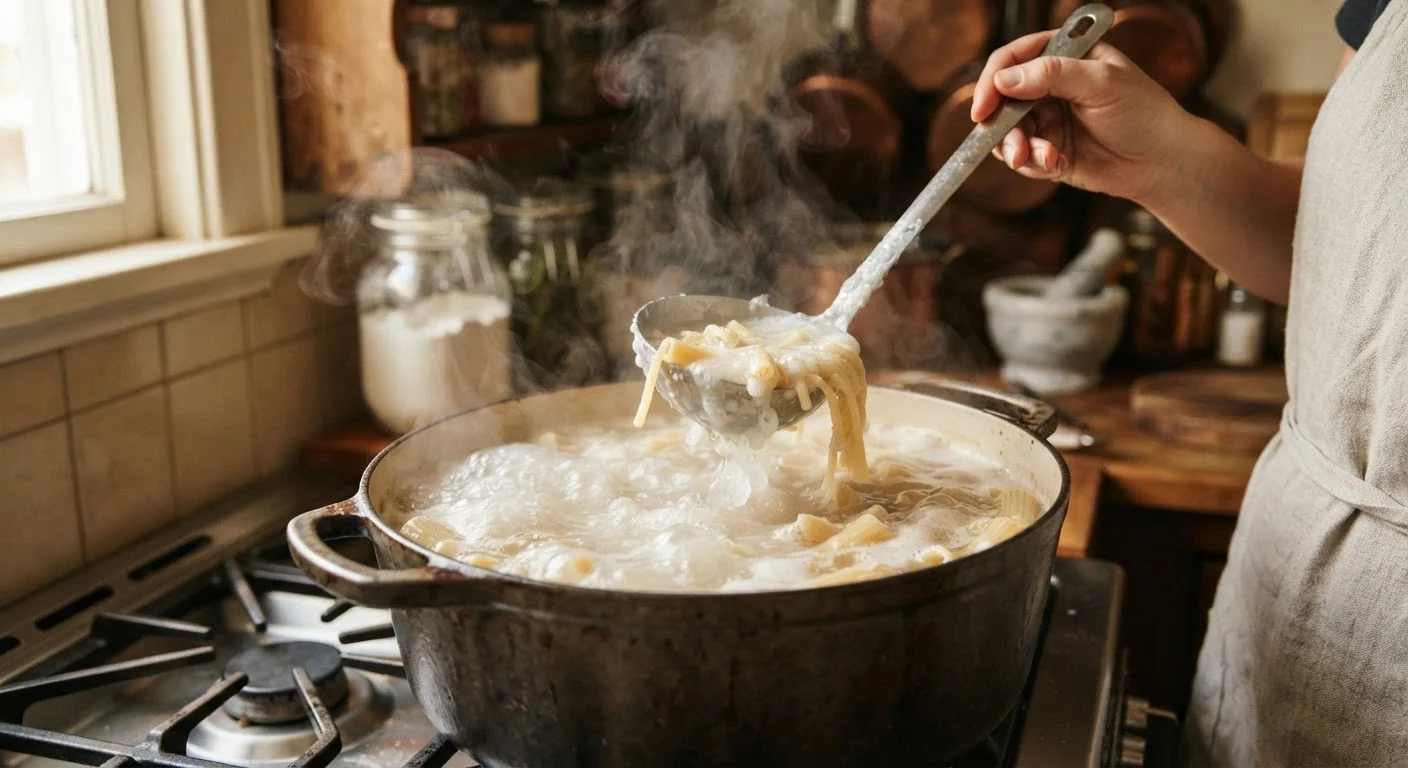
Most home cooks drain the pasta and watch the cooking water disappear down the sink without a second thought. That's a small but meaningful loss. As pasta cooks, it releases starch into the surrounding water, transforming it from plain tap water into something genuinely useful: a cloudy, slightly viscous liquid that behaves more like a light stock than plain water.
That dissolved starch is the key. When starch enters a pan of hot fat or sauce, it acts as an emulsifier — helping water and oil molecules bond together rather than separate. The result is a sauce that coats pasta evenly and clings to every strand or tube instead of pooling at the bottom of the bowl. This is the technique behind many restaurant-style pasta dishes, and it doesn't require any special equipment or skill.
For a deeper look at how sauces do the heavy flavour work in weeknight cooking, see our guide to sauce as shortcut. And if you've heard that adding oil to pasta water prevents sticking, it's worth checking the cooking myths home cooks keep repeating — oil in the water actually makes the sauce slide right off the finished pasta.
Starchier Water, Better Results
Smaller pasta shapes and shorter pasta like rigatoni or penne release more starch into the water than long thin shapes like angel hair. If you're cooking a sauce-heavy dish where emulsification really matters, a shorter shape will give you more starch to work with. Either way, the technique applies — you'll just see slightly more dramatic results with certain shapes.
How to Use Pasta Water Correctly
The technique is simple, but a few details make a significant difference. Follow these steps every time you cook pasta and you'll notice a consistent improvement in how your sauces come together.
What you will need
Salt your cooking water generously
Add enough salt to your pasta water that it tastes noticeably seasoned — many cooks describe it as tasting faintly of the sea. This matters beyond flavour: the salt that absorbs into the pasta during cooking carries through into your finished dish, reducing the need to heavily season the sauce separately. Aim for roughly 1 to 1½ teaspoons of table salt per quart of water, though exact amounts can vary by preference.
Reserve pasta water before you drain
About 1 to 2 minutes before the pasta is done, scoop out at least half a cup of the cooking liquid — a full cup is even better. Set it somewhere you won't accidentally knock it over. This is the step most people forget, and once the pasta is drained, the water is gone. Keep a heatproof mug next to the stove as a visual reminder until the habit sticks.
Transfer pasta directly into the sauce
Instead of draining pasta fully and then mixing, use tongs or a spider strainer to move the cooked pasta straight from the pot into your sauce pan. A little extra water comes along for the ride — that's intentional. Finishing the pasta in the sauce allows it to absorb flavour and helps the two elements come together rather than sitting side by side.
Add pasta water in small increments
With the heat on medium, add the reserved pasta water a splash at a time — two or three tablespoons to start. Toss or stir constantly. Watch how the sauce responds: it should loosen slightly and begin to look glossy rather than greasy or watery. If it's still too thick after 30 seconds of tossing, add another splash. Repeat until the texture is smooth and the sauce coats the pasta evenly.
Taste and adjust before serving
Once the sauce has reached the right consistency, taste the dish. The pasta water will have added some saltiness, so season carefully rather than automatically reaching for more salt. If the dish tastes flat rather than under-salted, a small amount of acid — lemon juice or a splash of wine — often does more work than additional salt. Serve immediately while the emulsion is still active and the texture is at its best.
Don't Let the Water Sit Too Long
Pasta water cools quickly and the starch can thicken as it sits, making it less effective as a sauce tool. Use it within a few minutes of reserving it, while the pan and sauce are still hot. If it thickens noticeably in the cup, a quick stir before adding it to the pan is usually enough to loosen it back up.
Once you're comfortable with pasta water, it's worth exploring how acid in cooking — a squeeze of lemon or a splash of wine — can further balance and brighten a finished pasta dish. These are the kinds of foundational moves covered in our home cooking tips hub.