

Key Takeaways
- In-season produce is typically cheaper because local supply is higher and transportation costs are lower.
- Out-of-season produce is often imported or grown in energy-intensive greenhouses, raising its price.
- Flavor and nutritional quality tend to be better when produce is harvested at peak ripeness.
- Freezing in-season produce extends its value well beyond the harvest window.
- Knowing what's in season each month helps you plan meals around lower-cost ingredients.
Seasonal Produce
Seasonal produce refers to fruits and vegetables that are harvested and sold during their natural growing window in a given region. When a crop is in season locally, supply is high, which typically drives prices down and quality up. Buying in season means you're purchasing food closer to when it was grown — often fresher and more flavorful than out-of-season alternatives.
Seasonality varies by climate zone. What's in season in Florida in January differs significantly from what's available in Minnesota at the same time. Local and regional growing calendars are more reliable guides than national generalizations.
Why Seasonality Drives Price More Than You Might Expect
The price of a bell pepper or a pint of strawberries isn't arbitrary. It reflects a chain of decisions that starts on a farm — when a crop is planted, where it's grown, and how far it has to travel to reach your cart.
When a vegetable or fruit is in season locally, growers harvest large volumes in a short window. That surplus keeps prices competitive. When the same item is out of season, grocers either source it from distant growing regions or from controlled greenhouse operations, both of which add cost. That cost gets transferred to you at checkout.
Transportation distance matters more than most shoppers realize. A tomato grown in your region in August may travel a few hundred miles. The same tomato purchased in February likely crossed multiple state lines — or an international border — adding fuel, refrigeration, and handling costs along the way. Those logistics costs are embedded in the sticker price, even if they're invisible at the store.
30–50%
Typical price premium for out-of-season produce
Industry observers and consumer food writers have noted that items like berries, stone fruits, and tomatoes commonly carry significant price premiums when purchased outside their local growing season, though exact figures vary by region and market.
~1,500 miles
Average distance food travels to reach US plates
The USDA and food systems researchers have cited estimates of roughly 1,500 miles as a general figure for how far food travels in the US supply chain, though produce sourced locally can reduce this substantially.
The Flavor Dividend: What Peak Ripeness Actually Means
Price is one half of the seasonal argument. Flavor is the other, and it matters practically — not just for enjoyment, but for how much you use and waste.
Produce destined for long-haul transport is often harvested before it's fully ripe so it can survive the journey without spoiling. That early harvest cuts short the natural process by which sugars develop, starches convert, and aroma compounds form. The result is fruit and vegetables that look fine but taste flat.
In-season produce harvested closer to peak ripeness tends to have better texture and more pronounced flavor. A summer peach bought from a local stand and a peach bought from a refrigerated bin in January are technically the same fruit — but they rarely taste like it.
There's also a practical kitchen benefit: when produce tastes good, you're more likely to use it before it spoils. That's a quiet but real contribution to reducing food waste in your household. For more on that angle, see how small storage and planning habits cut waste.
Check the Country of Origin Label
US grocery stores are required to display country of origin labeling on most fresh produce. If a fruit or vegetable is labeled from a distant country during a period when domestic sources are limited, that's a strong signal you're buying out-of-season — and likely paying more for it. Use this as a quick in-store clue about seasonality and price.
How to Put Seasonal Shopping Into Practice
Understanding why seasonal produce is cheaper is useful. Knowing how to act on that knowledge is more useful.
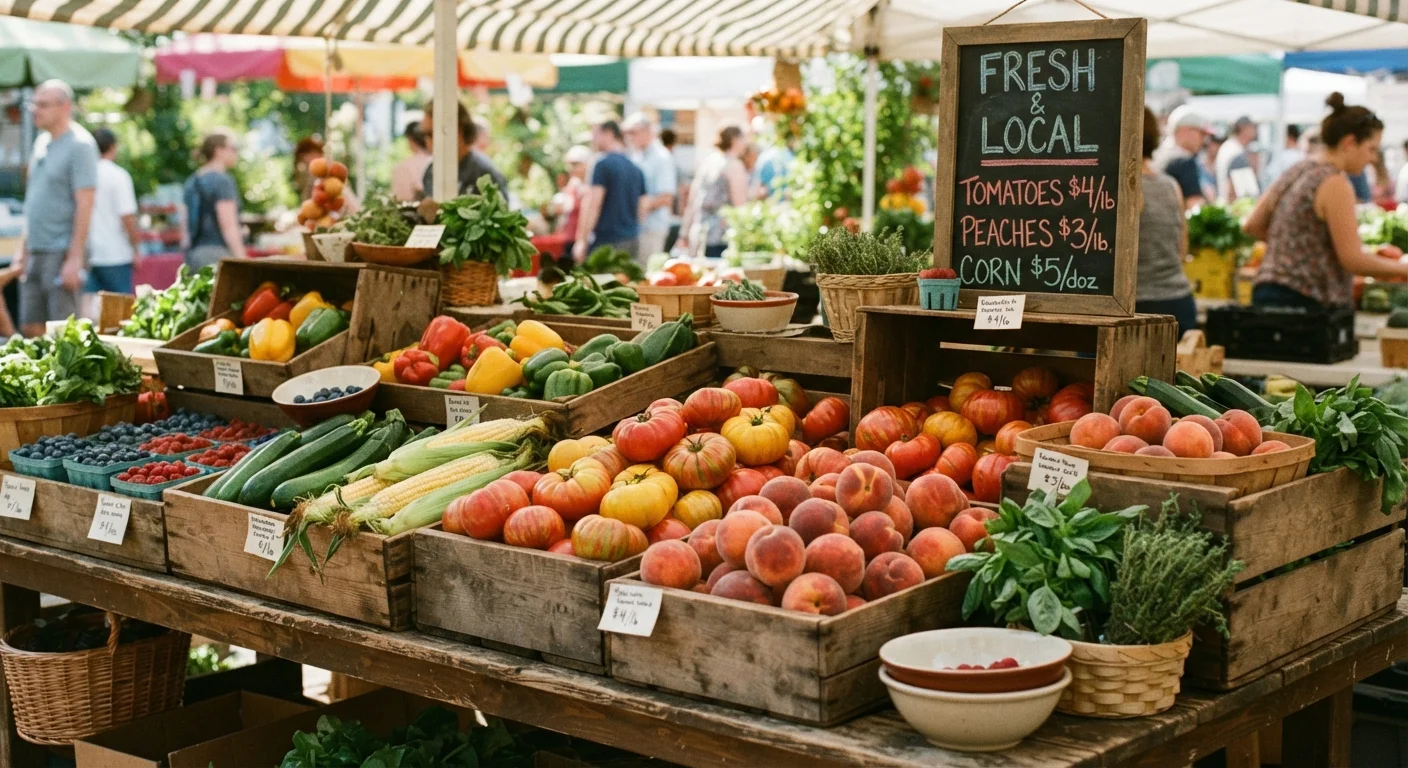
Start at the farmers market. Vendors can only sell what's currently growing nearby, making a farmers market a near-perfect real-time guide to your region's seasonal availability. Prices there reflect local supply conditions directly.
Read the signage at grocery stores. In-season items are often featured on sale or in prominent floor displays. When a store is running a promotion on zucchini in July or Brussels sprouts in November, that's usually a signal of seasonal abundance — and real savings.
Buy in volume and freeze. When an item is at peak season and its price is low, buying extra and freezing it stretches the value. Corn, berries, green beans, and many other vegetables freeze well without significant loss of quality. This approach connects directly to the logic of buying in bulk when conditions actually favor it.
Build meals around what's in season, not the other way around. Rather than deciding on a recipe first and then sourcing ingredients, check what's currently at its cheapest and most flavorful — then plan around that. It's a small mental shift that can make a noticeable difference in what you spend weekly.
For a reference to what tends to be in season month by month, see our seasonal shopping calendar. And if you're weighing seasonal produce against the convenience of pre-prepped options, it's worth understanding the real price premium built into convenience foods.