

Key Takeaways
- Batch cooking reduces daily decision fatigue and total active time spent in the kitchen each week.
- Upfront time investment and storage space are real barriers for some households.
- Foods vary widely in how well they hold up after being cooked and refrigerated.
- Batch cooking works best when meals are planned around flexible, versatile ingredients.
- It's not an all-or-nothing strategy — partial batch cooking suits many households well.
Reduces total active cooking time across the week
Cooking once for multiple meals means less daily prep, fewer pots to wash, and faster assembly on tired weeknights. Many households report spending significantly less total time in the kitchen overall.
Lowers food costs through bulk purchasing
Buying staple ingredients in larger quantities — grains, legumes, proteins — typically costs less per serving than buying in smaller amounts for individual meals.
Cuts food waste by using ingredients fully
Planning a batch means using an entire head of cabbage or bunch of herbs across multiple dishes, rather than leaving partial amounts to go soft in the fridge.
Reduces weeknight decision fatigue
Knowing that dinner is already partially or fully prepared removes the daily pressure of deciding what to cook, which is one of the most common reasons people default to takeout.
Supports more consistent, balanced eating habits
When nutritious food is already prepped and accessible, households are more likely to reach for it rather than convenient but less satisfying alternatives.
Requires a significant upfront time commitment
A meaningful batch session can take two to four hours, which is a real barrier on weekends when time is already limited. If the session gets skipped, the whole week's plan falls apart.
Not all foods reheat or store well
Textures and flavors change after refrigeration. Crispy, delicate, or sauce-sensitive dishes often suffer, limiting which recipes batch cooking can realistically support.
Requires adequate fridge and freezer space
Storing multiple containers of prepped food demands organized, sufficient refrigeration — something smaller kitchens or shared living situations may not easily provide.
Can lead to meal fatigue if variety is low
Eating the same meal three or four times in a row is a common reason people abandon batch cooking. Planning for ingredient flexibility, rather than fixed dishes, is essential.
Less suited to households with unpredictable schedules
If plans change frequently — travel, variable work hours, social commitments — prepped food can go unused and ultimately wasted, negating any savings.
Our Verdict
Batch cooking is a genuinely effective strategy for households that struggle with weeknight time pressure and want to reduce food costs. It rewards planning and pays off most when you cook ingredients that stay appealing after a few days in the fridge. That said, it's not a universal solution — small kitchens, unpredictable schedules, and households with varying tastes can all undermine the benefits.
Best suited to busy households of two or more who cook similar meals most nights and have reliable refrigerator and freezer space.
What Batch Cooking Actually Means
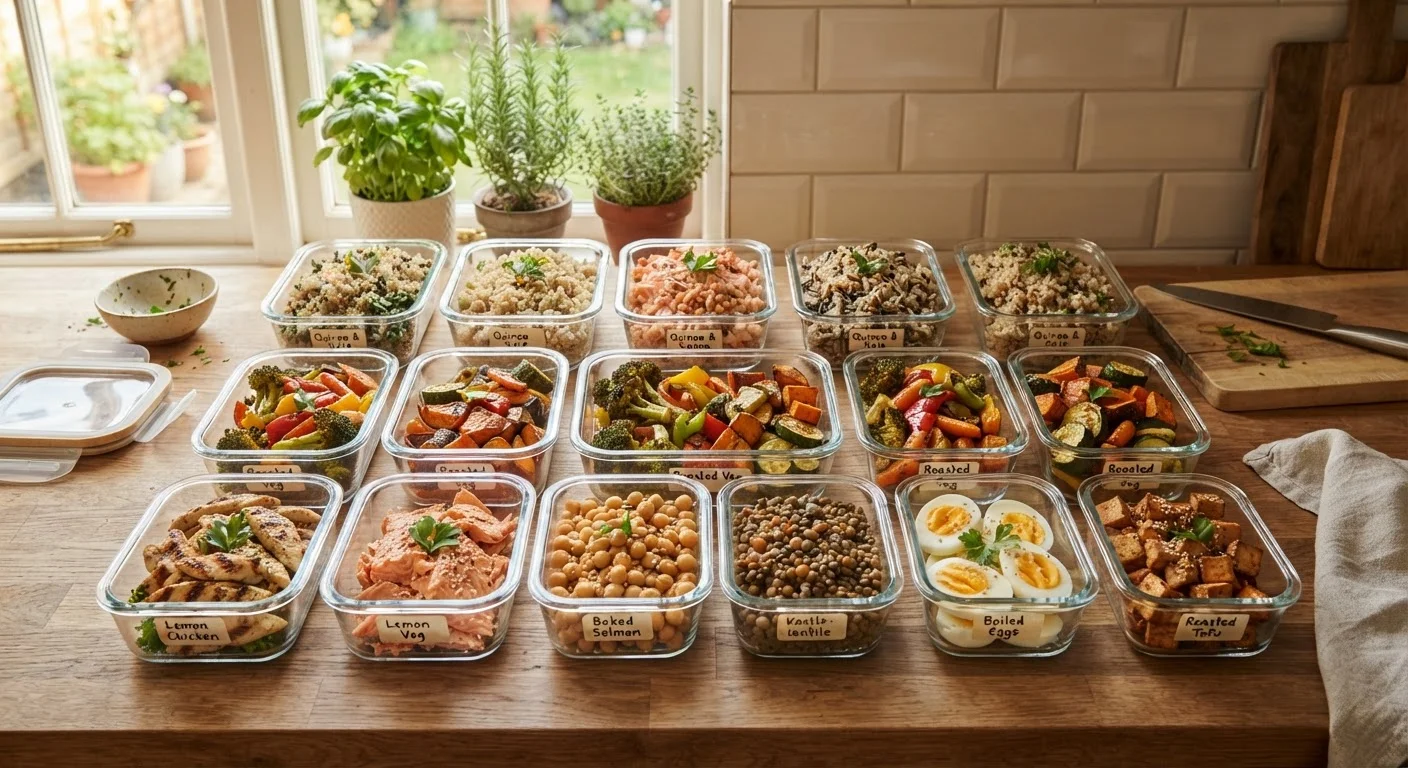
Batch cooking means preparing food in larger quantities than you need right now — whether that's cooking a full pot of grains, roasting a sheet pan of vegetables, or assembling several complete meals at once. The goal is to front-load your cooking effort so that weeknights require less active kitchen time.
It exists on a spectrum. At one end, you might simply double a soup recipe and freeze half. At the other, a dedicated Sunday session produces five days of lunches and dinners. Most households land somewhere in the middle. Understanding where you fall helps set realistic expectations before committing to the approach. For a more detailed comparison, see batch cooking vs. cooking fresh each night.
The Genuine Advantages
The core appeal of batch cooking is straightforward: you trade one longer cooking session for several shorter ones — or none at all on busy nights.
Reduces total active cooking time across the week
Cooking once for multiple meals means less daily prep, fewer pots to wash, and faster assembly on tired weeknights. Many households report spending significantly less total time in the kitchen overall.
Lowers food costs through bulk purchasing
Buying staple ingredients in larger quantities — grains, legumes, proteins — typically costs less per serving than buying in smaller amounts for individual meals.
Cuts food waste by using ingredients fully
Planning a batch means using an entire head of cabbage or bunch of herbs across multiple dishes, rather than leaving partial amounts to go soft in the fridge.
Reduces weeknight decision fatigue
Knowing that dinner is already partially or fully prepared removes the daily pressure of deciding what to cook, which is one of the most common reasons people default to takeout.
Supports more consistent, balanced eating habits
When nutritious food is already prepped and accessible, households are more likely to reach for it rather than convenient but less satisfying alternatives.
Buying in bulk to support batch cooking also tends to lower per-serving cost. Staples like dried beans, whole grains, and affordable proteins are cheaper per ounce in larger quantities. Dried beans in particular become far more economical when you cook a full pot at once rather than opening cans each night. Similarly, a whole chicken broken down and cooked in one session can yield multiple meals — see the whole chicken advantage for a practical example of how far a single bird can stretch.
~2–3 hrs
Typical weekly active kitchen time saved
Home cooking surveys consistently suggest that households using planned batch preparation report spending less cumulative time cooking compared to daily from-scratch cooking.
Up to 30%
Potential reduction in weekly food spend
Buying staple ingredients in larger quantities and reducing reliance on convenience foods or takeout can meaningfully lower weekly grocery costs, though results vary by household size and habits.
The Real Limitations
Batch cooking has a reputation for being a cure-all, but it comes with genuine trade-offs that are worth being honest about before you reorganize your Sundays.
Requires a significant upfront time commitment
A meaningful batch session can take two to four hours, which is a real barrier on weekends when time is already limited. If the session gets skipped, the whole week's plan falls apart.
Not all foods reheat or store well
Textures and flavors change after refrigeration. Crispy, delicate, or sauce-sensitive dishes often suffer, limiting which recipes batch cooking can realistically support.
Requires adequate fridge and freezer space
Storing multiple containers of prepped food demands organized, sufficient refrigeration — something smaller kitchens or shared living situations may not easily provide.
Can lead to meal fatigue if variety is low
Eating the same meal three or four times in a row is a common reason people abandon batch cooking. Planning for ingredient flexibility, rather than fixed dishes, is essential.
Less suited to households with unpredictable schedules
If plans change frequently — travel, variable work hours, social commitments — prepped food can go unused and ultimately wasted, negating any savings.
Not every food holds up well after cooking. Pasta absorbs liquid and turns mushy; delicate fish becomes rubbery; salad greens wilt within a day. Batch cooking favors ingredients that are structurally forgiving — grains, legumes, roasted root vegetables, braised meats, and soups. If your household relies on quick-seared proteins or crisp textures, reheating will disappoint. Managing texture in batch-style meals is a learnable skill, but it does require planning.
Making It Work for Your Household
The households that get the most from batch cooking tend to share one habit: they plan around flexible base ingredients rather than complete, plated meals. Cooked rice, roasted vegetables, and a pot of beans can be recombined in several ways across the week, which prevents the fatigue of eating the exact same dish four nights in a row.
A well-organized prep workflow matters too. Setting up an efficient kitchen workflow before you start a batch session — clearing counter space, labeling storage containers, and sequencing cook times — cuts frustration significantly. If you're new to the practice, building a full week of meals in a single session offers a step-by-step starting point.
Partial Batch Cooking Is a Valid Middle Ground
You don't have to commit to a full weekly session to benefit. Cooking double portions of one dish, pre-chopping vegetables on Sunday, or preparing a large pot of grains delivers many of the same time-saving benefits without the scope of a full batch day. Starting small and building a routine gradually tends to produce more lasting habits than attempting a complete overhaul at once.
For households torn between cooking from scratch and leaning on prepared shortcuts, batch cooking often bridges the gap — see weeknight cooking from scratch vs. semi-homemade for a fuller breakdown of that trade-off.