

Key Takeaways
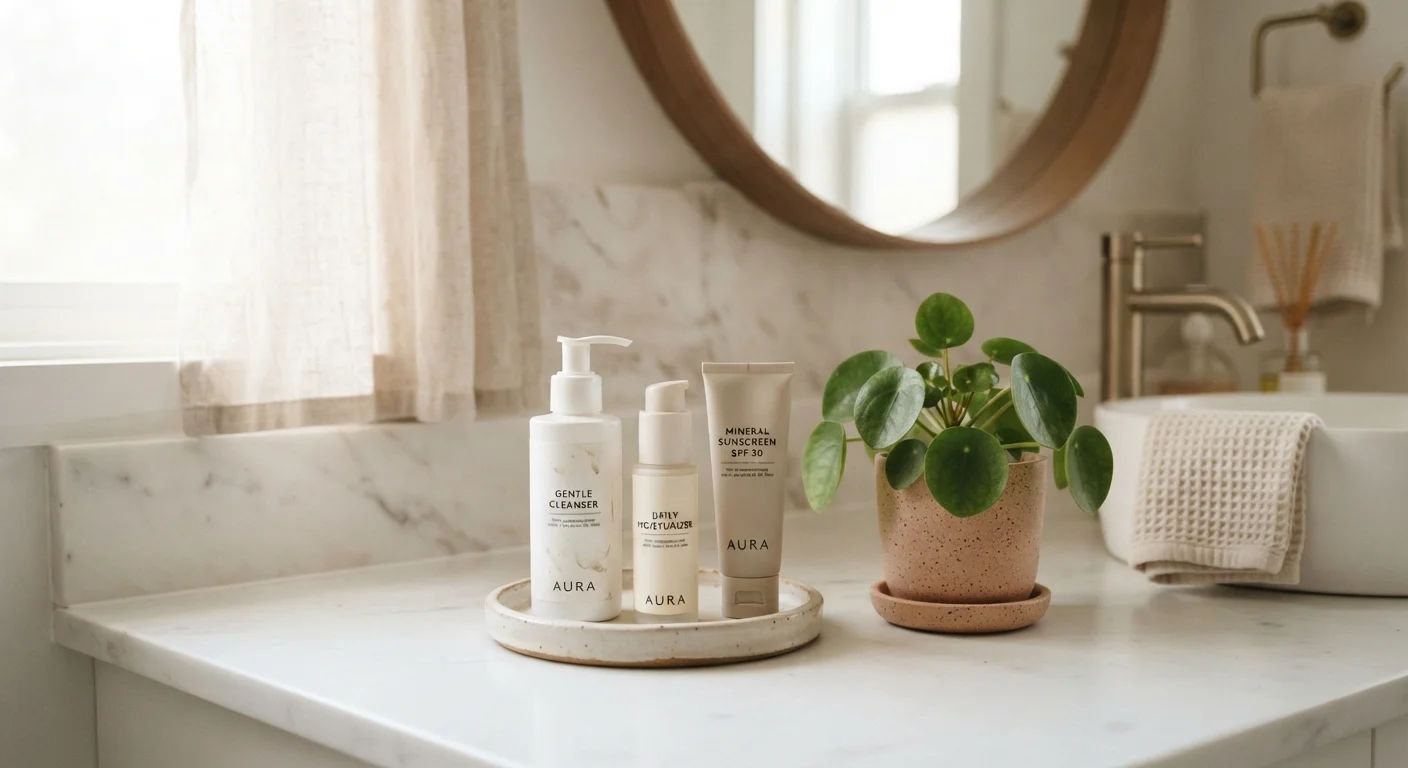
- Three products — cleanser, moisturizer, and sunscreen — form a complete, dermatologist-supported daily routine.
- Consistency with a simple routine outperforms an elaborate one done inconsistently.
- Morning and evening routines differ mainly by sunscreen use, not by complexity.
- Skin type guides product texture choices, not an entirely different ingredient list.
- Price does not determine effectiveness; formulation and active ingredients do.
Start here
Why Less Is More in Skincare
Core steps
The Three Steps That Cover the Basics
Choosing wisely
How to Choose Products Without Overthinking It
Refine your timing
Morning vs. Evening: What Changes and What Doesn't
Make it stick
Building Consistency Over Perfection
Why Less Is More in Skincare
Walk into any pharmacy and the skincare aisle can feel genuinely overwhelming — serums, essences, exfoliants, masks, toners, and eye creams, each promising a different transformation. The reality, backed by dermatological consensus, is that more products do not automatically mean better skin. In fact, layering too many products increases the risk of irritation and makes it harder to know what is actually working.
The bare-minimum approach strips the routine back to what skin genuinely needs: protection from environmental damage, removal of daily buildup, and maintenance of its natural moisture barrier. Everything beyond that is optional and can be added gradually once the basics are solid. This approach is especially useful for people who have avoided skincare because it felt too complicated or expensive.
If you have ever wondered whether a fuller routine is worth it, our step-by-step morning skincare guide explains how additional products fit in — but this article focuses on what you can accomplish without them.
Skin barrier
The outermost layer of skin that locks moisture in and keeps irritants, bacteria, and pollutants out. Keeping it intact is a central goal of basic skincare.
Broad-spectrum SPF
A sunscreen rating that means the product protects against both UVA rays (which age skin) and UVB rays (which cause sunburn). SPF 30 or higher is the general recommendation.
Non-comedogenic
A label term meaning the product is formulated to avoid clogging pores. It is especially relevant for people prone to acne or blackheads.
Ceramides
Naturally occurring fats found in the skin barrier. Moisturizers containing ceramides can help restore and strengthen a weakened barrier.
Glycerin
A widely used, well-tolerated humectant ingredient that draws moisture from the air into the skin, helping it stay hydrated.
Humectant
An ingredient category that works by attracting and holding water in the skin. Glycerin and hyaluronic acid are common examples found in moisturizers.
The Three Steps That Cover the Basics
A functional daily routine needs exactly three actions:
- Cleanse. A gentle, low-lather cleanser removes excess oil, sweat, pollutants, and sunscreen residue without stripping the skin's natural oils. Over-cleansing is a common mistake — twice daily is generally enough for most skin types, and once in the evening is often sufficient for dry or sensitive skin.
- Moisturize. Moisturizer helps maintain the skin barrier — the outermost layer of skin that keeps water in and irritants out. A compromised barrier is linked to dryness, sensitivity, and increased reactivity. Applying moisturizer while the skin is still slightly damp after cleansing can help seal in hydration.
- Apply sunscreen (morning only). Broad-spectrum SPF 30 or higher is widely considered the single most evidence-supported step in any skincare routine. UV exposure is a leading contributor to premature aging, uneven skin tone, and more serious skin concerns. If you use one product in the morning, make it this.
For a broader look at how ingredients in these products actually function, see our guide to common skincare ingredients and what they do.
How to Choose Products Without Overthinking It
Skin type — broadly categorized as dry, oily, combination, or sensitive — primarily influences the texture of products you reach for, not an entirely different ingredient list.
- Dry skin tends to do well with cream-based cleansers and richer moisturizers containing ingredients like ceramides or glycerin.
- Oily or acne-prone skin often benefits from gel or foam cleansers and lightweight, non-comedogenic (pore-friendly) moisturizers.
- Sensitive skin generally calls for fragrance-free formulas with minimal added ingredients. Our article on what makes a routine genuinely gentle for sensitive skin goes deeper on this.
Price is not a reliable indicator of effectiveness. What matters more is whether the formulation is stable and contains beneficial ingredients at useful concentrations. If you are looking to stretch your budget further, affordable skincare swaps that don't compromise on results offers practical guidance on what to look for on a label.
Patch-Test New Products First
Before applying any new cleanser or moisturizer to your full face, apply a small amount to the inside of your wrist or behind your ear for a day or two. This simple step can help you catch potential irritation or allergic reactions before they affect a larger area of skin.
Morning vs. Evening: What Changes and What Doesn't
The core structure stays the same morning and night — cleanse, moisturize — with one key difference: sunscreen belongs in the morning routine only. At night, the skin enters a natural repair phase, so the priority shifts from protection to maintenance.
Many people find that using a slightly richer moisturizer at night feels comfortable since there is no sunscreen layered on top. Others use the exact same moisturizer twice a day with no issues. Either approach is fine.
For those who want to understand when and how to expand from this foundation, our article on why your skincare routine may stop working over time covers common reasons a routine plateaus — and what to adjust.
Building Consistency Over Perfection
The most effective skincare routine is the one you actually do every day. A three-product routine completed consistently will outperform a ten-step routine that gets skipped four days out of seven. Setting your products out visibly — next to the bathroom sink, for example — is a simple habit cue that can improve follow-through.
Give any new routine at least four to six weeks before evaluating results, since the skin's natural renewal cycle takes roughly that long. If something causes persistent stinging, redness, or breakouts, discontinue it and consider consulting a dermatologist.
As your confidence builds, you can review your routine more critically. Our skincare routine audit guide provides a practical checklist for evaluating whether your products are actually performing as intended. And if you want to extend the same simple-first principle to the rest of your body, building a simple body care routine from scratch applies the same philosophy head to toe.
This article is for general informational purposes only and is not a substitute for professional medical or dermatological advice. If you have a skin condition or concerns about your skin's health, consult a qualified healthcare provider.