

Key Takeaways
- Product order matters — applying products in the wrong sequence can block active ingredients from working.
- Expired or destabilized products may irritate skin rather than help it.
- Ingredient conflicts, like mixing certain acids with retinol, are a common but avoidable routine mistake.
- You may not need more products — you may just need to use fewer, better-matched ones.
- Seasonal changes and skin shifts mean even a routine that worked before may need revisiting.
Summary
22 items · 30–60 minutes
Why Your Routine Deserves a Second Look
Most people build a skincare routine gradually — adding a product here, swapping one there — until the shelf is crowded and results are unclear. A routine audit isn't about overhauling everything. It's about pausing to ask: are these products actually doing what I think they're doing, and are they working together or against each other?
If your skin has plateaued, you're experiencing unexpected irritation, or you simply can't remember why half your products are there, it's time for a structured review. This checklist walks you through the key areas to examine. For those wondering whether their routine is more complex than it needs to be, our bare-minimum skincare routine guide offers a useful counterpoint.
Not a Substitute for Professional Advice
Skincare audits are a practical self-review tool, not a diagnostic process. If your skin is persistently irritated, inflamed, or reacting in ways you cannot explain, the right next step is a consultation with a qualified dermatologist — not more product swaps. Some reactions may indicate an underlying skin condition that requires professional assessment.
This article is for general informational purposes only and does not constitute medical or dermatological advice. If you are experiencing persistent skin concerns, irritation, or reactions, consult a qualified dermatologist or healthcare provider.
What You'll Need Before You Start
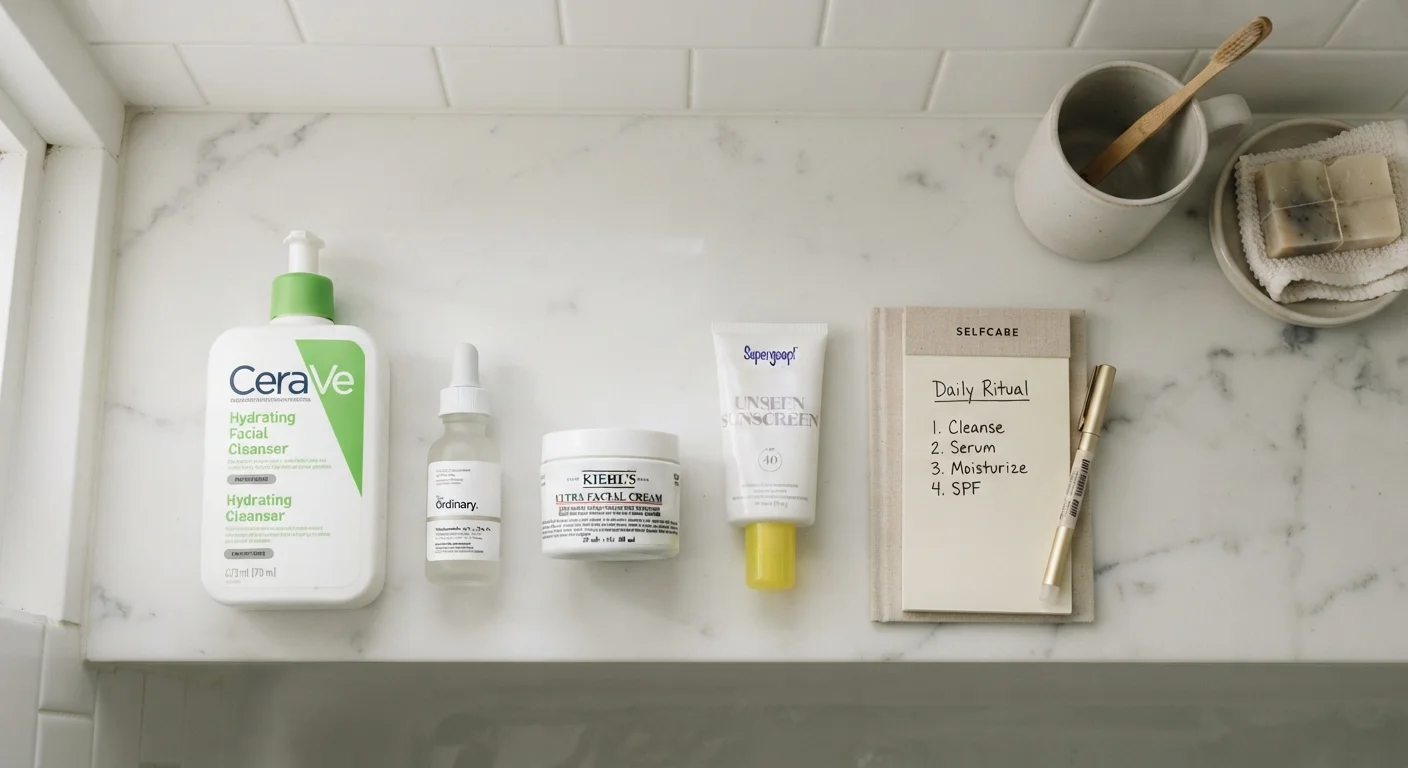
Before working through the checklist, gather every product you currently use — morning and night. Lay them out so you can read labels clearly. You'll be checking expiry dates, ingredient lists, and application steps, so having everything visible at once makes this much faster.
All current skincare products
Laying out every product you own lets you cross-check ingredients, expiry indicators, and sequencing in one pass.
Notepad or notes app
Use this to flag products to discard, research, or reposition in your routine.
Magnifying glass or phone camera
Helps read small-print ingredient lists and the PAO (Period After Opening) symbol accurately.
Ingredient compatibility reference
A reliable skincare ingredient reference helps you identify known ingredient conflicts before combining actives.
The Skincare Audit Checklist
Work through each group in order. Mark items you can confirm, flag anything uncertain, and note products you want to research further. The goal is clarity, not perfection.
Product Inventory
Ingredient Compatibility
Application Order
Cleanser Fit
Routine Fit for Skin Changes
Storage and Hygiene
Once you've worked through the list, look at the flagged items. A few adjustments to order or timing are often all it takes to get more out of what you already own. See our guide on layering skincare products correctly for deeper guidance on sequencing.
What to Do With Your Findings
A completed audit typically reveals one of three patterns: products applied in the wrong order, incompatible ingredients used at the same time, or products kept well past their effective life. Any one of these can quietly undermine a routine that looks solid on paper.
If you identified clashes — for example, using a vitamin C serum alongside a niacinamide product, or layering multiple exfoliating acids — consider separating them into morning and evening slots. Our article on why routines stop working over time explores how ingredient and timing issues accumulate. For questions around specific actives like retinol, our balanced retinol overview explains the trade-offs clearly.
Don't Introduce New Products Mid-Audit
Adding new products while reviewing your routine makes it harder to identify what's causing any issues. Complete the audit first, make one change at a time, and give your skin at least two to four weeks before evaluating results. Introducing multiple new products simultaneously makes it nearly impossible to isolate what's working.
If your audit turns up products you want to replace, cost doesn't have to be the barrier. Affordable skincare swaps exist across every routine step — what matters most is matching the product to your actual skin needs, not the price tag.
This article is for informational purposes only and is not a substitute for professional dermatological or medical advice. Always consult a qualified healthcare professional if you have concerns about your skin health.