

Key Takeaways
- Hot water strips natural oils from skin and hair, weakening the moisture barrier over time.
- Cold water helps seal the hair cuticle, reducing frizz and locking in moisture after washing.
- Lukewarm water is generally the safest middle ground for both skin and scalp health.
- People with eczema, rosacea, or dry skin are most vulnerable to damage from hot showers.
- Lotion applied immediately after a lukewarm shower dramatically improves skin hydration retention.
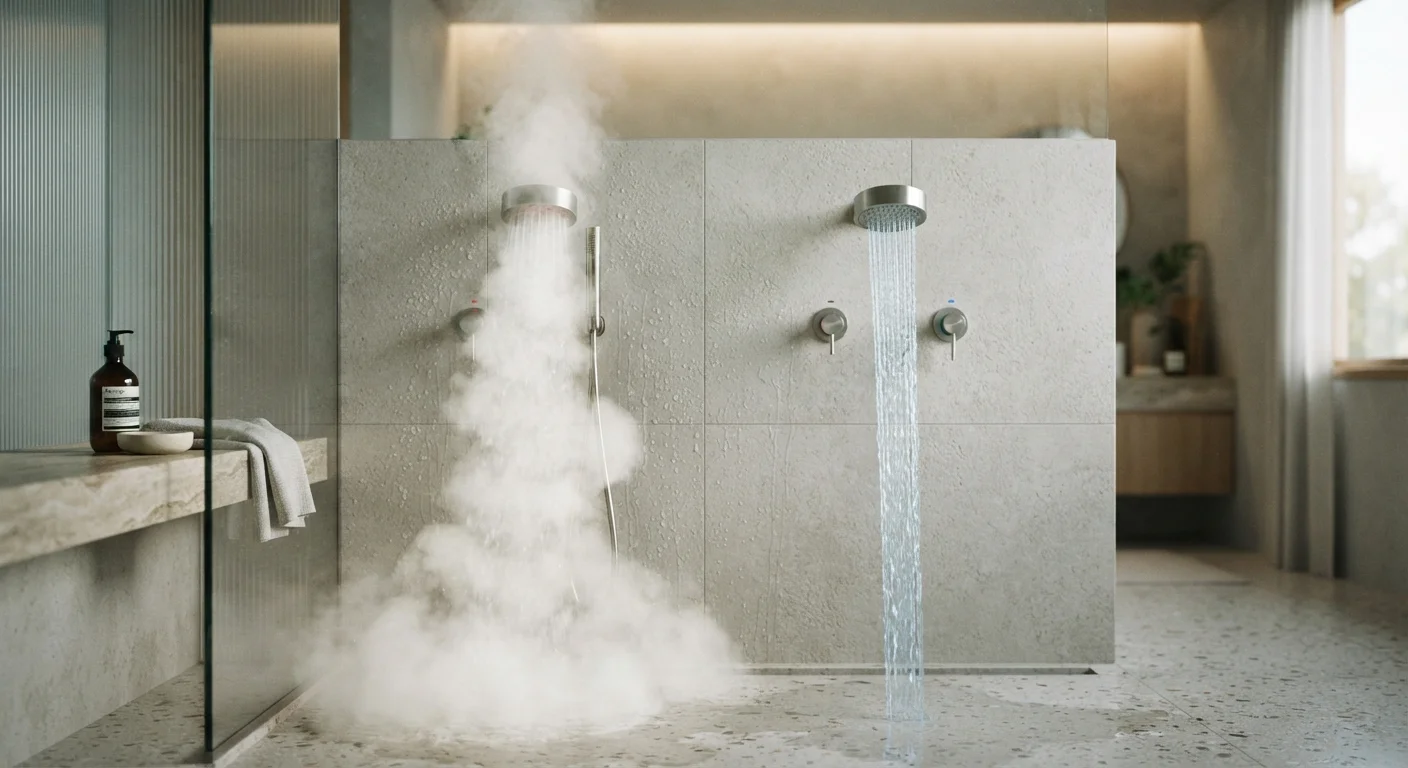
Option A
Hot Showers
The deeply relaxing, muscle-soothing classic.
Best for: Relieving muscle tension and opening pores for a thorough cleanse — with trade-offs for sensitive or dry skin types.
Option B
Cold Showers
The invigorating, skin-sealing alternative.
Best for: Preserving the skin barrier and smoothing the hair cuticle — ideal if you struggle with frizz or moisture loss.
If you have dry, sensitive, or eczema-prone skin
Cold Showers
Hot water accelerates moisture loss and can trigger flare-ups. Cool or lukewarm water helps protect the lipid barrier and calm inflammation.
If you struggle with frizzy or high-porosity hair
Cold Showers
A cool rinse flattens the hair cuticle, reducing frizz and helping strands hold onto moisture more effectively.
If you need to deeply cleanse oily skin or a congested scalp
Hot Showers
Warm water softens sebum and opens follicles, making it easier for cleansers to remove buildup — just keep sessions short.
If you want post-workout muscle relief without skin compromise
Hot Showers
Warm water eases muscle tension effectively. Finish with a brief cool rinse to help close pores and reduce skin stress.
If you want a simple all-around routine for balanced skin and hair
Cold Showers
Lukewarm-to-cool water preserves natural oils on both skin and scalp, reducing the need for heavy moisturizers or conditioners.
What Hot Water Actually Does to Your Skin
Hot showers feel restorative, but dermatologists consistently note that water above roughly 105°F (40°C) disrupts the skin's natural lipid barrier — the layer of oils and proteins that keeps moisture in and irritants out. When this barrier is repeatedly compromised, skin can become dry, tight, and more reactive over time.
Hot water also dilates capillaries near the skin's surface. For most people this is temporary, but for those with rosacea or persistent redness, frequent hot showers can worsen visible flushing. People with eczema or psoriasis are particularly sensitive: hot water can intensify itching and strip the protective oils their skin already struggles to retain.
One often-overlooked factor is timing. The skin loses moisture rapidly once you step out of any shower, but the effect is more pronounced after hot water. Applying a moisturizer within a few minutes of toweling off — while skin is still slightly damp — can significantly reduce trans-epidermal water loss. See our guide on lotion timing for exactly how to do this effectively.
| Criterion | Hot Showers | Cold Showers |
|---|---|---|
| Effect on skin barrier | Weakens lipid layer over time | Preserves natural oils |
| Hair cuticle | Opens cuticle, increases frizz | Seals cuticle, reduces frizz |
| Scalp oil production | Can overstimulate sebaceous glands | Gentler on oil balance |
| Muscle and tension relief | Effective for sore muscles | Minimal muscle-relaxing effect |
| Sensitive or dry skin | High risk of irritation | Lower risk, calming |
| Pore appearance | Dilates pores temporarily | Constricts pores temporarily |
| Post-shower moisture retention | Faster moisture loss after | Slower moisture loss after |
How Cold Water Affects Your Skin and Scalp
Cold water — generally anything below 70°F (21°C) — does not strip skin oils the way hot water does. It also temporarily constricts blood vessels, which can reduce puffiness and calm surface redness. These effects are short-lived, but for people with mild inflammation or sensitive skin, they're a real practical benefit.
For the scalp specifically, temperature matters considerably. Hot water can overstimulate the sebaceous glands, leading to faster oil production between washes — a frustrating cycle for anyone trying to stretch their wash days. Cooler water is gentler on the scalp's oil balance. This connects directly to why scalp health is so foundational: if your scalp environment is compromised by heat stress, it affects everything above it. Our article on why scalp health matters more than products explores this in more depth.
~10 min
Recommended maximum shower length for skin health
Dermatologists generally suggest keeping showers under 10 minutes to limit moisture loss, regardless of water temperature.
3 min
Window to apply moisturizer after showering
Research in dermatology literature suggests applying a moisturizer within 3 minutes of bathing significantly improves hydration retention in the skin.
~40°C
Temperature above which skin barrier disruption increases
Water above approximately 40°C (104°F) is commonly associated with accelerated stripping of the skin's natural lipid layer, per dermatological guidance.
Temperature's Impact on Hair: Cuticle, Frizz, and Porosity
The hair shaft is covered in overlapping cuticle cells that open and close in response to temperature, pH, and mechanical stress. Hot water raises the cuticle, which helps conditioners and treatments penetrate the cortex — but it also leaves the strand rougher and more prone to moisture loss after rinsing. Cold water flattens the cuticle down, sealing the surface for a smoother, shinier result with less frizz.
If you have high-porosity hair — strands that absorb water quickly but lose it just as fast — a cold rinse at the end of your wash routine can be genuinely helpful. Flattening the cuticle reduces the escape route for moisture. For low-porosity hair that resists product absorption, a short warm rinse before conditioning can help open the cuticle slightly, improving penetration. Understanding your hair's porosity is key to making the right temperature choice. Our hair porosity explainer walks you through identifying yours.
A practical middle-ground approach: wash with lukewarm water to cleanse effectively without excess heat stress, then finish with a 20–30 second cool rinse before stepping out. This preserves some of the cuticle-sealing benefit without the shock of a fully cold shower. As seasons change and humidity shifts, you may find you need to adjust water temperature accordingly — our seasonal hair and skin care guide offers useful context for those adjustments.
This article is for general informational purposes only and is not a substitute for advice from a qualified dermatologist or healthcare provider. If you have a skin condition or concern, please consult a professional.