

Key Takeaways
- Apply body lotion within three minutes of stepping out of the shower for best results.
- Slightly damp skin absorbs humectant ingredients more effectively than completely dry skin.
- Hot water and harsh soaps strip the skin's natural moisture barrier before you even reach for lotion.
- Layering a lotion under an occlusive cream or oil can significantly boost long-term hydration.
- Seasonal changes affect how quickly skin loses moisture, so your routine may need adjusting.
What you will need
Why Timing Is the Missing Piece
Most people grab their lotion when their skin starts to feel tight or flaky — often hours after a shower, while sitting on the couch. That impulse makes sense, but it misses the narrow window when moisturiser actually works best. Skin hydration isn't just about what you apply; it's about when.
When you step out of the shower, your skin's outermost layer — the stratum corneum — is temporarily softened and slightly swollen with water. This makes it far more receptive to absorbing ingredients. As soon as you towel off completely and wait, that water evaporates, the barrier firms back up, and lotion sits more on the surface than inside it. Dermatologists commonly refer to this post-shower opportunity as the "three-minute rule": moisturise within three minutes of bathing for noticeably better absorption.
Understanding this shift changes the whole logic of your routine. It's not about applying more product — it's about applying it smarter. For a broader look at ingredient layering and sequencing, see our morning skincare routine guide.
What You'll Need
Before adjusting your routine, gather what you need so the process is quick and consistent. Speed matters — your window is short.
Body lotion or cream
Delivers humectant and emollient ingredients to rehydrate and soften skin after bathing.
Soft cotton towel
Used to gently pat skin dry without stripping excess surface moisture before moisturising.
Body oil or thick cream
Applied on top of lotion as an occlusive layer to seal in moisture for very dry or rough skin areas.
What you will need
How to Moisturise Your Body for Lasting Hydration
Follow these steps after every shower or bath to get the most from your moisturiser.
Adjust your shower temperature and duration
Keep water temperature warm rather than hot, and aim to limit showers to around ten minutes. Prolonged hot showers deplete the skin's natural oils — the same oils that help your moisturiser stay effective once applied.
Pat — don't rub — your skin dry
Use a clean towel to gently pat your skin. Leave a light amount of surface dampness, especially on areas prone to dryness like shins, elbows, and upper arms. You want the skin damp, not dripping.
Apply your lotion to damp skin immediately
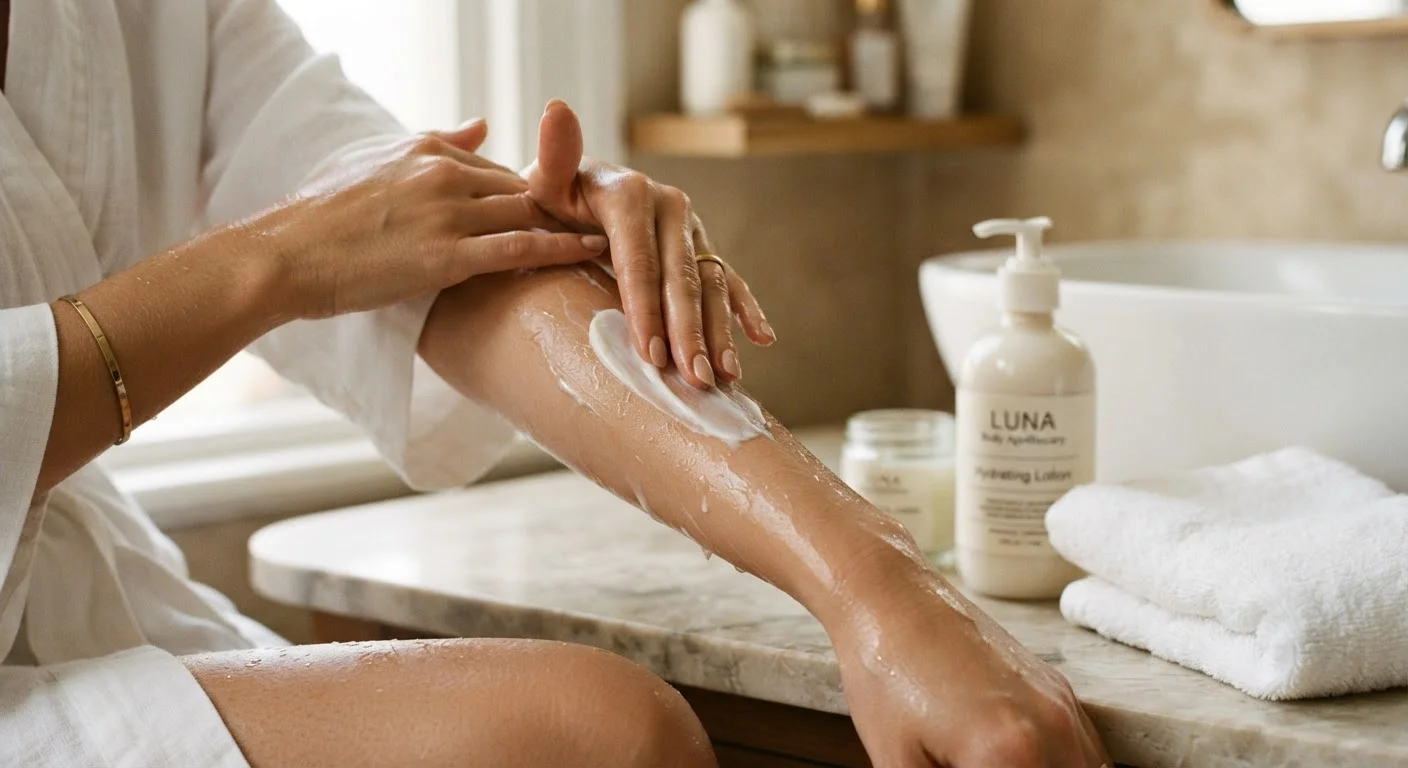
Dispense a generous amount of lotion and work from your feet upward. Focus extra product on rough or chronically dry areas. Use smooth, upward strokes and allow a moment for the product to absorb before dressing.
Look for formulas containing humectants (such as glycerin or hyaluronic acid) that draw water into the skin, alongside emollients (like shea butter or squalane) that smooth the surface. For a detailed comparison of common humectants, see our article on hyaluronic acid vs. glycerin.
Seal with an occlusive layer if skin is very dry
If your skin is persistently rough or flaky, consider applying a thin layer of a thicker cream or a few drops of a plant-based body oil on top of your lotion. Occlusives form a physical seal that dramatically slows water evaporation throughout the day.
Common occlusive ingredients include petrolatum, beeswax, and dimethicone. This layering approach — humectant lotion first, occlusive on top — follows the same logic used in facial skincare.
Build a consistent evening habit
If your skin stays dry despite morning moisturising, adding a light application before bed can make a meaningful difference. Skin repair and regeneration are most active during sleep, making nighttime a valuable second window for hydration support. Our article on night skincare explains the biology in more detail.
Common Mistakes That Undercut Your Results
Even with the right product and timing, a few habits can quietly undo your efforts.
Hot Showers Work Against Your Lotion
Very hot water dissolves the lipid layer that naturally seals moisture into your skin. By the time you apply lotion, you may be trying to compensate for damage that a cooler shower could have prevented. Lowering your shower temperature is one of the most effective — and free — changes you can make for body skin hydration.
- Showering with very hot water: High temperatures strip away the skin's natural lipids faster than lukewarm water. Try dialing the temperature down slightly, especially in winter.
- Toweling too aggressively: Vigorous rubbing removes the surface moisture you want to trap. Pat dry instead, leaving skin slightly damp before applying lotion.
- Skipping body lotion in summer: Air conditioning pulls moisture from skin just as cold air does outdoors. Year-round consistency matters more than seasonal instinct. Our guide on adjusting your routine by season covers this in more detail.
- Using the same formula forever: If your lotion stops feeling effective, it may not be your imagination. Routines can plateau for several reasons, including changes in climate, skin age, and product interaction.
This article is for general informational purposes only and is not a substitute for personalized advice from a qualified dermatologist or healthcare professional. If you have a persistent skin condition, consult a medical professional before adjusting your routine.