

Key Takeaways
- Hair grows from follicles rooted in the scalp, so scalp condition directly affects hair quality.
- Buildup from products and oils can block follicles and impede healthy hair growth.
- Dryness, oiliness, and irritation are scalp signals worth paying attention to.
- Simple habits like gentle cleansing and scalp massage can meaningfully improve scalp health.
- No shampoo or conditioner can fully compensate for an unhealthy scalp environment.
Scalp Health
Scalp health refers to the condition of the skin on your head — including its balance of oils, its microbial environment, and its ability to support hair follicle function. A healthy scalp is generally free of excessive dryness, flaking, irritation, or buildup. Just like the skin on your face, it responds to the products you use, your diet, stress levels, and environmental conditions.
The scalp has a higher density of sebaceous (oil-producing) glands than most other skin areas, making it particularly sensitive to disruption in the skin's natural barrier and microbiome.
The Scalp Is Skin — And It Needs the Same Attention
Most people build entire hair care routines around their strands — layering on conditioners, masks, and serums — while barely thinking about the scalp beneath. But hair is essentially a product of the scalp. Each strand grows out of a follicle embedded in scalp tissue, and the health of that tissue shapes the quality, strength, and growth rate of the hair above it.
Think of it this way: you wouldn't expect a plant to thrive in poor soil no matter how much you polished its leaves. The same logic applies here. A scalp dealing with chronic buildup, dryness, or inflammation is unlikely to produce its best hair, regardless of what you apply to the lengths and ends.
The scalp is also one of the oiliest parts of the body. Its high concentration of sebaceous glands means it's particularly reactive to product residue, environmental changes, and disruptions in routine. That reactivity is worth understanding — not as a problem, but as useful feedback.
Scalp Skin Is Different From Face Skin
While both benefit from gentle cleansing and moisture balance, the scalp has a much higher density of hair follicles and oil glands. Products formulated for the face are not necessarily appropriate for the scalp, and vice versa. Always check whether a product is intended for scalp use before applying it there.
What Disrupts Scalp Health
Several everyday factors can push a scalp out of balance:
- Product buildup: Dry shampoos, styling sprays, and heavy conditioners can leave residue that accumulates on the scalp over time. This buildup can clog follicles and create an environment where irritation or flaking develops. Scalp exfoliation — done with care — can help clear this without stripping natural oils.
- Over- or under-washing: Washing too frequently strips the scalp's natural sebum, triggering overproduction of oil as compensation. Washing too infrequently allows buildup and microbial imbalance. Finding the right frequency for your scalp type is genuinely individual.
- Harsh ingredients: Some sulfates and synthetic fragrances can irritate sensitive scalps. If your scalp feels tight, itchy, or dry after washing, the cleanser may be part of the issue.
- Stress and diet: The scalp, like all skin, responds to internal conditions. Chronic stress and nutritional gaps — particularly in protein, iron, and certain B vitamins — can show up in the scalp and hair over time.
- Seasonal shifts: Cold, dry air in winter and UV exposure in summer both affect scalp moisture and barrier function. Adjusting your routine seasonally is a practical way to stay ahead of these changes.
Check Your Water Temperature
Hot water can strip the scalp's natural oils more aggressively than warm water. Finishing a wash with a cooler rinse is a small habit that can reduce scalp dryness and irritation over time, especially for people who already tend toward a dry or sensitive scalp.
Simple Habits That Make a Measurable Difference
Improving scalp health doesn't require an overhaul or expensive new products. A few consistent habits tend to produce the clearest results:
- Cleanse the scalp deliberately. Focus shampoo on the scalp itself rather than dragging it through the lengths of your hair. Use fingertip pressure — not fingernails — to work the cleanser in gently.
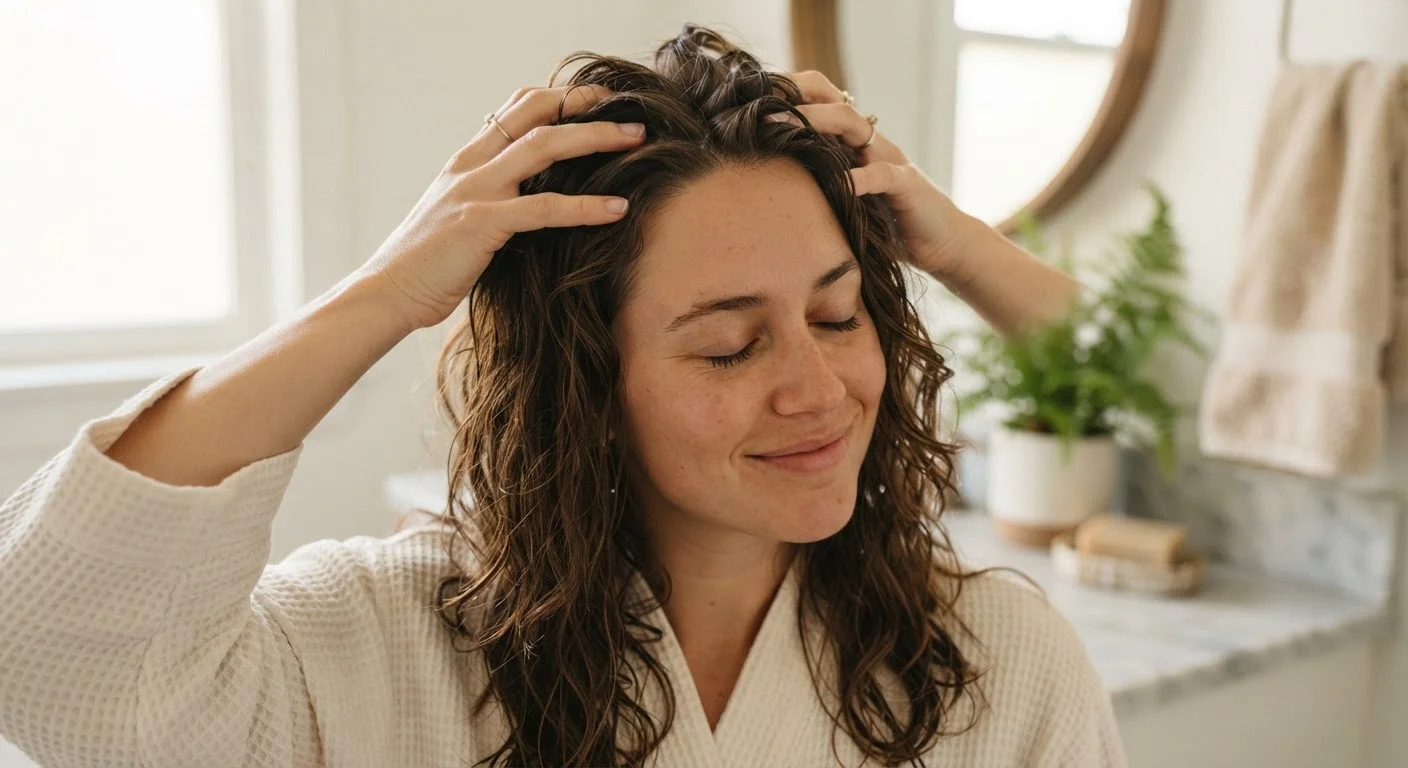
- Try periodic scalp massage. A few minutes of gentle massage a few times a week may support circulation around follicles. It's low-effort and costs nothing.
- Rinse thoroughly. Residue left on the scalp from shampoo or conditioner is a common and underappreciated source of irritation. Spend an extra 30 seconds rinsing than you think you need to.
- Keep conditioner off the scalp. Conditioner is designed for the hair shaft, not the scalp. Applying it at the roots can contribute to buildup and greasiness. Common conditioning mistakes often trace back to exactly this habit.
~100,000
Hair follicles on the average human scalp
Each follicle is embedded in scalp tissue, making scalp condition directly relevant to the density and quality of hair growth.
~50%
Adults affected by dandruff at some point
Dandruff (seborrheic dermatitis) is one of the most common scalp conditions globally, according to dermatological literature, yet it is frequently mistaken for simple dryness.
4 minutes
Daily scalp massage duration in a small study
A small 2016 study published in the journal ePlasty found that participants who massaged their scalps for this duration daily reported increased hair thickness after 24 weeks.
When to Look Beyond Your Routine
For most people, attentive basic care produces a noticeable improvement in scalp comfort and hair condition over weeks. But some scalp issues — persistent flaking, significant redness, patchy hair loss, or scalp pain — point to underlying conditions that warrant professional evaluation. Seborrheic dermatitis, psoriasis, and alopecia areata, for example, all have distinct presentations and appropriate treatments that go well beyond routine adjustments.
It's also worth reviewing your broader approach to skin care. The same principles that make a skin routine effective — understanding your skin type, not over-layering products, and checking for ingredient compatibility — apply directly to scalp care. Our skincare routine audit is a useful framework for thinking through whether your current products are actually serving you.
This article is for general informational purposes only and is not a substitute for professional medical or dermatological advice. If you have concerns about scalp conditions or significant hair loss, consult a qualified healthcare provider.