

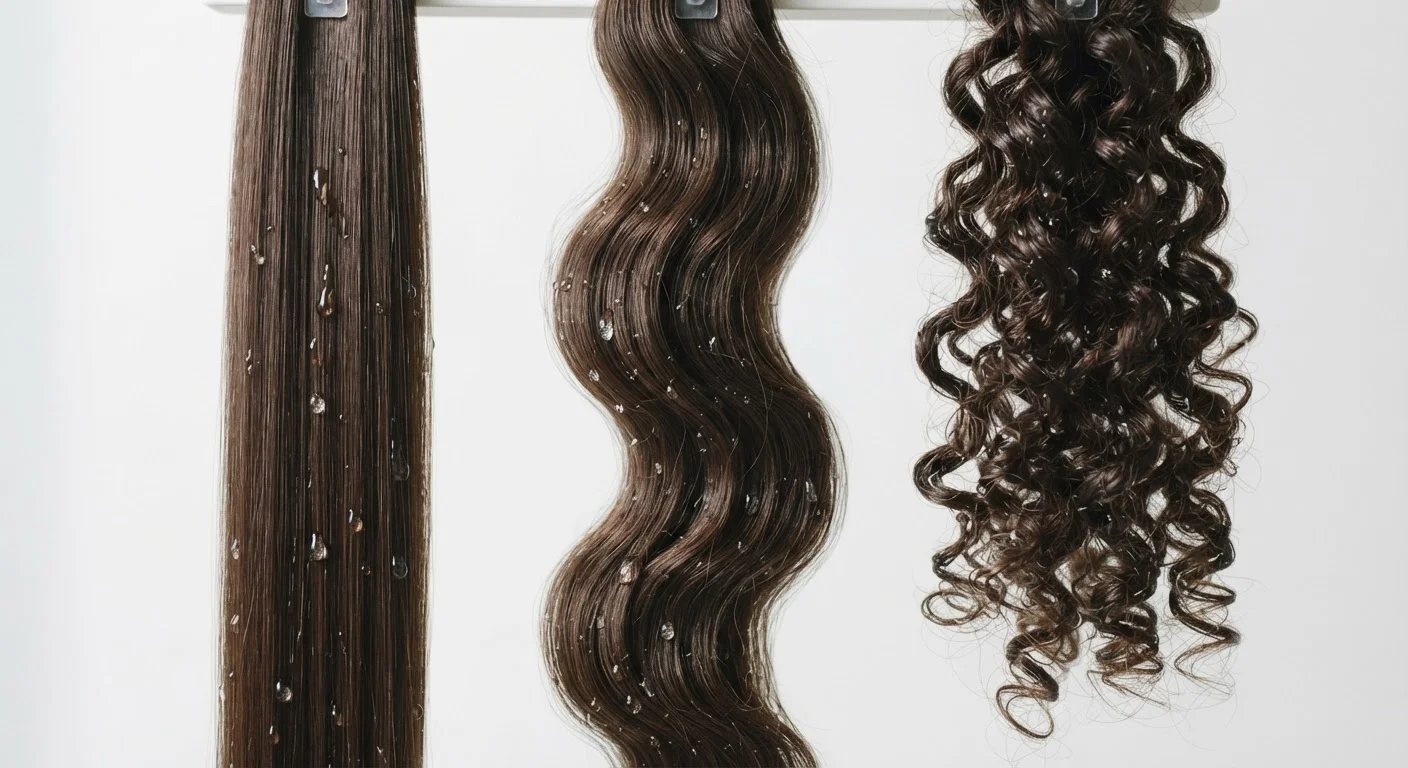
Key Takeaways
- Hair porosity is determined by how open or closed your hair's cuticle layer is.
- Low porosity hair resists moisture absorption; high porosity hair absorbs quickly but loses moisture fast.
- Identifying your porosity type helps you choose products that actually work for your hair.
- Heat damage, chemical processing, and sun exposure can raise porosity over time.
- A simple float test using a strand of hair can give you a rough starting point for identifying your porosity.
Hair Porosity
Hair porosity refers to how easily your hair strands absorb and hold onto moisture. It is determined by the condition of the hair's outer layer, called the cuticle, which is made up of overlapping scales. When those scales lie flat and tight, moisture has a harder time getting in — and when they're raised or damaged, moisture enters easily but escapes just as fast.
Porosity exists on a spectrum — low, medium (normal), and high — and is influenced by both genetics and cumulative damage from heat, chemical treatments, and environmental exposure.
What the Cuticle Actually Does
Every strand of hair is wrapped in a protective outer layer made of tiny, overlapping cells called the cuticle. Think of it like roof shingles — when they lie flat and close together, the structure underneath is well protected. When they're lifted or missing, the interior is exposed.
The state of your cuticle determines your porosity level. Genetics play a foundational role, but daily habits matter too. Repeated heat styling, bleaching, perming, and even prolonged sun exposure can lift or erode the cuticle over time, shifting hair from lower to higher porosity. That's why chemically processed hair almost always behaves differently from its untreated state.
Understanding the cuticle also explains why water temperature affects your hair's behavior. Hot and cold water interact with the cuticle differently, which is why some people finish their rinse with cooler water to encourage the cuticle to lie flat after washing.
The Three Porosity Types Explained
Low porosity hair has a tightly bound cuticle that resists moisture entry. Water and product often bead on the surface instead of absorbing in. This type can feel dry despite regular conditioning — not because it lacks moisture, but because moisture can't get in easily. The upside is that once moisture is sealed inside, it tends to stay longer. Low porosity hair is also prone to buildup from heavy creams and oils.
Medium (or normal) porosity hair has a moderately raised cuticle that allows moisture in and holds it reasonably well. This type tends to be the most forgiving — it responds well to a wide range of products and doesn't require highly specialized routines.
High porosity hair has a more open or damaged cuticle that absorbs moisture quickly but loses it just as fast. Hair can feel soft immediately after washing but dry out rapidly. Frizz in humid conditions is common because the open cuticle readily takes in airborne moisture unevenly. This type benefits most from layering products to seal moisture in.
3 Types
Recognized hair porosity categories
Hair care researchers and trichologists generally classify porosity as low, medium, or high based on cuticle structure and moisture retention behavior.
~50%
Of hair's strength linked to cuticle integrity
Research in hair fiber science suggests the cuticle layer plays a significant role in overall strand strength and resistance to breakage.
Up to 30%
Moisture increase from warm-water conditioning
Studies on hair fiber swelling indicate that warm water can temporarily increase cuticle permeability, improving conditioner uptake in low porosity hair.
How Porosity Shapes Product Choices
Matching your products to your porosity level is one of the most practical changes you can make to your hair routine. The weight and formulation of a product matters as much as its ingredients.
For low porosity hair, lightweight, water-based products are more likely to penetrate the cuticle. Applying deep conditioners with gentle heat — a warm towel or a hooded dryer — can help open the cuticle temporarily for better absorption. Heavy butters and thick oils tend to sit on the surface and contribute to buildup without delivering real benefit. Learning more about which ingredients to look for on labels can help you filter out formulas too dense for this type.
For high porosity hair, heavier, occlusive ingredients like shea butter or certain oils serve a real purpose: they form a barrier that slows moisture evaporation. Protein-based treatments can also help temporarily patch gaps in the cuticle, though sensitivity to protein varies. Be mindful that the wrong conditioning approach can still cause problems — our article on common conditioning mistakes walks through habits that undermine even well-chosen products.
Use Heat to Help Low Porosity Hair Absorb
If you have low porosity hair, try applying your deep conditioner and then sitting under a hooded dryer or wrapping your head in a warm, damp towel for 15–20 minutes. The gentle heat temporarily encourages the cuticle to open slightly, allowing conditioner to penetrate more effectively. This simple step can make a noticeable difference without requiring expensive products.
Identifying Your Porosity — and What to Do Next
The float test — dropping a clean hair strand into water and observing whether it sinks or floats — is a widely shared home method. It's a reasonable first indicator but shouldn't be treated as definitive. Buildup from styling products can skew results, and a single test doesn't capture the full range of your hair's behavior.
More reliable clues come from observing how your hair behaves over time: Does it take forever to get fully wet in the shower? That points toward low porosity. Does it dry very quickly and feel rough by the end of the day? That leans high porosity. Does it feel balanced and respond consistently to products? Medium porosity is likely.
Just as knowing your skin type shapes your skincare choices — understanding skin type is a foundational step in any routine — knowing your hair porosity gives you a practical filter for every product decision. It also helps explain why products that work for someone else may do nothing for your hair, or why your routine needs seasonal adjustment to account for humidity and temperature changes. Adapting your approach throughout the year becomes much easier once you understand how your cuticle responds to environmental shifts.
This article is for general informational purposes only. For concerns about hair loss, scalp conditions, or significant changes in hair health, consult a qualified dermatologist or healthcare professional.