

Key Takeaways
- Adjusting thermostat habits and sealing air leaks are among the most impactful no-cost changes homeowners can make.
- Running appliances like dishwashers and laundry machines during off-peak hours can reduce energy costs noticeably.
- Water-saving habits — not just fixtures — play a measurable role in lowering monthly utility bills.
- Phantom load (standby power draw) from idle electronics accounts for a meaningful share of home electricity use.
- Most high-impact changes require no professional help and little to no upfront investment.
Real Savings Without a Renovation Budget
Rising utility bills are one of the most consistent financial pressures homeowners face — yet many assume that meaningful savings require expensive upgrades like solar panels or new HVAC systems. That's not the whole picture. A growing body of energy research and utility data suggests that behavioral and low-cost changes can trim household energy and water use by 10–25%, depending on current habits and home type.
The strategies below don't require contractor visits, permits, or large outlays. They work by addressing the everyday patterns that quietly inflate monthly bills. For a deeper look at what drives winter spikes specifically, see why energy bills spike in winter.
Adjust your thermostat by a few degrees
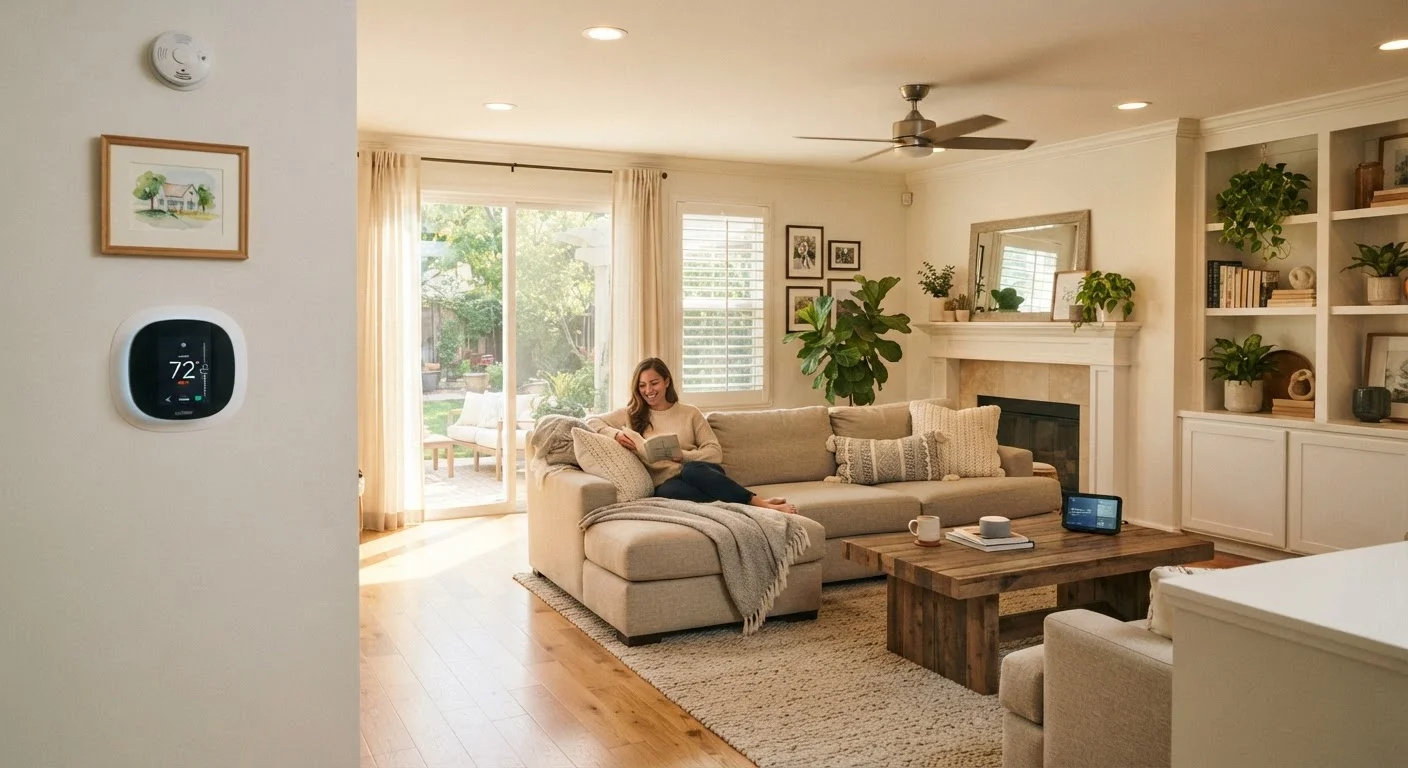
Heating and cooling typically account for the largest share of a home energy bill — often 40–50% by estimates from the U.S. Department of Energy. Dialing your thermostat back by 7–10°F for 8 hours a day (such as while you're at work or asleep) can reduce heating and cooling costs by around 10%, according to DOE guidance. A programmable or smart thermostat makes this automatic, but even manual adjustments help. In winter, set it lower at night and add a blanket. In summer, raise it when you leave the house.
Even a few degrees of thermostat adjustment can reduce heating and cooling costs by roughly 10%.
Seal drafts around doors and windows with weatherstripping
Air leaks are silent budget drains. Gaps around door frames, windows, and baseboards allow conditioned air to escape and outside air to infiltrate — forcing your heating or cooling system to work harder. Foam weatherstripping tape and door sweeps are inexpensive materials available at most hardware stores and can be applied without professional help. Focus first on doors and windows you can feel air movement around on windy days. This is one of the few no-permit, high-return tasks that also improves comfort immediately.
Sealing drafts around doors and windows is a no-permit task that improves comfort and reduces HVAC load.
Eliminate phantom load from idle electronics
Devices left plugged in — TVs, gaming consoles, phone chargers, small kitchen appliances — draw power even when not in use. This "standby" or "phantom" load can account for 5–10% of household electricity use, according to Lawrence Berkeley National Laboratory research. Using power strips with on/off switches makes it easy to cut power to clusters of devices at once. Get in the habit of unplugging chargers when not in use and powering down entertainment systems fully rather than leaving them on standby.
Phantom load from idle electronics can account for up to 10% of your home's electricity use.
Run large appliances during off-peak hours
Many utilities charge higher rates during peak demand periods — typically late afternoon and early evening on weekdays. Running your dishwasher, washing machine, or dryer after 9 p.m. or before 8 a.m. can reduce the cost of each cycle if your utility uses time-of-use pricing. Check your electricity bill or utility website to see whether your rate structure varies by time of day. Even on flat-rate plans, reducing simultaneous appliance use during hot afternoon hours lightens the load on your air conditioner.
Shifting laundry and dishwasher cycles to off-peak hours can lower costs if your utility uses time-of-use pricing.
Wash laundry in cold water
About 90% of the energy used by a standard washing machine goes toward heating the water, not running the motor. Switching to cold-water washing for most loads removes that energy draw almost entirely. Modern detergents are formulated to work effectively in cold water, so cleaning performance is generally not compromised for everyday laundry. Reserve hot-water cycles for items that genuinely need sanitizing, such as heavily soiled work clothes or bedding during illness.
Switching to cold-water washing eliminates roughly 90% of the energy a washing machine uses per cycle.
Fix leaky faucets and running toilets promptly
A faucet dripping at one drop per second wastes roughly 3,000 gallons of water per year, according to EPA WaterSense estimates. A running toilet can waste significantly more — sometimes 200 gallons a day or more depending on the severity. Both are often simple, inexpensive fixes: a worn washer in a faucet or a flapper valve in a toilet tank. These repairs are within the reach of most homeowners with basic tools. Leaving them unaddressed, however, means paying for water that provides no benefit. See the Repairs & Fixes hub for guidance on common household maintenance tasks.
A dripping faucet can waste around 3,000 gallons of water per year — a fix that often takes under an hour.
Use your oven and stovetop more strategically
Ovens generate significant heat and draw considerable power, especially when used for small tasks. Using a microwave, toaster oven, or slow cooker for smaller meals can reduce cooking energy use substantially compared to a full-size oven. When you do use the oven, batch cooking — preparing multiple dishes at once — makes the energy draw worthwhile. Avoid opening the oven door repeatedly during cooking; each opening drops internal temperature by roughly 25°F, causing it to reheat. In summer, strategic oven use also reduces how hard your air conditioner has to work. For more ideas on kitchen efficiency, browse home cooking tips.
Batch cooking and using smaller appliances instead of a full-size oven can meaningfully cut kitchen energy use.
Building Habits That Stick
The strategies above share a common thread: they shift how you use energy rather than what equipment you own. Individually, each change may feel small. Applied consistently across your household, they compound into real reductions over a billing cycle or a season.
Start With Your Utility Bill
Most utility providers offer free online energy-use breakdowns or home energy audits. Reviewing your usage by category — heating, cooling, water heating, appliances — helps you prioritize which habits will have the biggest impact in your specific home. Some utilities also offer rebate programs for efficiency measures; check your provider's website to see what's available in your area.
If you're already working to reduce spending in other areas of home life, the same incremental mindset applies. Our guide to reducing food waste without overhauling your routine shows how small, practical shifts can cut costs without disrupting daily life — a principle that translates well to energy and water use too.
For homeowners also looking to address minor repairs that could be driving up costs — such as drafty windows or running toilets — home repairs you can safely tackle on a tight budget offers accessible guidance on where to start.