

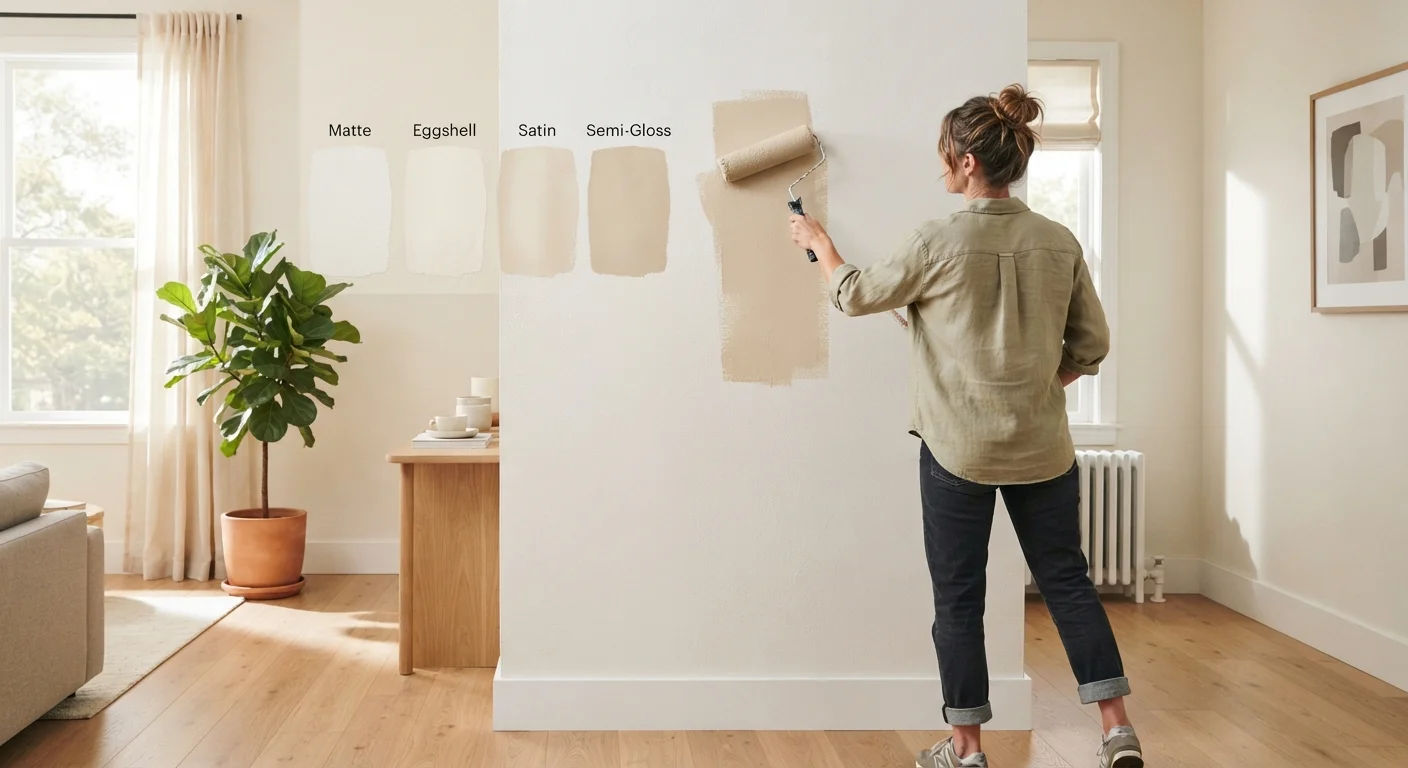
Key Takeaways
- Paint sheen affects both how a surface looks and how easy it is to clean.
- Higher-gloss finishes are more durable and moisture-resistant, making them suited to kitchens and bathrooms.
- Flat and matte finishes hide surface imperfections but are harder to wipe clean.
- Eggshell and satin are versatile middle-ground options that work well in living areas and bedrooms.
- Lighting conditions in a room significantly influence how a sheen level reads on the wall.
- Match sheen level to the surface's traffic, moisture exposure, and existing imperfections.
What you will need
What Paint Sheen Actually Means
Paint sheen refers to the amount of light a dried paint film reflects. It's determined by the ratio of pigment to binder in the formula — more binder creates a smoother, harder surface that reflects more light. Manufacturers typically label finishes along a spectrum: flat, matte, eggshell, satin, semi-gloss, and high-gloss.
Understanding this spectrum matters because sheen affects more than aesthetics. Higher-sheen paints are generally more moisture-resistant and easier to wipe clean. Lower-sheen finishes scatter light and hide surface irregularities, but they can absorb stains and scuffs over time. Getting the sheen wrong for a room means either struggling to keep walls clean or making every wall dent and tape line visible. How sheen interacts with a room's light is also worth understanding — see how natural light myths affect room decisions before committing to a finish.
Sheen Affects Cleaning, Not Just Looks
A flat finish that looks beautiful when new can become frustrating in a busy household — scrubbing marks off a flat-painted wall often removes paint along with the dirt. If washability matters to you, eggshell is a practical starting point even in lower-traffic rooms. Think of sheen as a maintenance decision as much as a style one.
The Full Sheen Spectrum Explained
Here's what each finish level typically offers in practical terms:
- Flat: No visible sheen. Excellent at hiding imperfections on ceilings and walls with dings, patches, or uneven texture. Not washable — best reserved for low-traffic areas like formal dining rooms or ceilings.
- Matte: Very slight sheen, nearly imperceptible. More durable than flat, with modest washability. A good choice for adult bedrooms or low-activity living rooms where you want a clean look without a shiny finish.
- Eggshell: Soft, low luster resembling the surface of an eggshell. Handles light cleaning well and holds up in moderate-traffic areas. One of the most widely used finishes for living rooms, bedrooms, and hallways.
- Satin: Noticeably smooth and slightly velvety. Good moisture resistance makes it practical for children's rooms, laundry rooms, and high-traffic hallways. Easier to clean than eggshell.
- Semi-gloss: Visibly reflective. Stands up to humidity and repeated scrubbing, which is why it's the standard choice for kitchens, bathrooms, and trim work. It will highlight surface imperfections, so prep work matters.
- High-gloss: Mirror-like finish. Reserved mostly for trim, cabinets, doors, and accent features where durability and a dramatic look are both wanted. Unforgiving of surface flaws.
Sheen also interacts with color saturation and room lighting in ways that can shift how a paint color reads once it's on the wall. It's worth reviewing how tone and light interact with color before finalizing your choice.
Matching Sheen to Each Room
A room-by-room approach keeps decisions practical:
Higher Sheen Means More Surface Prep Work
Switching to a semi-gloss or high-gloss finish without properly preparing the surface will make existing flaws more visible, not less. Fill holes, sand rough areas, and apply a quality primer before using any finish above eggshell on a wall. Cutting corners on prep with a reflective finish is one of the most common painting mistakes homeowners make.
- Ceilings: Flat is the default for a reason. The diffuse surface reduces glare from overhead lighting and conceals texture variations. Ceiling-specific flat paints often have a slightly thicker formula to minimize splatter.
- Living rooms and bedrooms: Eggshell or matte strikes the right balance between appearance and durability for adults-only spaces. Go satin if the room sees heavier use or has young children.
- Kitchens: Satin or semi-gloss. Steam, grease, and frequent wall contact demand a finish you can wipe down without damaging the paint film.
- Bathrooms: Semi-gloss is the standard. Full-bath environments with showers require genuine moisture resistance. Ventilation also matters — see maintenance tips in seasonal exterior upkeep for related moisture-management context.
- Trim and doors: Semi-gloss or high-gloss. These surfaces take daily wear and benefit from a harder, easier-to-clean film. The reflective quality also visually defines architectural detail.
- Hallways and staircases: Satin. High-traffic corridors need durability without the harshness of a semi-gloss on large wall areas.
Lighting in a space shapes how sheen reads at different times of day. A high-gloss wall in a room with strong directional lighting can feel overwhelming. Your room-by-room lighting reference can help you account for this before painting.