

Key Takeaways
- Marketing terms like 'durable' and 'premium' have no standardized legal definitions and can mean almost anything.
- Third-party certifications and material specifications are more reliable quality signals than brand language.
- Construction methods — joinery, fastener type, finish adhesion — often predict longevity better than price alone.
- A higher price tag does not automatically equal better build quality or longer product life.
- Learning to read material specs and certifications lets you compare products on facts, not marketing claims.
Why 'Durable' and 'High Quality' Mean Almost Nothing on Their Own
Walk down any home goods aisle and you'll see the same words everywhere: durable, premium, heavy-duty, professional-grade. These terms feel reassuring, but they carry no standardized legal definition. A manufacturer can print 'built to last' on a product with no obligation to prove it.
This isn't accidental. Vague quality language is a proven marketing tool because it triggers positive associations without making any specific, verifiable claim. The practical consequence for homeowners: you cannot use those words to compare two products. You need to look elsewhere.
The useful signals are hidden behind the marketing copy — in material specifications, construction methods, and third-party certifications. Understanding what each of those actually tells you is the foundation of smarter purchasing. See also our guide on how specifications are used to confuse rather than inform for a deeper look at decoding spec sheets.
Myth
If a product is labeled 'heavy-duty' or 'professional-grade,' it must meet a higher standard than regular products.
Fact
These terms have no regulated definitions in consumer product marketing. Any manufacturer can use them without meeting measurable criteria.
Unlike terms such as 'organic' (regulated by the USDA for food) or UL-listed (requiring independent verification), words like heavy-duty, commercial-grade, and professional-grade are unregulated in most product categories. They function as positioning language, not technical specifications. When you see these terms, look past them to find actual material specs, gauge ratings, or load-bearing data that can be independently verified.
Myth
A higher price guarantees better build quality and longer product life.
Fact
Price reflects many factors — brand positioning, packaging, distribution costs, marketing spend — not just material or construction quality.
Price correlates imperfectly with durability across product categories. Some mid-price products use the same raw materials as premium-branded equivalents. Conversely, some expensive products carry a price premium for aesthetics or branding rather than structural quality. The more reliable approach is to find products with published material specifications or independent test results and compare on those metrics, not price alone.
Myth
A product warranty is a reliable indicator that the product is well-built.
Fact
Warranty length and coverage vary widely and are marketing decisions as much as quality signals. The exclusions matter more than the headline duration.
A five-year warranty sounds impressive until you read that it covers only manufacturing defects, excludes normal wear, and requires the original purchaser to pay return shipping. A shorter warranty with broader coverage for normal-use conditions can represent a stronger manufacturer commitment. Read the exclusion clauses specifically — they reveal which failure modes the manufacturer anticipates and is unwilling to stand behind.
Myth
Third-party certifications on product packaging always mean the product was independently tested.
Fact
Some certification marks come from rigorous independent testing bodies; others are created by manufacturers or trade associations with minimal external oversight.
Not all certification logos carry the same evidentiary weight. Marks from organizations like ANSI, ASTM, or UL involve defined testing protocols and independent audits. A manufacturer-created 'quality seal' or an unverifiable eco-badge involves no such external check. When in doubt, search the certifying organization's name to determine who operates it and what verification process it requires before awarding the mark.
Myth
If two products use the same material name — like 'stainless steel' or 'leather' — they will perform the same way.
Fact
Material names cover wide ranges of grades, compositions, and processing methods that produce dramatically different performance outcomes.
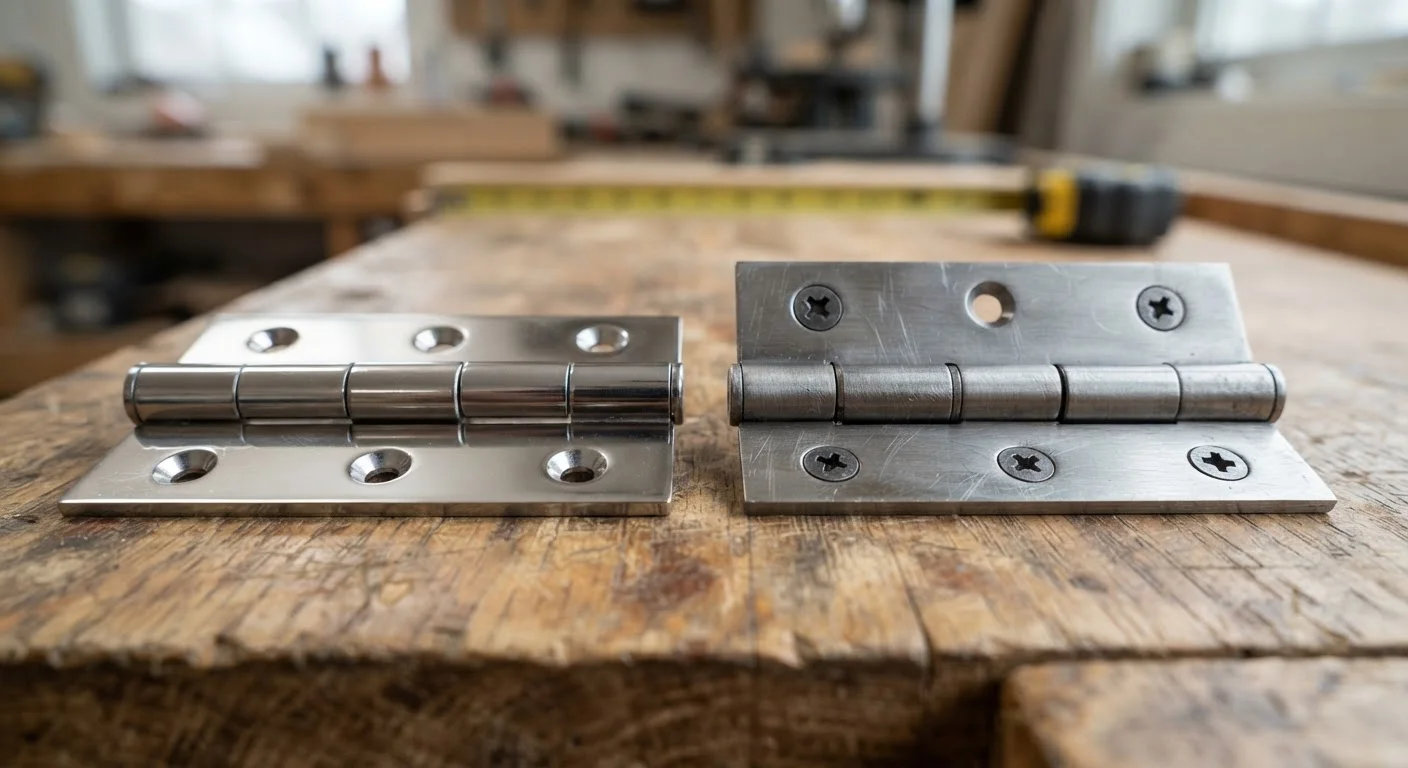
Stainless steel, for example, encompasses dozens of alloy grades. Grade 316 is significantly more corrosion-resistant than grade 430, yet both are accurately labeled 'stainless steel.' Similarly, leather legally describes products ranging from full-grain (the most durable, outermost hide layer) to bonded leather (scraps and fibers bonded with adhesive). When material names appear without grade or type qualifiers, ask the retailer or check the manufacturer's technical documentation for specifics before assuming equivalence.
What Actually Signals Longevity
Once you set aside the adjectives, several concrete factors reliably predict whether a product holds up over time.
Material Composition
The specific material — not the finish or coating — determines baseline durability. Solid brass resists corrosion differently than zinc alloy with a brass finish; full-grain leather ages differently than bonded leather. Product listings that name the actual substrate rather than just the look are generally more trustworthy. When a listing only describes the appearance, treat that as a red flag.
Construction Method
How components are joined matters as much as what they're made of. Dovetail joints in wood furniture outlast stapled or dowelled construction. Welded steel frames outperform bolted-only assemblies under repeated stress. For textiles, stitch count and seam reinforcement at stress points predict wear far better than thread count marketing numbers.
Verified Certifications
Independent testing bodies set measurable pass/fail thresholds that marketing language cannot match. For home products, look for certifications from recognized organizations — ANSI, ASTM, UL, or relevant sector-specific bodies — rather than manufacturer-created badges. The distinction matters: a manufacturer's own 'quality assured' logo means only that the company endorses itself. A recognized third-party mark means an independent organization tested and verified a specific claim. For a related example of how certification weight varies, our article on certifications that matter on cleaning products walks through the same evaluation logic.
~60%
Consumers who rely on packaging claims to judge quality
Research published in the Journal of Consumer Psychology has found that a majority of shoppers treat label language as a primary quality indicator, even when objective product information is available nearby.
3rd-party
Certification type that signals verified performance
Consumer advocacy organizations consistently distinguish between manufacturer self-certification and independent third-party marks when advising shoppers on how to evaluate product quality claims.
Warranty Terms as a Proxy
A warranty isn't proof of quality, but its specific terms reveal how much confidence a manufacturer has in their own product. A limited one-year warranty covering only defects under unusual conditions signals something different from a multi-year warranty covering normal use. Read the exclusions — they often tell you exactly where the manufacturer expects the product to fail.
Repairability is a related, often-overlooked factor. If a product cannot be serviced when a single component fails, its effective lifespan depends entirely on the weakest part. Our article on repairability as a buying criterion covers how to evaluate this before you buy.
Putting It Together at the Point of Purchase
Practically speaking, you won't always have access to complete spec sheets in-store. A few habits help close the gap:
- Search the model number rather than the brand name to find manufacturer spec documents or independent review data.
- Check for specific material callouts — listings that say '18-gauge steel' or '600-denier polyester' are giving you something verifiable; listings that only say 'premium metal' or 'quality fabric' are not.
- Look up the certification marks shown on packaging. Most recognized certification bodies maintain public databases where you can verify a product's listed status.
- Compare warranty exclusions across comparable products to surface where each manufacturer expects failure.
Price remains a rough signal at best. A higher price can reflect genuine material costs, but it can equally reflect brand premium, packaging, or marketing spend. Our framework for deciding between generic and name-brand products addresses exactly this: when the brand premium is justified and when it isn't.
For products making specific environmental or performance claims — waterproof ratings, for instance — the same verification logic applies. What to check before trusting waterproof claims is a useful companion for that category specifically.
The core skill is simple: train yourself to ask what does that word actually mean, and who verified it? When a claim can't be answered with a material name, a test standard, or a third-party mark, treat it as decoration rather than information.