

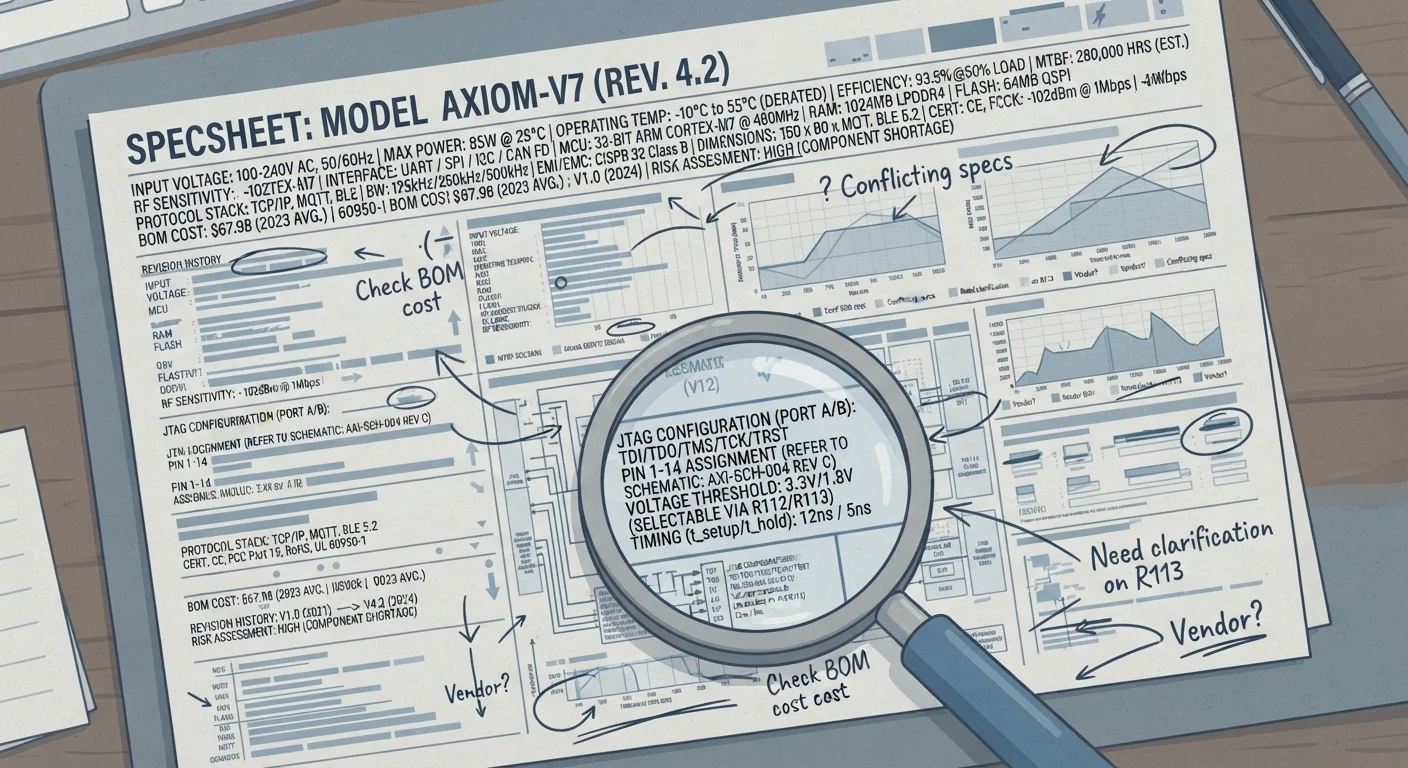
Key Takeaways
- High spec numbers don't automatically mean better real-world performance.
- Many listed features exist primarily to fill out a comparison chart, not to serve everyday users.
- Contextless metrics — like megapixels or thread count — can mislead without a reference point.
- Marketing terms such as 'military-grade' or 'ultra-precision' have no standardized definitions.
- Third-party testing and independent reviews often reveal what spec sheets conceal.
- Focusing on the two or three specs most tied to your actual use case cuts through the noise.
Spec Sheet Confusion
Spec sheet confusion happens when product listings use technical numbers, features, or jargon in ways that look informative but don't actually help you compare or evaluate products meaningfully. Manufacturers sometimes inflate, cherry-pick, or frame specifications to make a product appear superior — even when the numbers wouldn't hold up under real-world scrutiny.
This practice is sometimes called 'specmanship' in consumer electronics and appliance categories — the strategic use of measurable attributes to obscure rather than clarify product quality.
Why Spec Sheets Are Built to Impress, Not Inform
When you pull up a product listing, the spec sheet often runs long — dozens of rows of numbers, acronyms, and capability claims. This abundance can feel reassuring, as if more data means a more informed decision. In practice, many spec sheets are structured around comparison-chart optics: the goal is to win a side-by-side column matchup, not to give you a clear picture of how a product performs under the conditions you actually care about.
This isn't unique to one category. Mattress listings, light bulbs, kitchen appliances, and bedding all follow a similar pattern. Consider thread count in bedding: a number that sounds authoritative but says little about feel, durability, or temperature regulation on its own. Our guide to what bedding labels actually mean unpacks exactly why. The same dynamic plays out with lumens and color rendering for light bulbs — explained in detail in our piece on the three numbers that define a light bulb's performance.
“The abundance of specifications in modern product marketing often substitutes the appearance of information for actual insight. More numbers rarely means better decisions.”
— Smart Shopping Editorial Team, Consumer research and product evaluation specialists
Common Tactics That Make Specs Misleading
Several well-worn techniques show up repeatedly across product categories:
- Decontextualized numbers: A figure like '10,000 hours' or '5000 RPM' sounds impressive without knowing the industry average or whether it affects your use case. Context — what's typical, what's exceptional — is almost never provided.
- Self-reported measurements: Unless a spec is independently tested, it reflects the manufacturer's own methodology, which may differ significantly from standardized testing. Peak power output, for example, is routinely reported rather than continuous, real-load output.
- Undefined superlatives: Terms like 'ultra-durable,' 'professional-grade,' and 'precision-engineered' carry no regulatory or industry definition. They are descriptors, not certifications. Our article on the real difference between durability and build quality claims goes deeper on this.
- Feature padding: A long feature list can mask a product's weaknesses. Each added checkbox dilutes attention from the handful of specs that actually drive performance.
~60%
Consumers who find product specs confusing
A survey by Label Insight found that a majority of US consumers struggle to understand product information presented on packaging and listings.
3–5
Specs that typically drive purchase satisfaction
Consumer research consistently suggests that real-world satisfaction correlates with a small handful of performance attributes, not the breadth of a feature list.
How to Identify Which Specs Actually Matter
The most useful approach is to start with your use case, not the spec sheet. Write down the two or three things you need a product to do well. Then look specifically for the metrics tied to those needs — and ignore the rest. If you're evaluating a vacuum for pet hair on hard floors, suction at the nozzle and brush-roll design matter far more than tank capacity or number of included attachments.
From there, cross-reference against independent sources. Consumer testing organizations, category-specific reviewers, and owner communities often expose which specs translate to real-world performance and which are effectively noise. This pairs well with a broader framework for evaluating a home product when you know nothing about it — particularly useful when you're entering an unfamiliar category.
Pay attention to certifications from recognized standards bodies over proprietary claims. An ENERGY STAR certification, for instance, reflects third-party testing against a public methodology. A brand's own 'EcoMode' rating does not.
Waterproofing, Warranties, and Other Claim Categories to Scrutinize
Some product claims deserve extra skepticism because they have enormous real-world consequences if misunderstood. Waterproofing language is a prime example — terms like 'water-resistant,' 'splash-proof,' and 'waterproof' have meaningfully different implications, and IP ratings involve specific test conditions that may not match how you use the product. See our guide to verifying waterproof claims before you trust them for the full breakdown.
Warranty language works similarly: a 'limited lifetime warranty' sounds comprehensive but may cover only a narrow set of defects under very specific conditions. Understanding what falls outside coverage is as important as knowing what's included. Our piece on warranty gaps homeowners frequently overlook covers the exclusions that catch buyers off guard.
The common thread across these categories is that marketing language is calibrated to create impressions, not precision. Slowing down to ask 'what does this actually mean, and who verified it?' is the most reliable counter-move available to any buyer. For a practical companion to this approach, our guide on reading reviews and expert opinions without being misled explains how to weigh different information sources effectively.