

Key Takeaways
- Cleaning gutters before leaves fully fall prevents ice dams and water intrusion at the roofline.
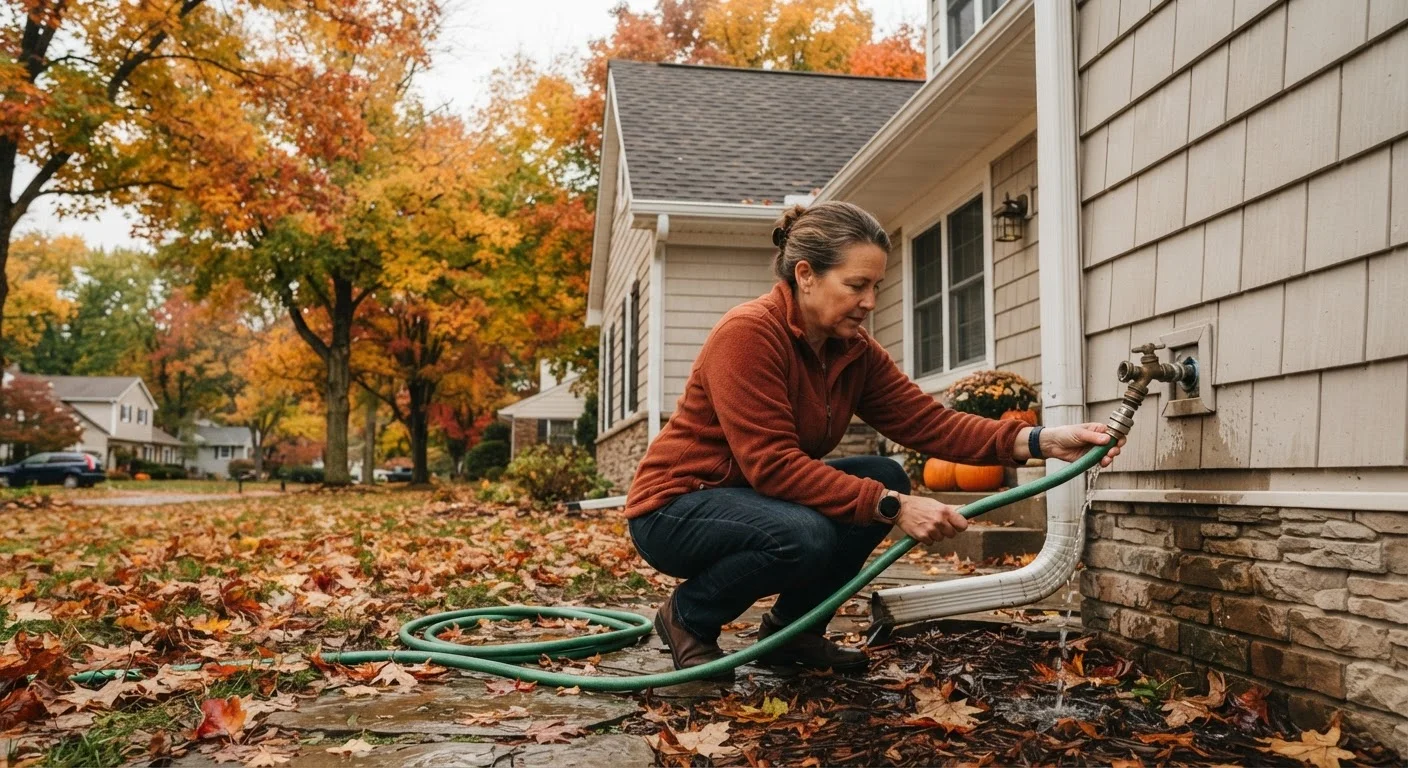
- Shutting off and draining outdoor faucets is one of the simplest ways to avoid a burst pipe.
- A chimney inspection should happen before your first fire of the season, not after.
- A roof walk-around in fall catches loose flashing and missing shingles before winter storms arrive.
- Reversing ceiling fans and sealing drafts reduces heating costs without major investment.
Summary
22 items · 1.5–3 hours spread over a weekend
Why Fall Is the Highest-Stakes Season for Home Maintenance
Autumn sits at the intersection of two demanding seasons. The heat-driven wear of summer has already taken its toll, and everything winter will throw at your home — freezing temps, ice, heavy snow loads, and persistent moisture — is right around the corner. This is the narrowest window you have to catch damage before it compounds.
Most costly winter repairs trace back to something overlooked in October or November. A neglected gutter backs up, water pools against the fascia, and by February you're dealing with rot or interior water damage. A cracked outdoor faucet goes unnoticed until a pipe bursts behind the wall. The work of fall maintenance isn't glamorous, but it is genuinely protective.
This checklist is organized so you can move through your home's exterior, then its systems, then its interior edges — reducing the chance of missing anything critical. For a broader view of how each season shapes your upkeep rhythm, see Your Home's Year at a Glance.
Gutters and Drainage
Outdoor Faucets and Irrigation
Roof and Exterior
Chimney and Fireplace
Heating System and Indoor Air
Lawn, Garden, and Exterior Storage
Tools and Supplies to Have Ready
Before you start, gather what you'll need. Working through the checklist in a single weekend is much easier when you're not making hardware-store runs mid-task. Note that any work involving roof access carries fall-hazard risks — use appropriate footwear, a secured ladder, and never work alone on a roof. If you're not comfortable with heights or your roof pitch is steep, hire a qualified professional for the inspection portion.
Extension ladder
Provides safe access to gutters and lower roofline areas for inspection and cleaning.
Garden hose with spray nozzle
Used to flush downspouts and test outdoor water flow before winterizing.
Gutter scoop or trowel
Removes packed leaf and debris buildup from gutters more efficiently than hands alone.
Exterior caulk and caulk gun
Seals gaps around windows, doors, and siding to prevent cold air and moisture infiltration.
Binoculars
Lets you scan the roofline for visible shingle or flashing damage safely from ground level.
Foam faucet covers
Inexpensive insulating covers that add a layer of frost protection over outdoor hose bibs.
HVAC filter (correct size)
Replacement filter for your furnace or air handler, sized to your unit's specifications.
Roof Access Requires Caution
Walking on a roof carries real fall risk, particularly in autumn when surfaces may be wet or covered with leaves. If your roof is steeply pitched or you're not confident on a ladder, limit yourself to a ground-level visual scan with binoculars and hire a licensed roofing contractor for a closer look. Never work on a roof alone or in wet, icy, or windy conditions.
After the Checklist: What Comes Next
Once you've worked through these items, you're well-positioned for the cold months ahead. A few areas of autumn prep naturally flow into deeper winter readiness work — particularly around heating systems, draft sealing, and pipe protection. Our room-by-room winter prep guide picks up where this checklist leaves off.
If gutters were in rough shape when you cleaned them, it's worth understanding the full risk picture. Skipping gutter cleaning is one of the costliest seasonal mistakes — and that article explains exactly why. Similarly, if your roof walk-around turned up concerns, Roof and Exterior Upkeep: What Each Season Actually Demands gives you the full seasonal framework for keeping your envelope in good condition.
Fall maintenance done consistently is one of the most reliable ways to keep repair costs manageable over the long life of a home. Work through the list, note anything that needs a professional, and schedule those follow-ups before the temperature drops.
Don't Skip the Chimney Inspection
Creosote buildup inside a flue is a leading cause of residential chimney fires — and it's invisible to an untrained eye. A certified chimney sweep can identify blockages, structural cracks, and unsafe buildup before you light a single fire. This is one task on the list where professional involvement is strongly advisable, not optional.