

Key Takeaways
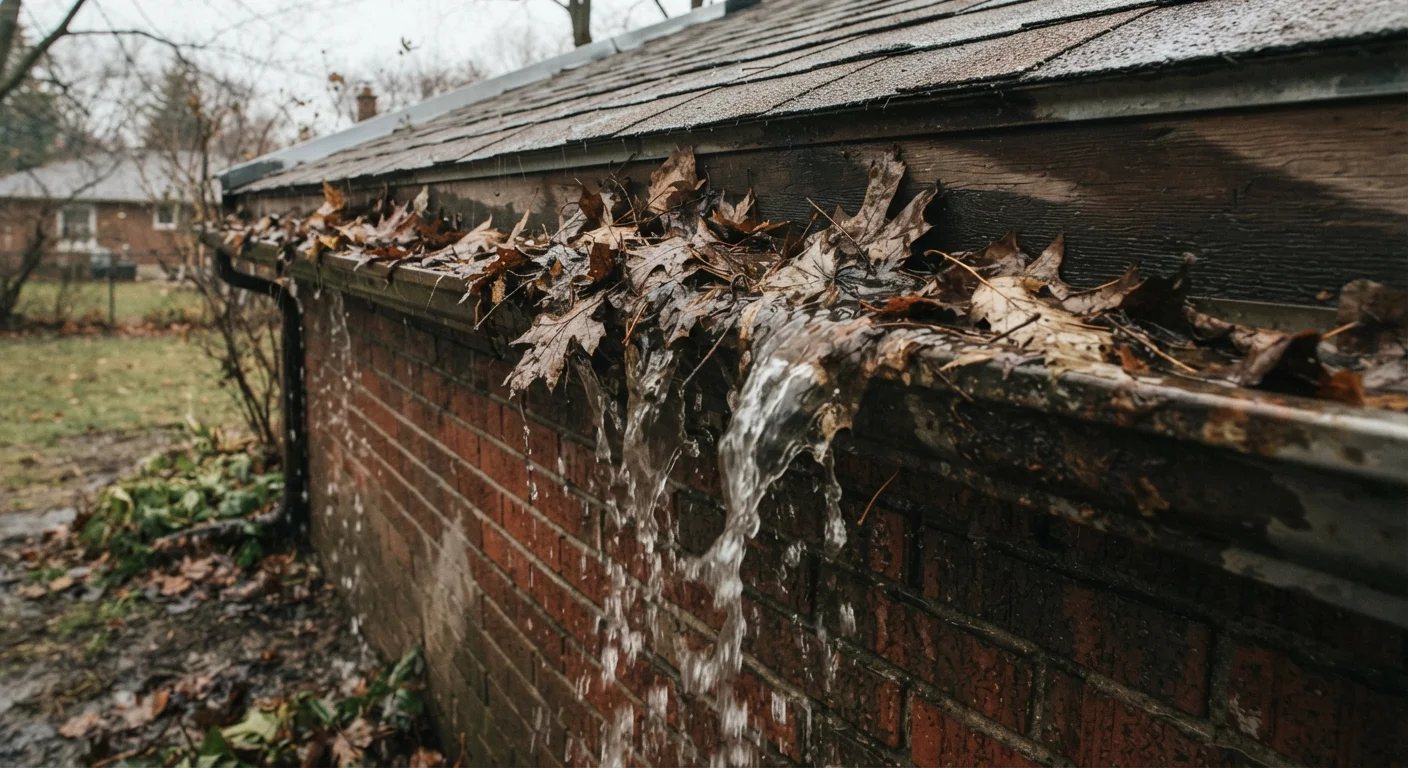
- Clogged gutters can cause foundation damage, roof rot, and basement flooding if left unaddressed.
- Most professionals recommend cleaning gutters at least twice a year — spring and fall.
- Water damage from neglected gutters is often not covered by standard homeowners insurance.
- Early, simple maintenance is far less costly than repairing structural damage after the fact.
What Gutters Actually Do — and Why They Fail
Gutters serve one core function: channel rainwater and snowmelt away from your home's foundation, walls, and roof. When they work correctly, they're nearly invisible. When they fail — usually because they're clogged with leaves, twigs, or compacted debris — water has nowhere controlled to go.
The result isn't just an overflow of water running down your siding. Unchecked moisture finds the path of least resistance, which often means your fascia boards, soffit, attic insulation, and eventually your foundation. The damage builds gradually, which is exactly why homeowners tend to underestimate it until repair bills arrive.
For a broader look at how skipping routine upkeep compounds over time, see keeping seasonal maintenance manageable even on a tight schedule.
Cleaning gutters only once per year, typically in spring, and skipping the fall clear-out.
Why it happens: Homeowners often associate gutter cleaning with spring yard work and don't realize leaf accumulation in fall creates the highest risk period for blockages.
Flushing downspouts without checking where water discharges at ground level.
Why it happens: Most homeowners focus on clearing the gutter trough itself and assume the downspout is functioning if water comes through. Underground extensions and splash blocks can shift, erode, or clog separately.
Ignoring small leaks or separated joints at gutter seams and end caps.
Why it happens: Minor drips seem insignificant, especially when the gutter is otherwise draining. Over time, these leaks direct water onto fascia boards and siding repeatedly, accelerating wood rot.
Assuming gutter guards eliminate the need for maintenance entirely.
Why it happens: Gutter guards and covers are marketed as low-maintenance solutions, leading homeowners to believe they've solved the problem permanently.
Neglecting to check gutter slope and alignment after a heavy storm or winter season.
Why it happens: Ice, heavy snow loads, and storm debris can bend hangers and shift gutter pitch. Many homeowners only address gutters when they're visibly sagging or pulling away.
How Neglect Turns into Repair Bills
The most serious consequence of blocked gutters is water intrusion at the foundation. When downspouts can't drain and water pools near the base of your home, it can seep through concrete or masonry over multiple wet seasons. Foundation repairs — including waterproofing, crack sealing, or drainage installation — commonly run into thousands of dollars.
$10,000+
Typical foundation water damage repair cost
According to home improvement cost data from HomeAdvisor, foundation waterproofing and drainage repair commonly ranges from several thousand to over ten thousand dollars depending on severity and home size.
2x/year
Minimum recommended gutter cleaning frequency
Most roofing and home inspection professionals advise at minimum a spring and fall cleaning to prevent debris buildup from damaging gutters, fascia, and foundations.
Roof damage is equally common. Water that backs up behind a clogged gutter can work under shingles, soaking the roof deck and leading to rot, mold, or interior ceiling leaks. This is especially true in winter, when backed-up water freezes and expands — a phenomenon called an ice dam — forcing moisture under shingles with each freeze-thaw cycle.
Fascia boards, the horizontal boards that gutters attach to, are also vulnerable. Once they rot, gutters can pull away from the house entirely, requiring both carpentry and gutter reinstallation. Pair gutter cleaning with the tasks in our autumn maintenance checklist to catch roof and fascia issues before winter sets in.
Ladder Safety Matters More Than Speed
Gutter cleaning requires working at height, which carries real fall risk. Always use a stable, properly rated ladder on level ground, and never lean out beyond the ladder's side rails. If your gutters are above a single story, or if your roof pitch makes ladder access awkward, consider hiring a professional rather than taking unnecessary risks.
Staying Ahead of the Problem
The good news is that gutter maintenance is one of the most straightforward seasonal tasks a homeowner can do. Cleaning twice per year — once in late spring after seed and pollen season, and once in late fall after trees have dropped their leaves — covers most homes adequately. Homes surrounded by pine trees may need an additional mid-season clearing.
When cleaning, work safely from a stable ladder, use gloves, and flush the gutter channel with a garden hose to confirm downspouts are draining freely. Check that gutters slope slightly toward downspouts (roughly a quarter-inch drop per 10 feet) so water doesn't pond. Also inspect end caps and joints for separation, which allows water to escape behind the fascia.
If you've been skipping this task for several seasons, inspect your foundation perimeter for soil erosion, check your attic for moisture staining, and look at fascia boards for soft spots before the next heavy rain. The repairs and fixes hub has practical guidance for common issues you might find. You can also review summer upkeep tasks to catch related maintenance often missed between the main seasonal cleans.