

Key Takeaways
- A thermostat only controls when your system runs, not how evenly heat spreads through your home.
- Humidity levels significantly affect how warm or cool a given temperature feels.
- Air leaks, poor insulation, and duct problems are common causes of room-to-room temperature differences.
- Thermostat placement can cause your system to cycle on and off at the wrong times.
- Addressing the root cause of discomfort is more effective than simply adjusting the thermostat up or down.
Thermostat vs. Comfort Level
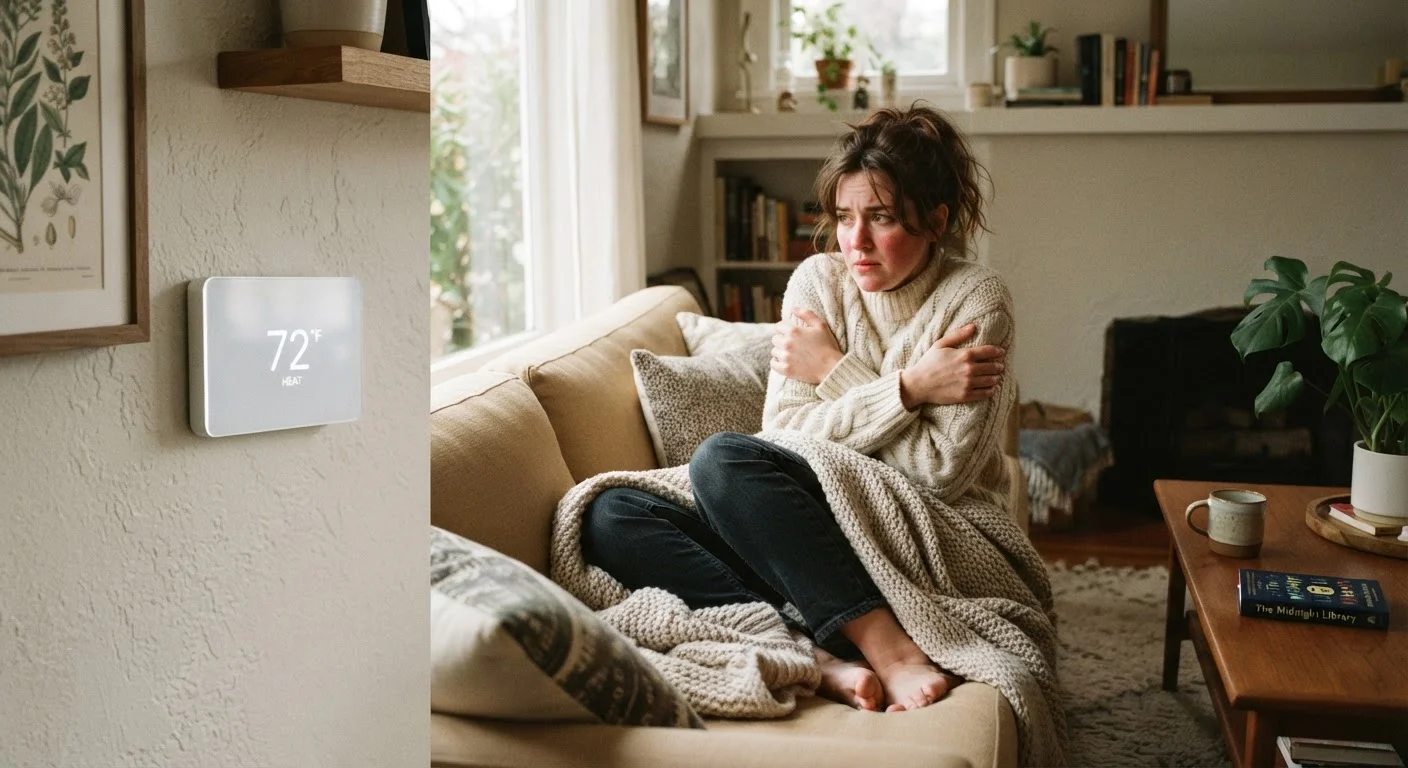
A thermostat is a switch, not a heater. It tells your heating or cooling system when to turn on and off based on the air temperature at one specific location in your home. Comfort, however, depends on many more factors — including humidity, airflow, insulation, and how heat is distributed throughout your living space. This is why a thermostat set to 70°F can feel perfectly warm in one room and chilly in another.
Thermostats measure ambient air temperature at the sensor location only. Radiant heat loss through walls, windows, and floors affects perceived temperature (thermal comfort) independently of what the thermostat reads.
What a Thermostat Actually Does
Most homeowners assume the thermostat is the brain of their heating and cooling system. In reality, it's closer to a simple on/off switch. The thermostat reads the air temperature at its sensor location and tells the heating or cooling system to run until that local temperature matches the set point — then it shuts off.
That's it. The thermostat has no control over how warm a distant bedroom gets, how fast heat moves through ductwork, or whether a drafty corner ever reaches the target temperature. It only measures one spot and responds to that single reading.
This is why you can have a perfectly functioning thermostat and still feel uncomfortable. The system is doing exactly what the thermostat asks — the problem lies elsewhere. Understanding this distinction is the first step to diagnosing real comfort problems in your home.
Your Thermostat Measures One Spot Only
Most residential thermostats have a single temperature sensor that reads the air immediately surrounding it. Multi-zone systems and smart thermostats with remote sensors can provide more nuanced readings across different areas of the home, but the fundamental limitation — that one reading drives the whole system — applies to most standard setups.
The Hidden Factors That Actually Drive Comfort
Thermal comfort — how warm or cool you actually feel — is shaped by at least four variables beyond air temperature:
- Relative humidity: Dry winter air makes the same temperature feel colder than humid air does. Forced-air heating systems in particular can strip moisture from indoor air, dropping relative humidity well below the comfortable range of 30–50%.
- Radiant heat loss: Cold walls, single-pane windows, and uninsulated floors constantly draw warmth away from your body even when the air temperature is adequate. You feel cold because surfaces around you are cold, not because the air is.
- Air movement and drafts: Moving air accelerates heat loss from skin. A subtle draft from a poorly sealed window or outlet can make a room feel several degrees colder than it is. See our guide to home weatherproofing to separate effective sealing strategies from common misconceptions.
- Heat distribution: Whether your home uses forced-air or radiant heating makes a big difference in how evenly warmth reaches every corner. Forced-air and radiant systems distribute heat very differently, and the type you have can directly explain uneven temperatures room to room.
25–30%
Heating energy lost through air leaks in typical homes
According to the U.S. Department of Energy, drafts and air infiltration account for a substantial share of heating and cooling energy loss in American homes.
30–50%
Recommended indoor relative humidity range in winter
The American Society of Heating, Refrigerating and Air-Conditioning Engineers (ASHRAE) identifies this humidity range as supporting both thermal comfort and indoor air quality.
Up to 15%
Energy wasted by leaky duct systems
The U.S. Environmental Protection Agency estimates that leaky ducts in forced-air systems can lose a significant portion of conditioned air before it reaches living spaces.
Why Thermostat Placement Matters More Than You'd Think
Where your thermostat sits on the wall has a direct impact on how your entire system performs. A thermostat located near a drafty front door will detect cooler air and run the heat more than necessary. One positioned in direct afternoon sunlight may read the air as warmer than it actually is and shut the system off too soon, leaving other rooms cold.
Ideal thermostat placement is on an interior wall, away from windows, exterior doors, direct sunlight, supply vents, and appliances that generate heat. If your thermostat is in a problematic spot, that alone can explain chronic comfort complaints throughout your home.
Smart or programmable thermostats can help by letting you schedule temperature changes around daily patterns, but they still inherit any problems caused by poor sensor placement.
Common Scenarios and What's Really Going On
Here are several familiar situations that confuse homeowners — and what's actually driving them:
Uneven temperatures and persistent cold spots often have identifiable, fixable causes. Before raising your thermostat setting — which can quietly drive up your energy bill — it's worth investigating the underlying issue. Our article on why energy bills spike in winter breaks down how these hidden inefficiencies translate directly into higher costs.
Test for Drafts Before Adjusting the Thermostat
Hold a lit incense stick or a thin piece of tissue paper near window frames, outlet covers, and baseboards on a cold day. Any movement in the smoke or paper indicates air infiltration. Sealing these leaks is often more effective — and more energy-efficient — than raising your thermostat setting.
What You Can Do About It
Improving comfort without simply cranking up the thermostat involves addressing the factors described above:
- Check and seal air leaks around windows, outlets, baseboards, and door frames using weatherstripping or caulk.
- Inspect your vents and registers — make sure none are blocked by furniture, rugs, or debris, and that they're open in rooms you use regularly.
- Consider a humidifier if your home's air feels particularly dry in winter. Raising indoor humidity to a comfortable range can make the air feel warmer without changing the thermostat.
- Evaluate thermostat placement and, if it's in a problematic location, consult a licensed HVAC technician about relocating the sensor.
- Have your ducts inspected if room-to-room temperature differences persist — leaky or unbalanced ductwork is a frequent culprit that a professional can assess and correct.
Hazardous work involving gas lines, electrical wiring, or structural modifications should always be handled by a licensed professional. Verify any permit requirements with your local building authority before making changes to your HVAC system.