

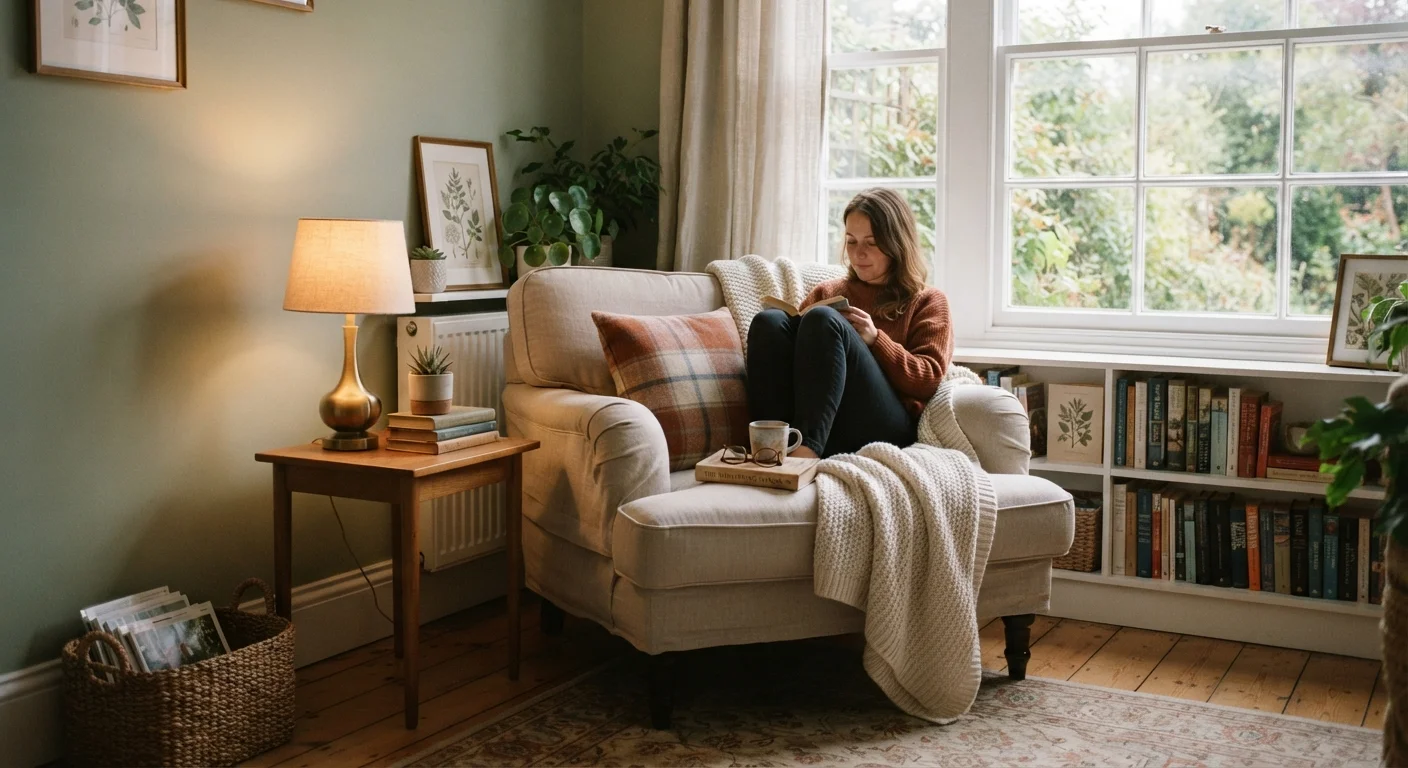
Key Takeaways
- Location and lighting matter more than furniture quality when setting up a reading nook.
- Acoustic comfort — reducing background noise — significantly improves reading focus.
- A dedicated, organized book storage system within arm's reach keeps the habit sustainable.
- Small spaces can make excellent reading corners when zoned intentionally.
- Personalization, not perfection, is what makes a reading corner get used consistently.
What you will need
Why Most Reading Corners Get Abandoned
The idea of a reading nook is appealing to most homeowners, but the reality often falls short. A chair gets moved to accommodate guests. The lamp doesn't give enough light. Books pile up in another room. Within weeks, the dedicated reading spot becomes overflow storage or simply goes unused.
The problem is usually not commitment — it's friction. Every small inconvenience between you and reading adds up: getting up to find a book, squinting under dim light, or sitting in a spot that's noisy or uncomfortable. A well-designed reading corner removes those obstacles rather than adding aesthetic ones.
Understanding how furniture placement affects the feel of a whole room also helps. The living room layout principles most people overlook are directly relevant here — your reading nook needs to fit within the room's flow, not fight it.
Don't Place Your Nook in a High-Traffic Zone
Reading requires a degree of mental absorption that's easily disrupted by movement and noise. A corner near a main hallway, kitchen entrance, or television will work against the habit no matter how comfortable the chair is. Even a partial visual barrier — like a bookshelf positioned at an angle — can meaningfully reduce distraction.
What You'll Need Before You Start
Setting up a reading corner doesn't require buying a full suite of new furniture. In most homes, the ingredients already exist — they just need to be gathered and arranged with intention. Review what you have before purchasing anything.
What you will need
Directed task lamp
Provides focused, adjustable light for reading without causing glare.
Small side table or surface
Holds a drink, bookmark, reading glasses, or a lamp within easy reach.
Rug or floor mat
Anchors the reading zone visually and adds acoustic softness to reduce ambient noise.
Bookshelf or magazine holder
Keeps current reads organized and immediately accessible from the reading seat.
Curtain or room divider panel
Creates a subtle visual boundary that signals the space as a quiet zone.
Start With What You Already Own
Before buying anything new, audit your existing furniture. An underused armchair, a spare side table, and a clip-on lamp may be all you need to get started. Refining the space over time is far more practical than trying to build a perfect setup before you've used it once.
Setting Up Your Reading Nook Step by Step
Follow these steps in order. Each one builds on the last, and skipping early steps — especially location and lighting — tends to undermine everything that follows.
Choose the right location
Walk through your home and identify corners or wall segments away from the television, kitchen activity, and main foot traffic paths. Natural light is a bonus during daytime reading, but avoid direct sunlight on your screen or page — it creates glare and heat. A spot with a window to one side (rather than directly in front or behind) tends to work best.
If your space is compact, review strategies in our guide on making tight living rooms work — even a 4×5 foot footprint is enough for a functional reading nook.
Set up your seating and surface
Your primary seat should support an upright but relaxed posture — fully reclined positions tend to encourage sleep over reading. If using an armchair, ensure your feet reach the floor comfortably or use a footrest. A firm cushion placed in a window seat or on a bench can work equally well.
Position a small side table or surface within reach of your dominant hand. This keeps drinks, glasses, and bookmarks from becoming a reason to get up and break focus.
Get the lighting right
Place a directed task lamp so light falls over your shoulder or from the side — not from directly behind or in front of you. The bulb brightness should feel comfortable without being harsh. For most adults, 450–800 lumens from a task lamp is a practical working range, though comfort varies by individual.
Organize your books within arm's reach
A reading habit that requires leaving the chair to retrieve a book is a habit that erodes quickly. Keep a small shelf, stack, or magazine holder within arm's reach of your seat. Limit what's stored there to your active reading queue — books you plan to read within the next few months — rather than your entire collection.
This close-at-hand organization is one of the same principles that make kitchen storage effective. See how spatial logic applies across the home in our smart storage strategies guide.
Zone the space visually
Even in an open-plan living room, you can signal to yourself — and others — that the reading corner is a distinct zone. A rug under the chair, a small floor lamp creating a light boundary, or a low bookshelf placed at an angle all serve this function without adding walls. Our article on zoning a room without walls covers this in detail.
Reduce friction and personalize
Add one or two items that make the space distinctly yours: a throw blanket, a small plant, a candle, or a dedicated pair of reading glasses if you use them. These aren't decorative extras — they signal that the space is ready and waiting, which lowers the mental barrier to actually using it. Remove anything that doesn't serve reading: chargers, remote controls, or work materials have a way of colonizing comfortable chairs.
Lighting Setup Can Affect Eye Comfort
Poor or mismatched lighting is one of the most common reasons people abandon a reading nook. Avoid relying solely on overhead ambient light, which often creates glare on pages. A directed task lamp positioned to the side and slightly above eye level reduces strain. If you read in the evening, warm-toned bulbs (around 2700K–3000K) are generally easier on the eyes than cool white light.
Keeping the Habit Going
A reading corner's value is measured by how often it gets used, not how good it looks in a photo. The setup you've built should feel lived-in and slightly imperfect — because that's what gets used. If you find yourself avoiding the space, ask one diagnostic question: what's the smallest inconvenience that stops you from sitting down? That friction point is almost always fixable.
If your reading practice is part of a broader effort to build healthier daily routines, you may find useful overlap in our guide to setting up a home environment that supports daily wellness. The same spatial principles — reducing friction, creating cues, organizing within reach — apply across many habits.
Revisit your nook setup every few months. Adjust the lighting as seasons change. Rotate your book queue. Small recalibrations keep the space working for you rather than becoming invisible background furniture.