

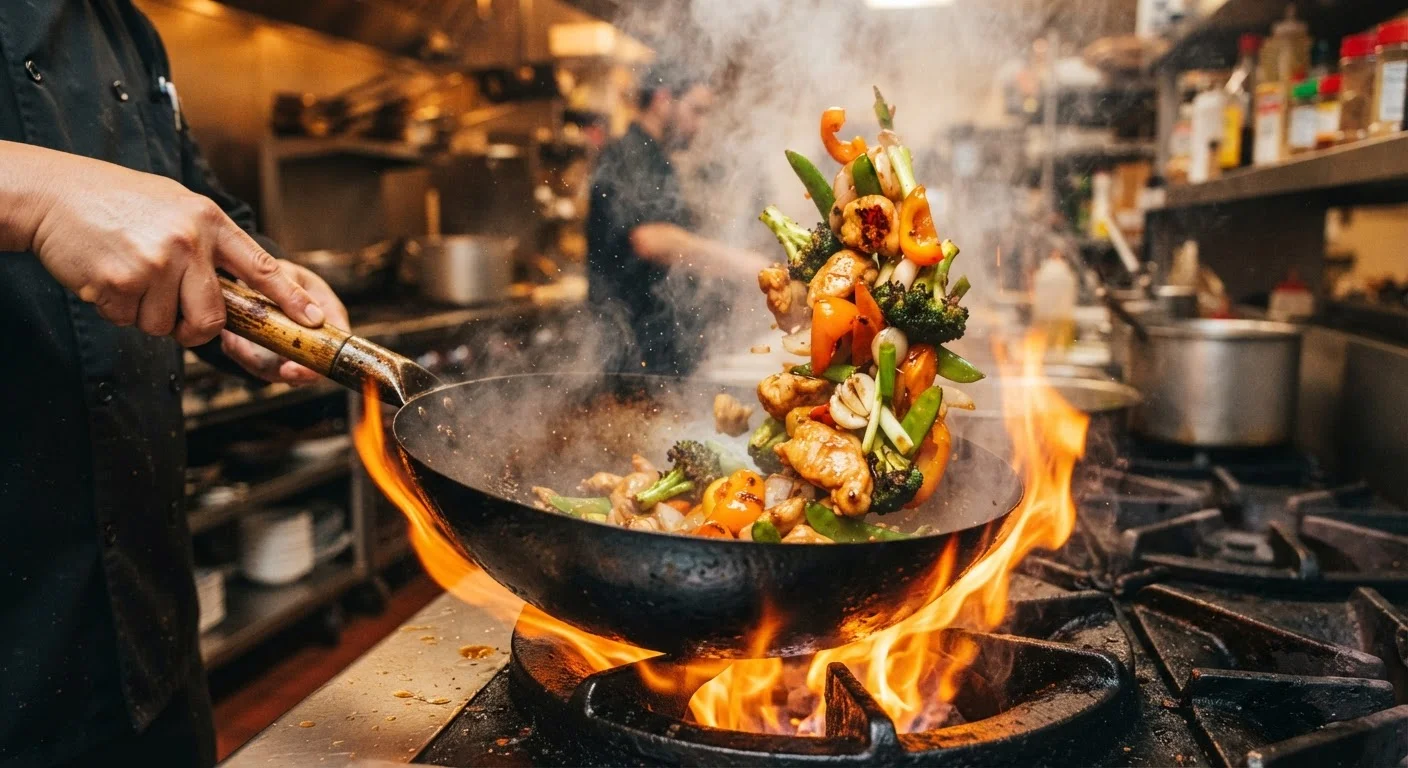
Key Takeaways
- Overloading the pan with too many ingredients is the single most common cause of soggy stir-fry.
- Wet or undried vegetables release steam that prevents proper browning at high heat.
- A ripping-hot pan before any ingredients go in is non-negotiable for stir-fry success.
- Sauce added too early or in excessive amounts will stew ingredients instead of coating them.
- Cooking in smaller batches takes a few extra minutes but produces dramatically better texture.
What's Actually Happening in a Soggy Stir-Fry
Stir-frying is a dry-heat technique — it relies on intense, direct heat to quickly sear food and create those slightly charred, tender-crisp results. When that process breaks down, you end up with steamed, waterlogged vegetables and rubbery protein instead. Understanding why moisture is the enemy here makes the fixes much easier to apply. See our guide to stir-frying vs. other pan techniques for a deeper look at what sets this method apart.
The short version: when food releases moisture faster than your pan can evaporate it, the temperature drops and the food braises in its own liquid. Avoiding that is the whole game.
Crowding the pan with too many ingredients at once.
Why it happens: Home cooks want to save time and get everything done in a single batch, especially on busy weeknights.
Adding vegetables that haven't been fully dried after washing.
Why it happens: Recipes often say to 'wash and cut' vegetables without emphasizing that surface moisture needs to go before heat is applied.
Starting with a pan that isn't hot enough.
Why it happens: Cooks are eager to get dinner going and don't allow enough preheating time, or they're uncertain what 'hot enough' looks like.
Adding sauce too early in the cooking process.
Why it happens: It feels intuitive to add sauce when the ingredients are partway through cooking so the flavors meld, but liquid added too soon drops the temperature and creates steam.
Using too much sauce relative to the amount of food.
Why it happens: More sauce often seems like more flavor, and measuring precisely feels like an extra step when you're tired and in a rush.
Getting Your Setup Right Before You Cook
Most stir-fry failures are decided before a single ingredient hits the pan. Prep work — drying your vegetables, cutting protein into uniform pieces, and organizing ingredients by cook time — determines whether the actual cooking goes smoothly. Wet broccoli florets pulled straight from a rinse are practically guaranteed to drop your pan temperature and release puddles of water.
Don't Use a Small Saucepan as a Substitute
A wok or wide, heavy skillet with sloped sides is important for stir-frying because surface area determines how quickly moisture evaporates. A small or deep saucepan traps steam, making soggy results almost unavoidable no matter how good your technique is. If you don't have a wok, a 12-inch stainless steel or cast iron skillet is the best alternative.
Sauce timing also belongs in the prep conversation. Mix your sauce before you start cooking and measure it carefully — excess liquid is one of the most overlooked sources of sogginess. For more on keeping sauces controlled and cohesive, see where home cooks lose control of their sauces.
If weeknight dinner prep in general feels rushed or chaotic, the real fix is often upstream — planning gaps are usually the culprit, not cooking skill.