

Key Takeaways
- Prolonged sitting is associated with increased health risks, but short movement breaks can help offset those effects.
- You don't need a gym, equipment, or long blocks of free time to add meaningful movement to your day.
- Habit-stacking — pairing movement with existing routines — makes consistency far easier to maintain.
- Micro-movements at your desk, such as calf raises and seated stretches, are genuinely effective starting points.
- Setting environmental cues, like reminders or a clear floor space, lowers the friction to move more.
What you will need
Why Desk-Based Movement Matters
Research consistently links prolonged sitting to a range of health concerns — reduced circulation, muscle tightening, metabolic slowdown, and increased fatigue. The good news is that the evidence also shows frequent, short movement breaks can meaningfully offset many of those effects, even when total daily exercise time stays the same.
This isn't about fitting in a full workout during your lunch break. It's about understanding that movement is cumulative. Ten two-minute breaks add up to 20 minutes of activity across the day — time that would otherwise be lost to unbroken sitting. For readers looking to build a sustainable wellness environment at home, see our guide on setting up a home space that supports daily wellness for complementary ideas on reducing environmental friction.
This Is General Wellness Information
The movement suggestions in this article are general educational information, not medical advice. If you have a musculoskeletal condition, cardiovascular concern, or any health issue that may be affected by physical activity, consult a qualified healthcare professional before making changes to your routine.
If you're looking to build a broader daily framework, small habits and measurable shifts offers a practical approach that covers movement alongside sleep, nutrition, and stress management.
What You'll Need Before You Start
The barrier to desk-friendly movement is intentionally low. You don't need equipment, a gym membership, or an open hour in your schedule. Here's what helps:
What you will need
Interval timer or phone alarm
Set recurring reminders every 45–60 minutes as a cue to stand, stretch, or move briefly.
Supportive footwear
Comfortable, flat-soled shoes or bare feet reduce strain during standing and floor-based stretches.
Clear floor space (approximately 2×4 feet)
A small cleared area near your desk allows for stretches, standing exercises, and brief walks without rearranging the room.
Water bottle
Staying hydrated naturally creates movement opportunities — regular refill trips add low-effort steps throughout the day.
Once these basics are in place, follow the steps below to build the habit systematically rather than relying on motivation alone.
The Step-by-Step Routine
Work through the following steps in order. Each one builds on the last — the reminder system creates the opportunity, the stretch sequence fills it, and the end-of-day routine locks in long-term consistency.
Set a movement reminder every 45–60 minutes
Prolonged unbroken sitting is the core problem — not the sitting itself. The goal is to interrupt long static periods regularly. Set a repeating alarm or use a focus-timer app to prompt you to stand or move every 45 to 60 minutes. Keep the reminder label simple and specific: "Stand and stretch for 2 minutes" is more actionable than a vague nudge.
Do a 2-minute standing stretch at each break
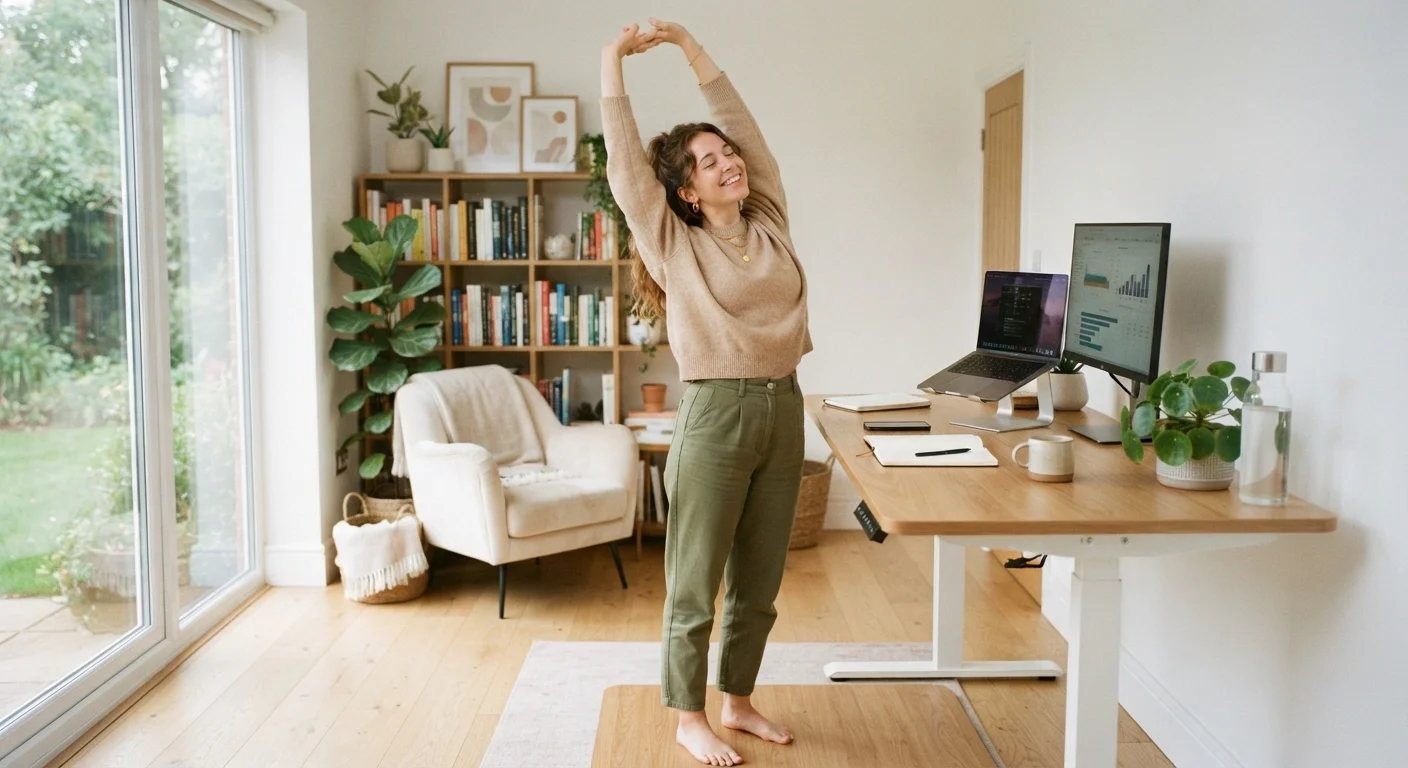
When the reminder fires, stand up and run through a brief sequence: roll your shoulders backward three times, gently tilt your head side to side, place both hands on your lower back and lean into a gentle backward arch, then do 10 slow calf raises. This sequence takes under two minutes and addresses the areas most affected by desk posture — neck, upper back, hip flexors, and calves.
Add seated micro-movements between breaks
You don't have to wait for a reminder to move. While seated, periodically do ankle circles, squeeze and release your glutes, or engage your core by sitting upright without back-rest support for 30–60 seconds. These micro-movements maintain circulation and reduce the muscular fatigue that builds up from sustained static posture.
Take walking versions of stationary tasks
Identify tasks in your day that don't require you to be at a screen — phone calls, audio-only meetings, brainstorming, or listening to a recording. Walk slowly around your home or stand during all of these. Even a 10-minute phone call taken while walking adds meaningful cumulative movement over a full week.
Build a short end-of-day movement sequence
At the end of your workday, spend 5–10 minutes on a light cool-down sequence that reverses the effects of sitting: a standing hip-flexor stretch (lunge position, held 20–30 seconds each side), a doorframe chest opener (hands on frame, lean gently forward), and a seated hamstring stretch. This signals a clear transition out of work mode and helps prevent the stiffness that accumulates over the week.
Habit-Stack for Better Consistency
Link your movement breaks to something you already do — a coffee refill, the end of a video call, or a bathroom trip. Attaching a new behaviour to an existing one dramatically reduces the effort needed to remember it. Over time, the movement becomes automatic rather than a chore.
To stay accountable week to week, the weekly wellness reset self-audit is a structured tool for checking in on your movement habits before they drift.
Common Pitfalls and How to Avoid Them
The most frequent obstacle isn't motivation — it's forgetting. Without a reliable external cue (your alarm or habit-stack anchor), movement breaks are the first thing displaced by task pressure. Keep the reminder system non-negotiable for the first two weeks, even when you feel too busy. The sessions are short enough that skipping them rarely saves meaningful time.
A second common issue is overcorrecting. Attempting to fill every break with intense exercise tends to create resistance and burnout quickly. The value here is consistency and low friction. Two minutes of gentle movement every hour, sustained for months, does far more than an ambitious routine that lasts a week.
Don't Push Through Pain
Mild muscle tension from prolonged sitting is common, but sharp, persistent, or joint pain during any movement is a signal to stop. Movement breaks should feel relieving, not painful. If discomfort persists, speak with a healthcare provider rather than attempting to work through it.
If your home workspace feels cramped, small adjustments to your layout can make movement breaks genuinely easier. Our article on making the most of a small living space has practical ideas that apply equally well to a home office corner.
This article is for general informational and educational purposes only and does not constitute medical advice. Always consult a qualified healthcare professional before making changes to your physical activity routine, particularly if you have any existing health conditions.