

Key Takeaways
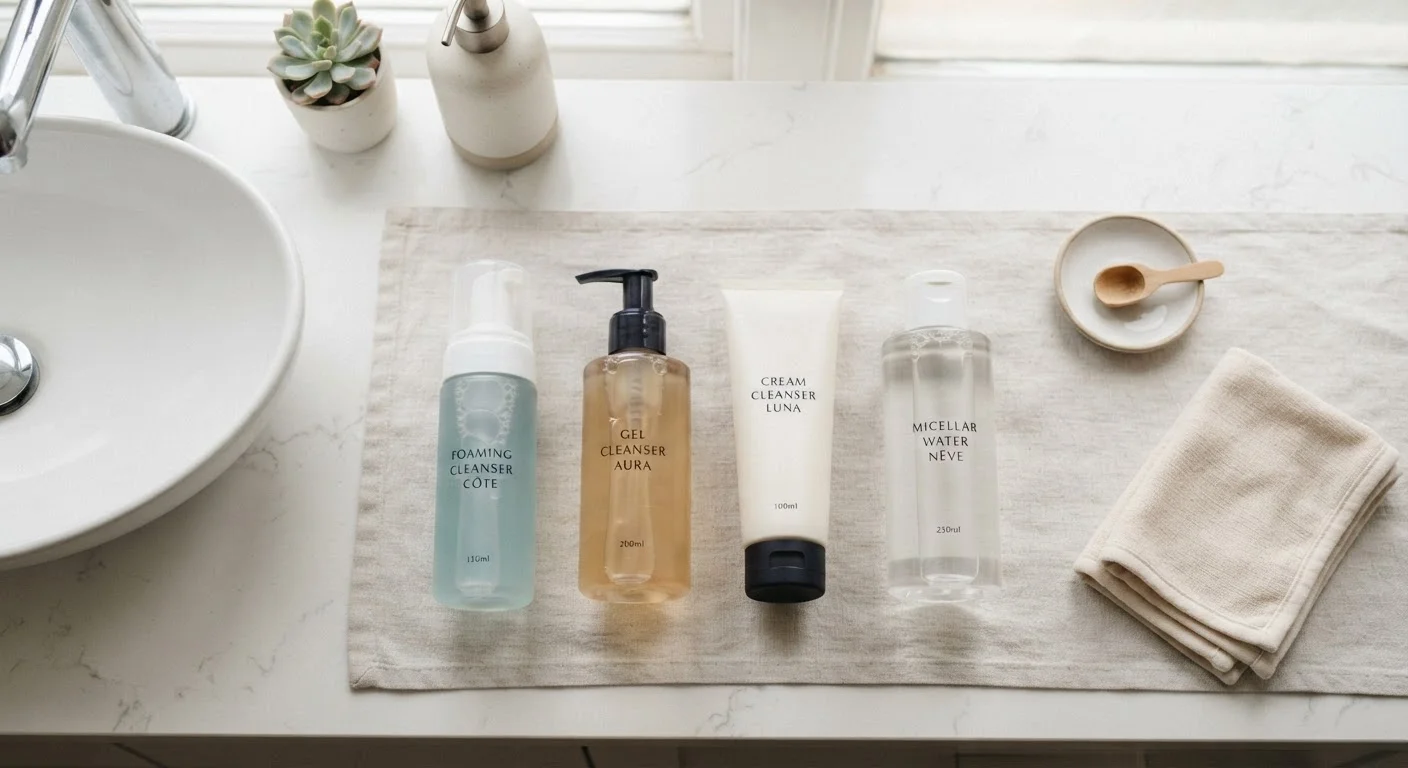
- Foaming cleansers remove excess oil effectively but can over-strip dry or sensitive skin.
- Gel cleansers balance thorough cleansing with a gentler effect, suiting oily to combination skin.
- Cream cleansers preserve the skin's moisture barrier, making them ideal for dry and sensitive types.
- Micellar water lifts makeup and light grime without rinsing, best as a first cleanse or travel option.
- Your skin type — not trend or packaging — should always guide your cleanser choice.
Our Verdict
No single cleanser format is universally superior — each is engineered for different skin priorities. Foaming and gel formulas favor oilier complexions, cream cleansers support dry and sensitive skin, and micellar water fills a practical niche as a gentle, no-rinse option. Matching the format to your skin type is the most reliable way to cleanse effectively without causing irritation or imbalance.
| Best for | Recommended |
|---|---|
| Oily or acne-prone skin needing thorough oil removal | Foaming Cleanser |
| Combination or mildly oily skin wanting balance | Gel Cleanser |
| Dry, sensitive, or mature skin requiring hydration preservation | Cream Cleanser |
| Quick makeup removal, travel, or sensitive skin with minimal buildup | Micellar Water |
Why Cleanser Format Actually Matters
A cleanser is the foundation of any skincare routine — it prepares the skin to absorb everything that follows. Yet many people select one based on scent, packaging, or price without considering how its formula interacts with their skin type. The result is often a routine that feels fine on the surface but quietly undermines skin health over time: a stripping formula leaving dry skin tighter, or an overly rich cleanser contributing to congestion on oily skin.
Understanding the four primary formats — foaming, gel, cream, and micellar water — gives you the knowledge to make a purposeful choice. If you're not yet sure of your skin type, the skin type guide is a useful starting point before comparing options.
| Foaming | Gel | Cream | Micellar Water | |
|---|---|---|---|---|
| Best skin type | Oily, normal | Oily, combination | Dry, sensitive, mature | All types, esp. sensitive |
| Cleansing strength | High | Moderate–high | Gentle | Light |
| Requires rinsing | Yes | Yes | Yes | No |
| Barrier impact | Can strip barrier | Minimal disruption | Supports barrier | Very low disruption |
| Removes makeup/SPF | Yes | Yes | Mostly | Light makeup only |
| Good for double cleansing | Second cleanse | Second cleanse | Second cleanse | First cleanse |
| Travel/convenience | Moderate | Moderate | Moderate | High |
Foaming Cleansers: Deep Clean with Trade-Offs
Foaming cleansers use surfactants — cleansing agents that attract both water and oil — to create lather that lifts sebum, sunscreen, and environmental debris from the skin surface. They tend to leave skin feeling squeaky-clean, which many people associate with thorough cleansing.
That sensation, however, can signal disruption of the skin's natural lipid barrier. Dermatological guidance generally cautions that high-foaming formulas with strong surfactants (like sodium lauryl sulfate) can elevate skin pH and reduce moisture retention, particularly in drier skin types. Foaming cleansers are most appropriate for normal to oily skin, where managing excess sebum is genuinely beneficial. Those with dry or sensitive skin are generally advised to approach high-foam options with caution.
Check the Surfactant, Not Just the Foam
A cleanser's lather level doesn't reliably indicate its gentleness. Look at the surfactant ingredients listed: sodium lauryl sulfate (SLS) is among the more irritating, while glucosides, cocamidopropyl betaine, and sodium lauroyl sarcosinate tend to be milder. If your current cleanser leaves skin tight or red, the surfactant type is often worth investigating first.
Gel Cleansers: The Middle-Ground Option
Gel cleansers share surfactant-based chemistry with foaming formulas but typically produce little to no lather and tend to use milder cleansing agents. This makes them effective at removing oil and impurities while being less likely to leave skin feeling tight or depleted.
They suit oily to combination skin types well and are often a sensible first choice for those new to building a skincare routine. Because they rinse cleanly and don't leave residue, they work well as a base step before applying serums or moisturizers. Once you've established a cleanser, building a morning skincare routine can help you sequence what comes next.
Cream Cleansers: Moisture-First Cleansing
Cream cleansers use a lotion-like base that typically contains emollients or humectants alongside gentle surfactants. Rather than aggressively stripping oil, they lift impurities while leaving a light conditioning film on the skin. This makes them well-suited to dry, sensitive, or mature skin that benefits from barrier-supportive ingredients during the cleansing step itself.
They are not the right pick for those struggling with congestion or heavy product buildup — the richer base may not fully remove heavier formulations. For dry skin types pairing a cream cleanser with hydrating follow-up steps, humectants like hyaluronic acid or glycerin can further support skin comfort.
Micellar Water: The No-Rinse Cleanser
Micellar water contains tiny clusters of surfactant molecules called micelles suspended in soft water. When applied to the skin with a cotton pad, micelles attract and trap oil-based impurities, makeup, and light grime without requiring rinsing. The process is gentle and involves no rubbing, making it a practical option for sensitive or reactive skin.
Its limitation is cleansing depth. Micellar water is generally not sufficient as a standalone cleanser for those wearing heavy or waterproof makeup, sunscreen, or who have oily skin — it works best as a first cleanse in a double-cleansing routine or as a convenient option for travel and makeup removal. For a broader look at how cleanser format choices parallel product choices in other areas of your routine, see auditing your skincare routine.
This article is for general informational purposes only and does not constitute medical or dermatological advice. If you have a skin condition or concerns, consult a qualified healthcare professional or dermatologist.