

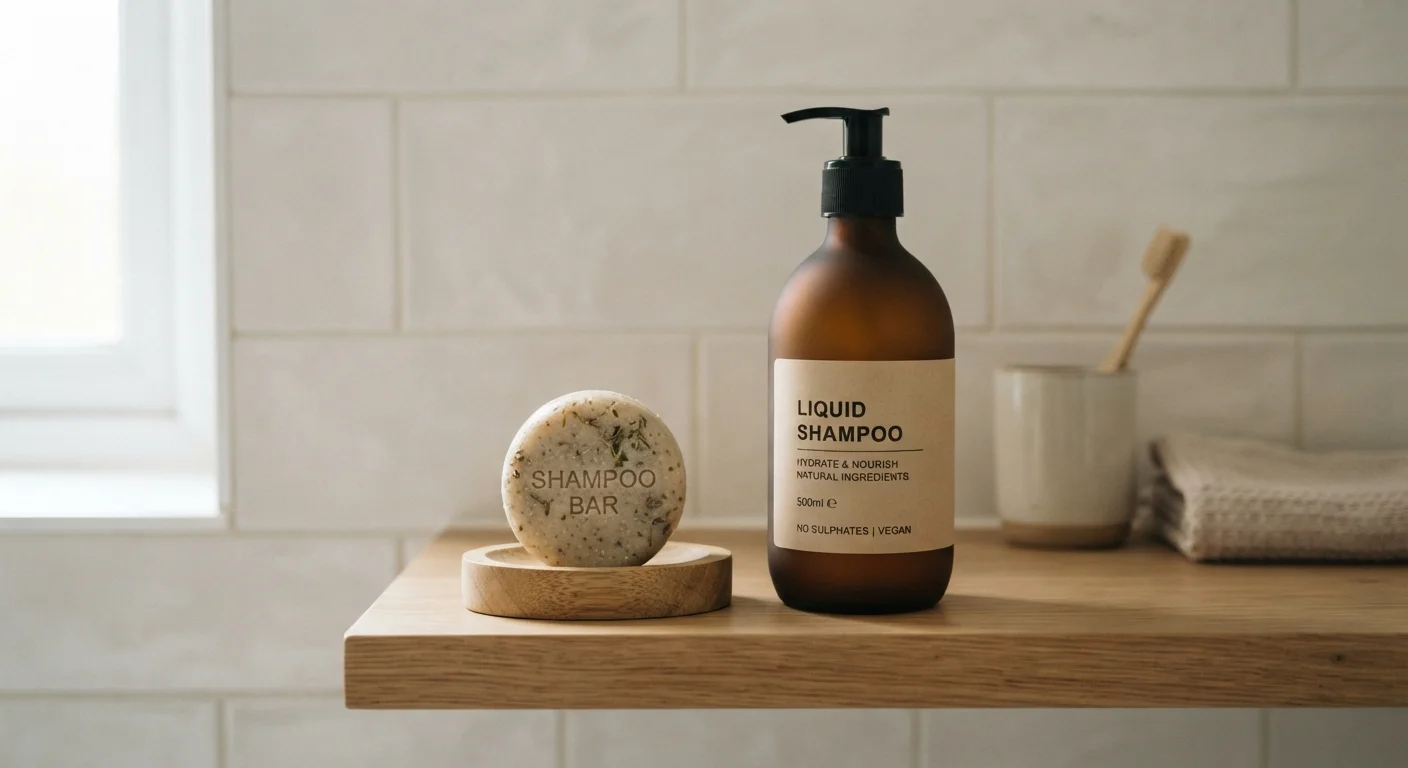
Key Takeaways
- Shampoo bars are more concentrated than liquid shampoo and produce less plastic waste.
- Liquid shampoos generally offer more formula variety, especially for dry or chemically treated hair.
- Hard water can make shampoo bars less effective, leaving residue on hair and scalp.
- An adjustment period of one to two weeks is common when switching to a shampoo bar.
- Hair porosity plays a significant role in which format works best for your strands.
- Neither format is universally superior — the best choice depends on your hair type and routine.
Option A
Shampoo Bars
The compact, low-waste solid alternative.
Best for: Travelers, eco-conscious households, and those with oily or low-porosity hair who want a concentrated, packaging-free option.
Option B
Liquid Shampoo
The familiar, widely accessible standard.
Best for: Anyone with dry, chemically treated, or high-porosity hair who benefits from moisturizing formulas and straightforward application.
If you travel frequently or want to cut down on plastic
Shampoo Bars
Shampoo bars are TSA-friendly, lightweight, and generate no plastic bottle waste, making them a practical choice for frequent travelers and eco-minded households.
If your hair is dry, color-treated, or chemically processed
Liquid Shampoo
Liquid formulas more readily accommodate moisturizing and bond-protective ingredients that dry or chemically treated hair typically needs.
If you live in a hard-water area
Liquid Shampoo
Hard water minerals react with the soap-based surfactants in many shampoo bars, causing buildup and dullness that is harder to avoid with liquid formulas.
If you have oily or fine hair and prefer a clean, lightweight rinse
Shampoo Bars
The concentrated cleansing action of many shampoo bars suits oilier scalps well, and the lighter residue works with fine strands rather than weighing them down.
What Sets These Two Formats Apart
At their core, shampoo bars and liquid shampoos do the same job: they remove oil, product buildup, and environmental debris from the scalp and hair shaft. The difference lies in their formulation and water content. Liquid shampoos are typically 70–80% water by volume, while shampoo bars are either water-free or contain very little moisture — meaning the cleansing agents are far more concentrated in solid form.
Most shampoo bars fall into one of two categories. Syndet bars (short for synthetic detergent) use the same mild surfactants found in liquid shampoos, such as sodium cocoyl isethionate, pressed into a solid form. Soap-based bars are made through a saponification process using oils and lye — similar to traditional bar soap — and tend to have a higher pH, which can affect hair differently depending on your hair type. Understanding which type of bar you're using matters, because their behavior on the scalp and hair differs considerably.
| Criterion | Shampoo Bars | Liquid Shampoo |
|---|---|---|
| Water content | Minimal or none | 70–80% water by volume |
| Formula variety | Limited; syndet or soap-based | Wide range for all hair types |
| Hard water compatibility | Problematic; can cause buildup | Generally unaffected |
| Packaging waste | Minimal (paper/cardboard) | Typically plastic bottle |
| Travel friendliness | TSA-compliant; no liquid rules | Limited to 3.4 oz carry-on |
| Ease of use | Slight learning curve | Straightforward application |
| Adjustment period | Common (1–2 weeks) | Typically none |
| Longevity per unit | Often longer per wash | Varies by bottle size |
For a broader look at how surfactant types behave across different cleansing products, see our guide to cleanser formats.
Performance, Hair Compatibility, and the Adjustment Period
One of the most frequently discussed hurdles with shampoo bars is the so-called transition period — a phase of one to two weeks during which hair may feel waxy, heavy, or unusually oily as the scalp adapts to the new cleansing method. This is more pronounced with soap-based bars and in areas with hard water, where mineral ions bond with the bar's fatty acids to form insoluble residue on the hair shaft.
Your hair porosity — the degree to which your hair cuticles open and close to absorb moisture — also shapes how each format performs. Low-porosity hair (tightly closed cuticles) often responds well to the lightweight cleansing of syndet bars. High-porosity hair (damaged or more open cuticles) generally benefits from the moisturizing agents more easily delivered through liquid formulas.
Liquid shampoo has a broader formulation range: clarifying versions for buildup removal, moisturizing blends for dry or curly hair, and color-safe options for chemically treated strands. This variety makes it easier to match a product to your specific needs without an adjustment period.
~80%
Water content in typical liquid shampoo
Most liquid shampoos are predominantly water, which means you're largely paying for the delivery medium alongside the active ingredients.
1–2 weeks
Typical shampoo bar transition period
Hair care educators and dermatologists commonly note an adjustment window when switching from liquid to bar format, particularly with soap-based bars.
550+
Single-use plastic bottles avoided per bar (estimated)
Some environmental advocates estimate one shampoo bar can replace multiple bottles over its lifetime, though actual figures vary by bar size and individual use habits.
If you're evaluating how often to use either format, our article on washing frequency and scalp oil production explains what the evidence actually says about wash-day habits.
Convenience, Cost, and Environmental Considerations
From a practical standpoint, liquid shampoo is simpler to use: squeeze, lather, rinse. Shampoo bars require a slightly different technique — rubbing the bar directly on the scalp or working up a lather between your palms first — and need to dry out between uses to avoid turning mushy. A well-draining soap dish or a dry shelf extends the bar's usable life significantly.
On cost per wash, shampoo bars generally last longer than a same-sized equivalent in liquid form because of their concentration. However, price comparisons depend heavily on the specific products and where they're purchased, so it's worth doing your own math based on what's available to you.
Environmentally, solid shampoo bars typically require less packaging — often just a paper wrapper or cardboard box — compared to plastic shampoo bottles. That said, the full environmental picture includes manufacturing, ingredient sourcing, and shipping, which vary across products. The packaging reduction is the clearest and most consistent benefit.
A Note on Hard Water and Shampoo Bars
If your tap water is hard — meaning it contains elevated levels of calcium and magnesium minerals — soap-based shampoo bars may leave a noticeable film on your hair. This happens because the minerals react with the bar's fatty acids. If you live in a hard-water area and want to try a bar, look for syndet-style formulations, which are less reactive with minerals. A diluted apple cider vinegar rinse (always patch-test first) is sometimes used to help clear residue, but speak with a dermatologist if scalp irritation occurs.
For related reading on making format-based decisions for body care, see body wash vs. bar soap, which applies similar logic to skin cleansing.
This article is for general informational purposes only and does not constitute medical or dermatological advice. If you have a scalp condition or specific hair health concerns, consult a qualified healthcare or dermatology professional.