

Why Sign Colour Is a Language of Its Own
Road signs in the United States follow a colour-coding system established by the Federal Highway Administration's MUTCD. Each colour is assigned a specific category of meaning — so even before you read the words on a sign, its colour is already communicating something. Understanding this system makes you a faster, more confident reader of the road.
This matters most in unfamiliar areas, bad weather, or low-light conditions, where you may only catch a sign's colour before you can read its text. See our complete road safety reference for broader context on how these rules fit together.
The Colour Guide: What Each Hue Means
Here's a breakdown of every standard sign colour used on US public roads:
- Red — Prohibition or a required stop. Stop signs, yield signs, and Do Not Enter signs all use red. When you see red, you're being told to stop or that a specific action is forbidden.
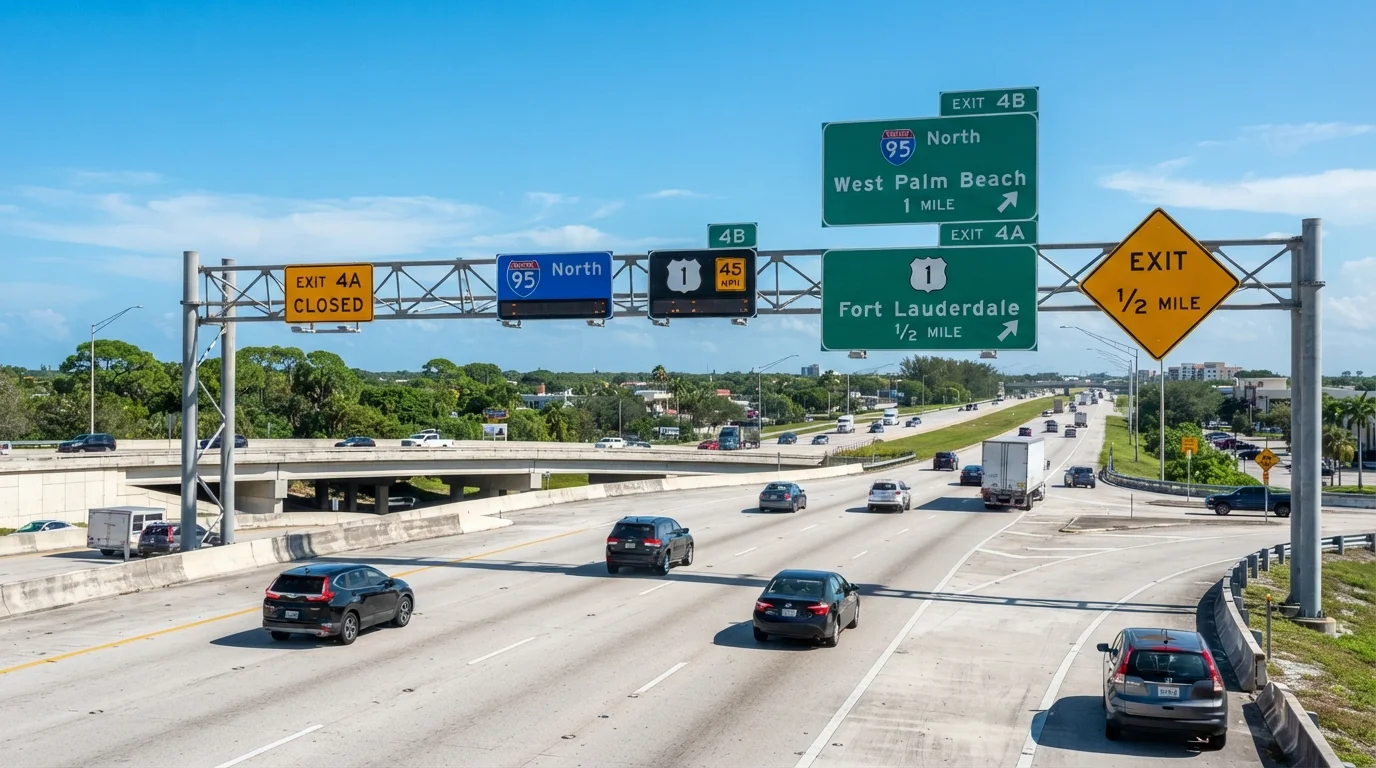
- Yellow — General warning. Yellow signs alert you to conditions ahead that require caution: sharp curves, pedestrian crossings, school zones, or road merges. They don't tell you to stop — they tell you to prepare.
- Orange — Work zone or temporary traffic control. Orange signs appear in construction and maintenance areas. Fines in these zones are typically higher, and conditions can change quickly.
- Green — Guide and directional information. Highway exit signs, mileage markers, and street name signs are green. Green means go — here's where you are, and here's where you're headed.
- Blue — Motorist services. Hospitals, gas stations, food, lodging, and rest areas are flagged in blue. If you need something, look for blue.
- Brown — Recreational and cultural interest. Parks, historical sites, scenic byways, and campgrounds use brown. It's essentially the tourism colour.
- White — Regulatory information on a white background. Speed limits, lane-use rules, and parking restrictions appear in black text on white. These are rules you must follow — not suggestions.
- Fluorescent Yellow-Green — High-visibility warning. A distinct shade reserved specifically for pedestrian, bicycle, and school zone signs. It's more eye-catching than standard yellow and designed to stand out in varied lighting.
MUTCD
The Manual on Uniform Traffic Control Devices, published by the Federal Highway Administration. It sets national standards for all road signs, signals, and pavement markings used on public roads in the US.
Regulatory sign
A sign that communicates a rule drivers must follow by law, such as speed limits or no-turn restrictions. Typically displayed in black on white.
Warning sign
A sign that alerts drivers to upcoming hazards or changing road conditions. Standard warning signs use a yellow background with a diamond shape.
Fluorescent yellow-green
A specific high-visibility colour reserved for pedestrian, bicycle, and school crossing signs. It is distinguishable from standard yellow and was added to the MUTCD to improve sign recognition in varied light conditions.
Temporary traffic control
Signs, signals, and markings used to guide drivers through construction or maintenance zones. Orange is the designated colour for this category.
Putting It Into Practice
Recognizing sign colours quickly is a skill that improves with deliberate attention. A few habits that help:
- Scan for colour first. On a busy road, your eyes will register a sign's colour before its shape or text. Let colour give you the first piece of information.
- Pair colour with shape. The MUTCD also standardizes sign shapes — octagons for stop, triangles for yield, diamonds for warnings. Colour and shape together make signs readable even when partially obscured.
- Notice orange early. Construction zone signs often appear well before the work area itself. Give yourself extra following distance when you spot orange.
Night driving adds complexity — colour perception decreases in low light. Reflective coatings on signs help, but slowing down gives you more time to process what you're seeing. Our night driving safety guide covers this in more detail.
If you encounter roundabouts — which use a mix of warning, regulatory, and guide signage — our roundabout guide walks through what each sign there is telling you. And if you're also the kind of person who reads the codes on everyday objects, you might find our look at plastic resin codes a similarly satisfying decode.
State Variations Are Rare But Exist
The MUTCD applies to all roads open to public travel across the US, and states are required to adopt standards that are substantially compliant. However, some states have approved minor variations in sign design or supplemental signs unique to local needs. If you notice an unfamiliar sign while travelling, the colour and shape should still give you a reliable starting point for interpreting its meaning.