

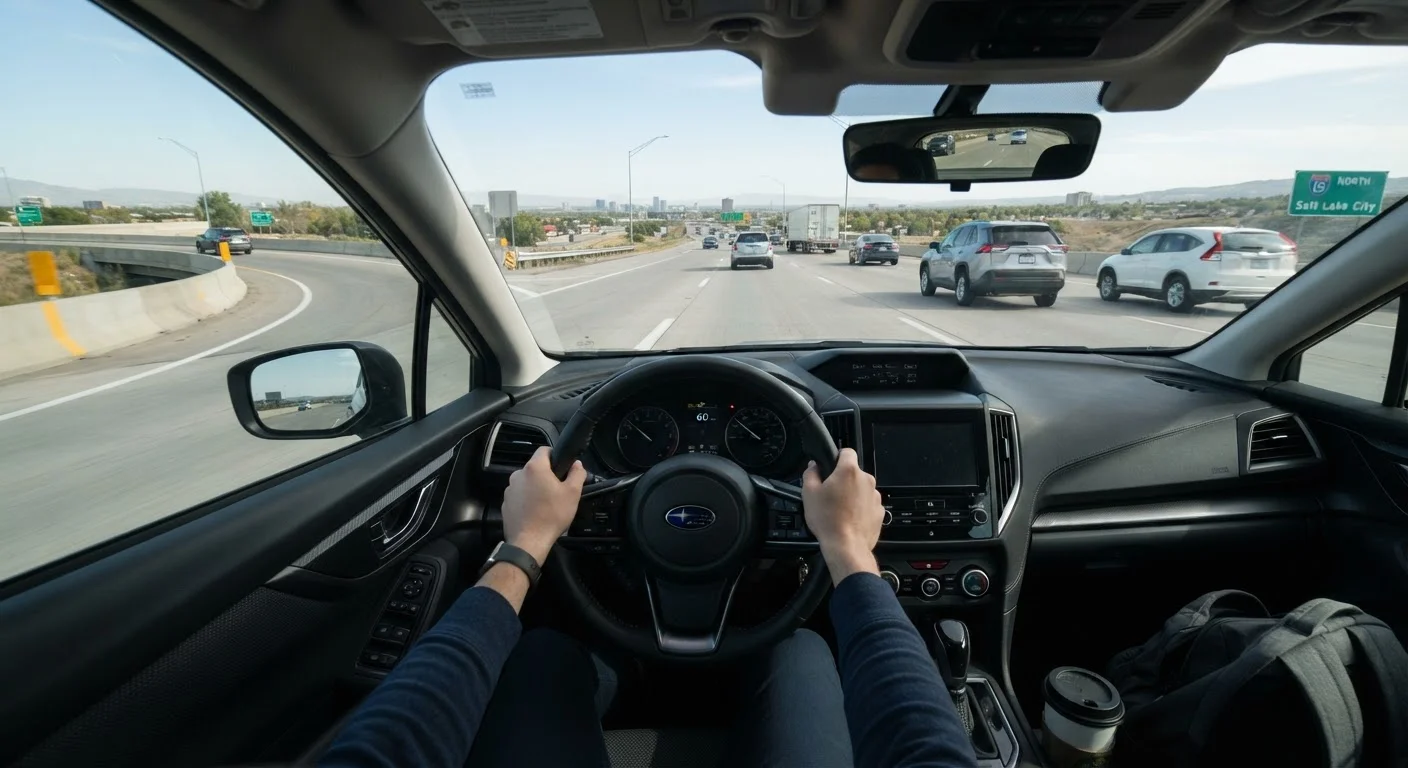
Key Takeaways
- Highway merging requires matching traffic speed before the on-ramp ends, not after.
- Scan the highway early and identify your target gap while you still have ramp length to work with.
- Hesitation and last-second braking on ramps create hazards for drivers behind you.
- Highway drivers are expected to assist merging traffic when safe, but you cannot rely on it.
- Mirrors alone are insufficient — a quick shoulder check is essential before committing.
What you will need
Why Highway Merging Goes Wrong
Most drivers think of merging as a simple lane change. In reality, it combines several skills at once: speed management, gap selection, signaling, and spatial awareness — all in a compressed window of time. When any one of those elements breaks down, the result is braking, swerving, or worse.
The most common errors aren't dramatic. They're small timing mistakes that ripple backward through traffic. Entering the highway too slowly forces following drivers to brake suddenly. Merging without matching speed creates a speed differential that cuts your reaction time — and everyone else's — to almost nothing. Understanding the mechanics of a merge helps you avoid these patterns before they become habits. For a broader look at how speed gaps affect safety, see our article on safe following distance.
What to Do When No Gap Appears
If the on-ramp is running out and no gap has opened, ease your speed slightly to let a gap develop rather than forcing your way in. If you reach the end of the ramp and traffic is stopped or gridlocked, come to a complete stop and wait for a safe opening — then accelerate to merge speed as quickly as the ramp allows. Forcing a merge is always more dangerous than a brief delay.
What You Need Before You Begin
Merging safely isn't about equipment — it's about readiness. Before you approach an on-ramp, make sure the basics are covered.
What you will need
If you're unfamiliar with how yield-based entry points work in different road designs, our guide on navigating roundabouts and yield points covers the underlying logic that applies here too.
How to Merge Safely: Step by Step
Follow these steps in order. Each one builds on the last — skipping ahead or rushing through them is where most merge problems begin.
Signal Early on the Ramp
Turn on your left turn signal as soon as you enter the on-ramp. This isn't just courtesy — it tells drivers already on the highway that you intend to enter. The earlier you signal, the more time highway traffic has to adjust.
Scan the Highway While You Still Have Ramp
Don't wait until the last 100 feet to look. As soon as you have a sightline to the travel lane, begin checking your left mirror and identifying gaps in traffic. You're looking for a gap large enough for your vehicle to slide into without forcing anyone to brake.
A usable gap is generally at least three to four seconds of space — the same buffer that applies to safe following distance in normal driving.
Accelerate to Match Highway Speed
Use the full length of the on-ramp to reach the speed of traffic — not a speed close to it. A 10 mph difference between you and a highway driver closing at 65 mph is eliminated in a matter of seconds. Matching speed gives you and other drivers adequate reaction time.
If traffic is moving at 65 mph, aim for 65 mph before you reach the merge point. Use the ramp's length; don't arrive at the end still accelerating.
Do a Shoulder Check Before Moving Left
Mirrors cover most of your field of view, but not all. A vehicle in your blind spot — particularly a motorcycle or compact car — may not be visible in either mirror. A quick glance over your left shoulder takes under a second and confirms the gap is actually clear.
Move Smoothly into the Gap
Once you've confirmed the gap is clear and your speed matches traffic, steer gradually into the lane. Avoid sharp or abrupt movements — smooth inputs give surrounding drivers time to react if needed. Maintain your speed through the lane change; don't decelerate as you merge.
Cancel Your Signal and Check Your Position
After completing the merge, cancel the turn signal if it hasn't self-cancelled. Check your mirrors to confirm your lane position is centered, and that no one behind you has had to brake hard. If traffic seems unsettled behind you, ease off the accelerator slightly to let the flow normalize.
Avoid the 'Stop and Dart' Pattern
Some drivers stop at the bottom of the ramp to wait for a gap, then dart into highway traffic from a standstill. This is one of the most hazardous merge behaviors possible. At 65 mph, a highway vehicle covers roughly 95 feet per second — a gap that looks adequate from a standstill closes far faster than most drivers expect. Use the ramp length to build speed, not to wait.
Experienced drivers sometimes skip steps because merging feels automatic after years of practice. That confidence can quietly become a liability. Our piece on overconfidence at the wheel explores this pattern in detail.
After the Merge: Settling Into Traffic
Once you're in the travel lane, resist the urge to immediately accelerate to the far left or change lanes again. Give yourself a few seconds to stabilize your position and check that traffic behind you has adjusted. From there, match the flow of surrounding vehicles and maintain a cushion of space ahead — roughly three seconds of following distance under normal conditions.
If conditions are reduced — rain, night, heavy congestion — extend that buffer further. Driving at night adds an additional layer of complexity to any merge situation; our night driving guide covers how reduced visibility changes your timing and scanning approach. For a full overview of the safety fundamentals that apply across every driving scenario, the complete road safety reference is a solid next read.