

Key Takeaways
- Correct tyre pressure is found on the driver's door jamb sticker, not on the tyre sidewall.
- Underinflated tyres increase stopping distances and reduce fuel efficiency noticeably.
- Check pressure when tyres are cold — before driving more than one mile.
- Temperature swings of 10°F typically shift tyre pressure by about 1 PSI.
- A basic gauge costs just a few dollars and is all you need for this task.
What you will need
Why Tyre Pressure Deserves More Attention Than It Gets
Most drivers think about tyres only when one goes flat. But tyre pressure affects your car every single time you drive — influencing how it handles, how quickly it stops, how much fuel it burns, and how long the tyres themselves last.
Running even 6–8 PSI below the recommended pressure can noticeably extend braking distances and cause the tyre to overheat at highway speeds. Over time, underinflation wears the outer edges of the tread faster than the center, meaning you'll need replacement tyres sooner than expected. As part of a broader approach to protecting your car long-term, tyre pressure is one of the simplest wins available.
Overinflation is also a problem. A tyre pumped too hard rides on a smaller contact patch, reducing grip and causing accelerated wear in the center of the tread. Neither extreme is safe.
Sidewall Numbers Are Not Your Target Pressure
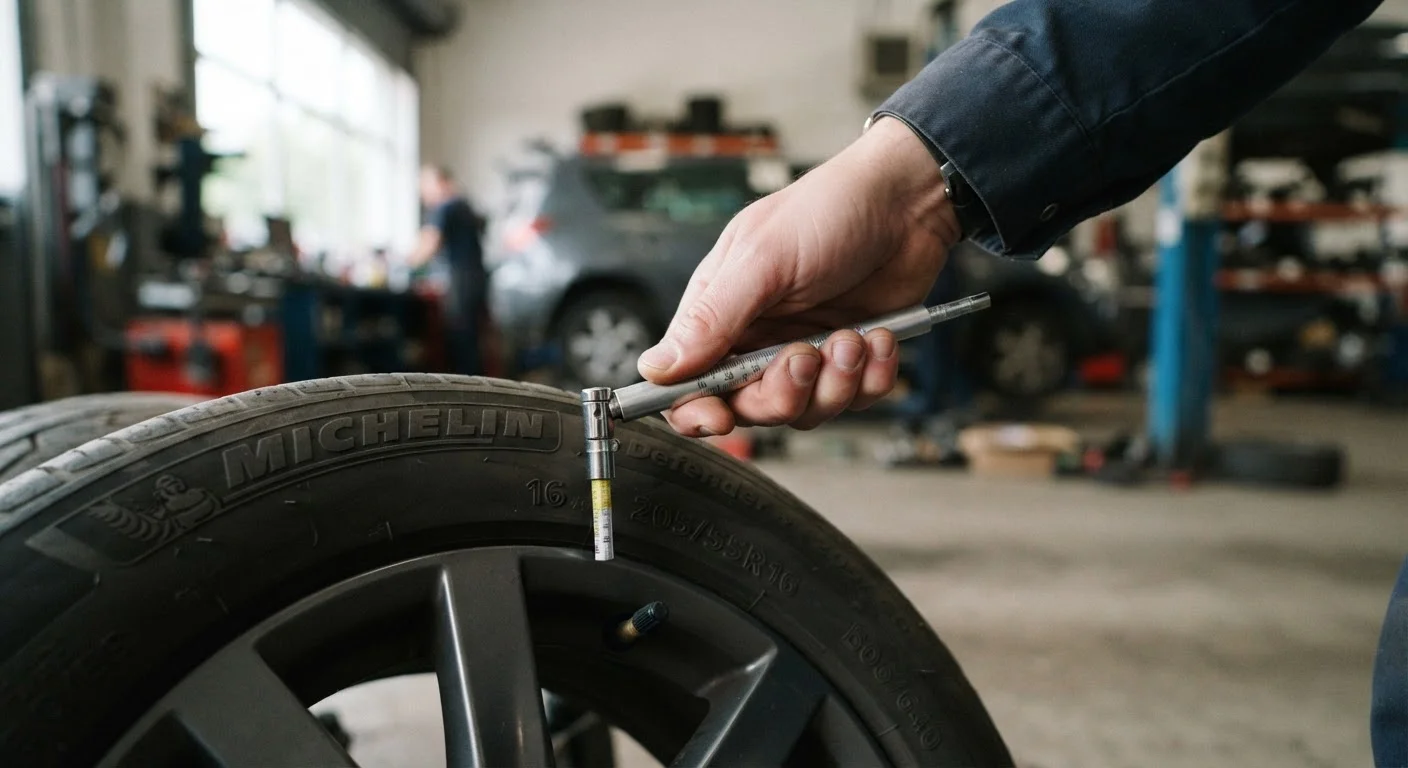
The maximum pressure number moulded into the tyre sidewall is a structural limit set by the tyre manufacturer — not a driving recommendation. Inflating to that number could make the ride dangerously harsh and reduce grip. Always follow the figure on your door jamb sticker or owner's manual.
The number printed on the tyre sidewall is the maximum pressure the tyre can hold — not the recommended operating pressure. Always use the figure on your driver's door jamb sticker or owner's manual instead.
What You Need Before You Start
This task requires almost no equipment and no mechanical skill. Here's what to gather before you begin.
What you will need
Tyre Pressure Gauge
Reads the air pressure currently inside each tyre so you can compare it to the recommended figure.
Air Compressor or Pump
Adds air to a tyre that's below the recommended pressure.
Valve Cap Holder or Small Container
Keeps the small valve caps safe while you work so they don't roll away.
Once you have a gauge and know your vehicle's target pressure, you're ready. Many gas stations have air compressors available, often for free or a small fee. A portable 12V compressor plugged into your car's power outlet is convenient for home use, but it's optional — you can always drive carefully to a station for air after checking pressure at home.
How to Check and Adjust Your Tyre Pressure
Follow these steps in order. The whole process takes about five minutes once you're comfortable with it. Doing this monthly — or before any long trip — is a straightforward habit that pays off in safety and savings. Ignoring small issues like a slow pressure loss is exactly the kind of thing that tends to get expensive over time.
Find your recommended tyre pressure
Open the driver's door and look for a sticker on the door jamb (the frame the door closes against). It lists the front and rear recommended pressures in PSI (pounds per square inch). If the sticker is worn off, check the owner's manual. Write the numbers down before you walk to the tyres.
Remove the valve cap from the first tyre
Each tyre has a small rubber or metal valve stem poking out near the wheel. Twist the cap counterclockwise and set it somewhere safe. Losing valve caps is more common than it sounds — a small pocket or cup holder works well.
Press the gauge firmly onto the valve stem
Push the open end of your gauge straight onto the stem — don't angle it. Press firmly until the hissing sound stops. A stick gauge will pop out a reading bar; a dial or digital gauge will display the number. Read the PSI immediately.
Compare the reading to your recommended pressure
If the gauge reads within 1–2 PSI of the recommended figure, that tyre is fine. If it's low, you'll need to add air. If it's high, you'll need to release some air by pressing the small pin inside the valve stem with a pen tip or the back of some gauges.
Add or release air as needed
To add air, press the compressor nozzle onto the valve stem and inflate in short bursts, checking with the gauge between each burst. To release air, press the center pin briefly, then recheck. Small adjustments go a long way — add or release a little at a time.
Replace the valve cap and repeat for all four tyres
Thread the valve cap back on finger-tight — no tools needed. Move to each remaining tyre and repeat steps 2–5. Don't forget to check your spare tyre if your vehicle has one; a flat spare is useless in an emergency.
Check Pressure Monthly and Before Long Trips
Tyre pressure naturally drops over time — roughly 1 PSI per month under normal conditions, and faster in cold weather. Setting a monthly reminder takes 30 seconds to create and five minutes to act on. It's one of the lowest-effort items in the budget-conscious car owner's toolkit.
Proper tyre pressure also supports better fuel economy. If you want to understand how driving habits affect what you spend at the pump, see our article on fuel efficiency and your wallet.