

Key Takeaways
- Most car batteries last 3–5 years before they need replacing.
- Slow cranking, dim lights, and a swollen case are early warning signs of battery failure.
- A multimeter or inexpensive battery tester can confirm whether the battery is the actual problem.
- Extreme temperatures — both hot and cold — accelerate battery wear significantly.
- Short, frequent trips can drain a battery faster than long highway drives.
- Battery replacement is straightforward but involves safety steps that matter.
How a Car Battery Actually Works
Your car battery is a rechargeable lead-acid battery. It stores electrical energy and releases it in a short, powerful burst to start the engine. Once the engine is running, the alternator — a generator driven by the engine — takes over powering the car's electronics and recharges the battery at the same time.
Think of the battery as a savings account: the alternator keeps topping it up, and starting the car makes a big withdrawal. The problem comes when withdrawals outpace deposits — usually from short trips, extreme heat, or an aging battery that can no longer hold a full charge.
Most car batteries are rated in cold cranking amps (CCA) — the amount of power they can deliver in cold weather when starting is hardest. A higher CCA rating generally means stronger starting performance, especially in winter. Your owner's manual will specify the minimum CCA your vehicle requires.
Signs Your Battery Is Failing
Battery problems rarely appear without warning. Knowing what to look for lets you act before you're stuck in a parking lot.
- Slow or labored cranking when you turn the key — the engine takes longer than usual to fire up.
- Dim headlights or interior lights, especially when the car is idling.
- A clicking noise instead of the engine turning over — a classic sign of insufficient charge.
- The battery or check engine warning light appearing on your dashboard.
- A swollen or bloated battery case — caused by excessive heat, this means the battery is likely past its useful life.
- A sulfur or rotten-egg smell near the battery — this indicates a leaking battery and warrants immediate attention from a mechanic.
Leaking or Swollen Battery: Don't DIY
A battery with a cracked or swollen case, or one that smells like sulfur, should be handled by a professional. Leaking battery acid is corrosive and hazardous. Don't attempt to remove or charge a damaged battery yourself — have your vehicle towed to a shop if necessary.
If you notice corrosion — a white or bluish crust on the terminals — that can also disrupt the electrical connection and mimic battery failure. A mechanic can clean terminals safely and tell you whether it's the cause of your issues.
How to Test Your Battery
Before you buy a new battery, it's worth confirming the battery is actually the problem. Other culprits — a failing alternator, a parasitic drain, or a corroded connection — can produce identical symptoms.
Option 1: Use a multimeter
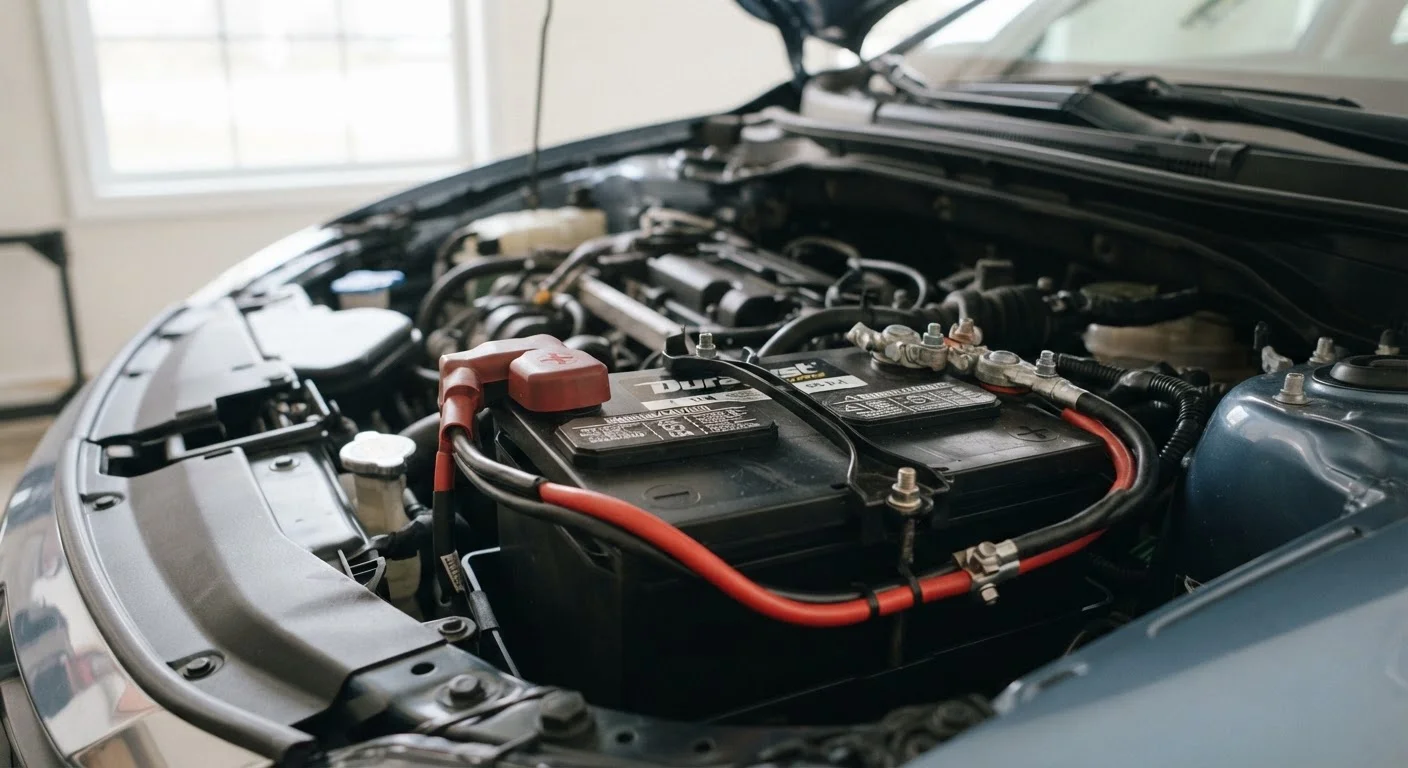
A basic digital multimeter costs under $20 at most hardware stores. Set it to DC voltage, touch the red probe to the positive terminal and the black probe to the negative. A healthy, fully charged battery reads around 12.6 volts. Below 12.0 volts at rest suggests the battery is significantly discharged or worn out.
Option 2: Free testing at an auto parts store
Many auto parts stores offer free battery testing — you either bring the battery in or they test it in your vehicle. The machine gives a printed report that confirms whether the battery, alternator, or starter is the weak link. This is a good option if you're not comfortable using a multimeter yourself.
When your battery test comes back borderline — not dead, but not great — treat it as already failed and plan the replacement. Borderline batteries tend to fail suddenly, and usually at the worst time.
A battery hovering at the low end of acceptable capacity has almost no reserve for cold mornings or longer periods without driving, making an unexpected failure highly likely within weeks or months.
If your car sits unused for two or more weeks regularly, plug it into a battery maintainer (also called a trickle charger) overnight once a month. It's the single best thing you can do to extend battery life.
A battery left in a discharged or partially charged state for extended periods undergoes a process called sulfation, where lead sulfate crystals form on the plates and permanently reduce capacity.
When to Replace vs. When to Recharge
Not every dead battery needs to be replaced. If your battery died because you left the headlights on overnight, a full recharge may be all it needs — assuming the battery is otherwise healthy and less than three years old.
Use this as a general guide:
- Recharge if: The battery is less than 3 years old, discharged by a one-time event (lights left on, extreme cold), and passes a load test after charging.
- Replace if: The battery is 4–5+ years old, fails a voltage or load test, or struggles even after a full charge.
If you're managing vehicle costs carefully, it's tempting to delay replacement — but a battery that fails unexpectedly often costs more (towing, lost time) than the replacement itself. For context on planning for these surprises, see our guide on building a car emergency fund.
Battery Replacement: What to Expect
Battery replacement is one of the more approachable car tasks — but it does involve working with electrical components, so some caution is warranted.
If having it done professionally: A shop or auto parts store will typically handle removal, disposal of the old battery (lead-acid batteries require proper recycling), and installation. Expect the job to take 30 minutes or less. Labor costs are generally modest.
If doing it yourself: Always disconnect the negative terminal first (marked with a minus sign or the letters NEG) and reconnect it last. This reduces the risk of short circuits. Wear safety glasses — batteries contain sulfuric acid. Make sure the replacement battery matches your vehicle's group size and CCA rating, both listed in your owner's manual.
Note on memory reset: Disconnecting the battery may reset your radio presets, power window positions, and in some vehicles, the throttle or transmission settings. These typically recalibrate within a few drive cycles, but check your owner's manual for any model-specific steps.
For a broader look at keeping your car reliable through the year, our seasonal car maintenance guide is a practical companion read.
Extending Your Battery's Life
You can't make a battery last forever, but these habits genuinely help:
- Drive regularly and long enough. Short trips under 20 minutes don't give the alternator enough time to fully recharge the battery. If most of your driving is short hops, consider a periodic longer drive or a trickle charger at home.
- Minimize electrical load when the engine is off. Sitting with the radio, climate system, or phone charger running without the engine is a fast way to drain the battery.
- Keep terminals clean. Mild corrosion can be cleaned, but leave heavy buildup to a mechanic.
- Park in a garage when possible in extreme weather. Both summer heat and deep winter cold shorten battery lifespan.
- Check your battery annually once it's past three years old. Catching a weakening battery before it fails completely is almost always less disruptive.
If you're new to owning a car, building these habits early pays off. Our first-timer's maintenance guide covers the broader picture. And if you've heard that batteries last longer with certain habits, it's worth separating fact from fiction — our piece on car maintenance myths addresses some common misconceptions.