

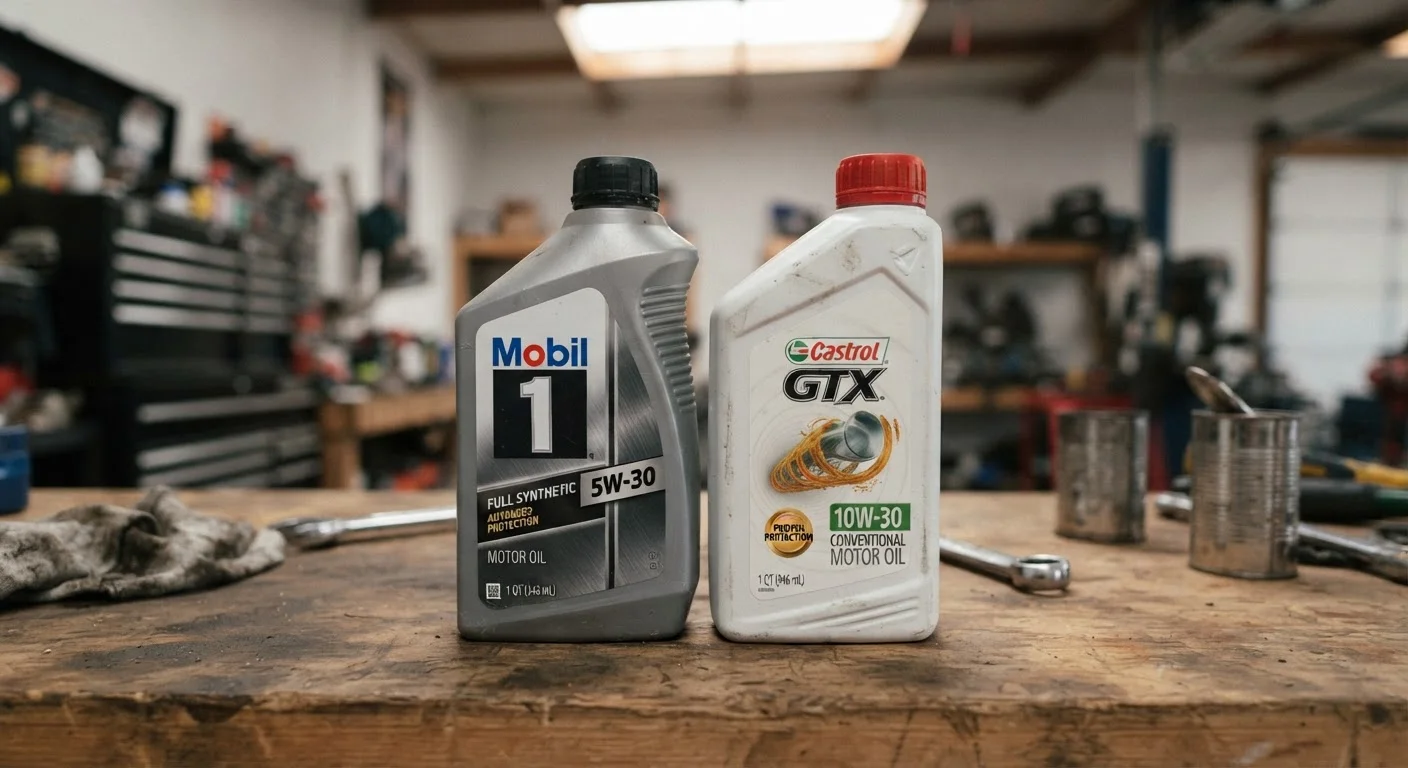
Key Takeaways
- Synthetic oil is chemically engineered for more consistent molecular structure than conventional oil.
- Conventional oil is refined from crude oil and has been the standard for most of automotive history.
- Synthetic oil generally allows longer intervals between changes, though always follow your vehicle's manual.
- Your owner's manual — not general advice — is the most reliable guide for which oil your engine needs.
- Switching between oil types is generally safe, but consult your manual or a mechanic first.
Option A
Synthetic Motor Oil
The engineered, high-performance option.
Best for: Drivers with newer vehicles, extreme climates, longer intervals between oil changes, or high-performance engines.
Option B
Conventional Motor Oil
The time-tested, straightforward standard.
Best for: Drivers of older vehicles with simpler engines and regular, predictable driving patterns.
If you drive a newer vehicle or one with a turbocharged engine
Synthetic Motor Oil
Many modern and turbocharged engines are specifically engineered to run on synthetic oil. Check your owner's manual — it may actually require it.
If you drive an older, high-mileage vehicle with no manufacturer synthetic requirement
Conventional Motor Oil
Older engines designed around conventional oil may not need the added performance of synthetic. Your mechanic can help you assess whether switching makes sense.
If you drive in extreme temperatures — very hot summers or cold winters
Synthetic Motor Oil
Synthetic oil maintains more stable viscosity across a wider temperature range, which helps protect your engine during cold starts and heat stress.
If you want to reduce how often you change your oil
Synthetic Motor Oil
Synthetic oil typically lasts longer before breaking down, which can mean fewer changes — though always defer to your vehicle manufacturer's recommendation.
What's Actually Different Between Synthetic and Conventional Oil
Both types do the same fundamental job — lubricate your engine's moving parts, reduce friction, and help manage heat. The difference is in how they're made and how consistently they perform under stress.
Conventional motor oil is refined directly from crude oil. That process removes many impurities, but the resulting molecules still vary in size and shape. That inconsistency is generally fine for everyday driving, but it means conventional oil can break down faster under extreme heat or cold.
Synthetic motor oil is either fully synthesized in a lab or highly refined to a much greater degree than conventional oil. The result is a more uniform molecular structure. That uniformity translates to more stable performance — especially during cold starts (when your engine is most vulnerable) and under sustained high heat.
For a deeper look at how oil grades like 5W-30 and 10W-40 factor into this, see our guide to engine oil grades and types.
| Criterion | Synthetic Oil | Conventional Oil |
|---|---|---|
| Origin | Lab-engineered or highly refined | Refined from crude oil |
| Molecular consistency | Highly uniform | Variable |
| Cold-weather performance | Flows more readily at low temps | Can thicken in the cold |
| Heat resistance | More resistant to breakdown | Breaks down faster under heat |
| Typical change interval | 7,500–10,000+ miles (varies by vehicle) | 3,000–5,000 miles (varies by vehicle) |
| Cost per quart | Generally higher | Generally lower |
| Common use case | Newer, turbocharged, or high-performance engines | Older or simpler engine designs |
Change Intervals: Does Synthetic Really Last Longer?
This is one of the most common questions — and the answer is generally yes, but with an important caveat.
Because synthetic oil resists breakdown better than conventional oil, many vehicles using it can go longer between changes. Manufacturers often specify intervals of 7,500 to 10,000 miles or more for synthetic, compared to the traditional 3,000-to-5,000-mile range associated with conventional oil. Some vehicles go even longer.
That said, the only reliable source for your car's correct change interval is your owner's manual. Interval recommendations vary by engine design, driving conditions, and oil type specified by the manufacturer. Ignore the old "every 3,000 miles" rule if your manual says otherwise — it's often unnecessary and outdated. Our article on car maintenance myths covers this in more detail.
~75%
U.S. new car oil change recommendations using synthetic
Industry estimates suggest the majority of new vehicles sold in the U.S. now specify synthetic or synthetic-blend oil per manufacturer guidelines.
3,000 mi
Old conventional wisdom on oil change intervals
The 3,000-mile rule was standard advice for decades, but most modern vehicles with synthetic oil are specified for intervals two to three times longer.
Which One Does Your Car Actually Need?
The clearest answer to this question lives in your glove box. Your vehicle's owner's manual specifies the oil type and viscosity grade your engine was designed for. If it says synthetic, use synthetic — and vice versa.
A few practical considerations worth knowing:
- Turbocharged engines typically run hotter and under more stress than naturally aspirated engines. Most manufacturers require full synthetic for these.
- Older vehicles built before synthetic oil was common were designed around conventional oil. Many still run fine on it, though synthetic is often compatible too.
- High-mileage oil is a third category worth knowing about — it's formulated specifically for engines with over 75,000 miles and may include additives that help condition aging seals.
Switching from conventional to synthetic mid-ownership is generally considered safe, but if you're unsure, a quick conversation with a trusted mechanic is worth it. Your engine's fluid system as a whole is something worth understanding — see our overview of what each car fluid does for a broader picture.
This article is for informational purposes only. Always consult your vehicle's owner's manual and a qualified mechanic for maintenance decisions specific to your car.