

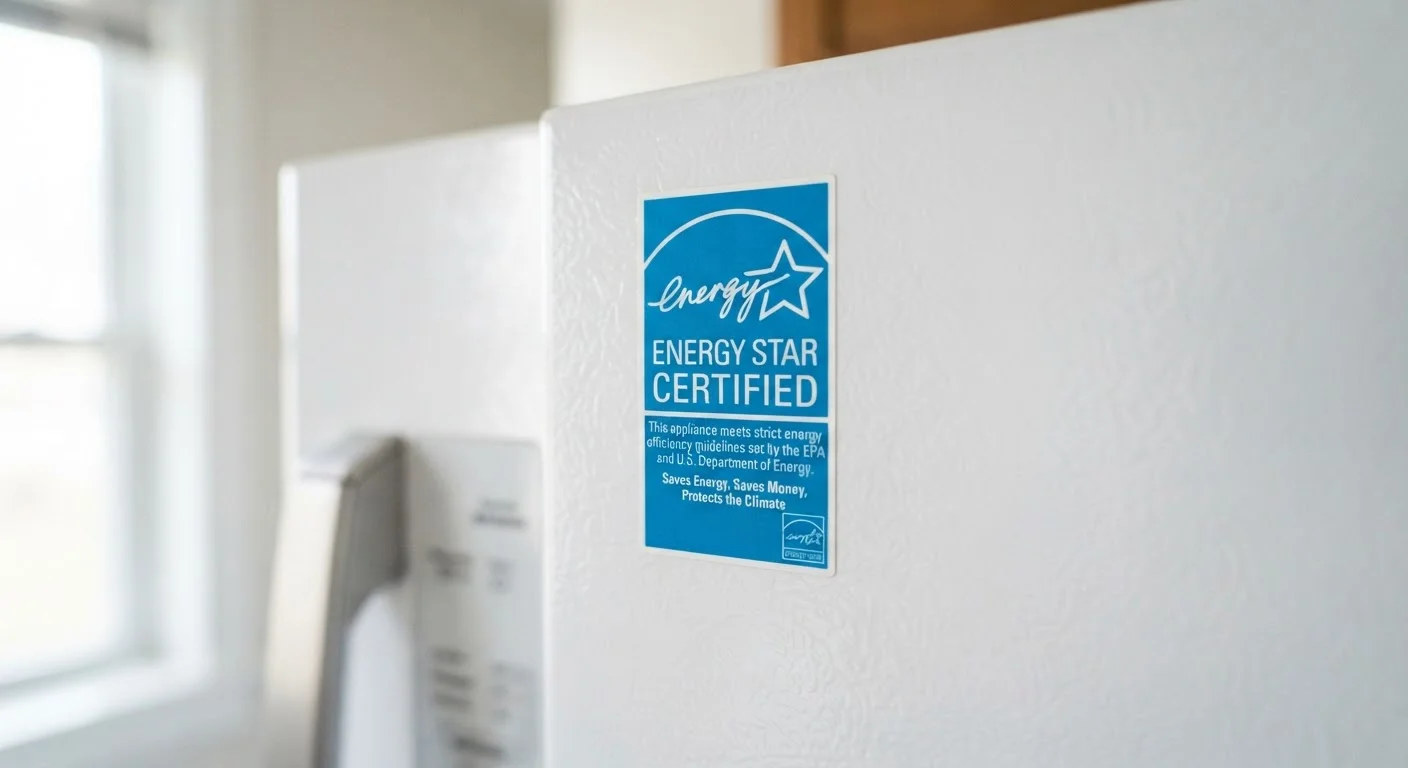
Key Takeaways
- Energy Star certification signals a product meets EPA-defined efficiency thresholds, not that it's the most efficient option available.
- Manufacturers self-report performance data in many categories; the EPA does conduct verification testing but not on every product.
- The label covers energy use under standardized test conditions, which may differ significantly from real-world usage.
- Energy Star does not address product durability, repairability, total cost of ownership, or environmental impact beyond electricity use.
- Comparing the yellow EnergyGuide label alongside Energy Star gives a more complete picture of a product's efficiency.
What Energy Star Actually Certifies
Energy Star is a voluntary program administered by the U.S. Environmental Protection Agency (EPA). When a product earns the label, it means that product met the EPA's energy efficiency specifications for its product category at the time of certification. Those specifications vary widely by category — a certified refrigerator, a certified window, and a certified laptop are each measured against entirely different criteria.
The program covers more than 75 product categories, from major appliances and lighting to commercial buildings and industrial plants. That breadth is useful, but it also means the label signals different things depending on what you're buying. Understanding that distinction is the starting point for shopping smarter. For a deeper look at how certification language can mislead, see which certifications carry real weight on other household products.
Myth
Energy Star means the product is the most energy-efficient model available.
Fact
Energy Star means the product clears a minimum efficiency threshold set by the EPA — not that it outperforms all competing models.
The EPA sets a floor, not a ranking. In any given category, dozens of models may qualify, spanning a wide range of actual efficiency levels. A product at the very bottom of the qualifying range carries the same blue label as one significantly more efficient. If you want to compare models within the certified pool, use the EnergyGuide label's estimated annual energy use figure rather than treating the blue logo as a quality ranking.
Myth
Every Energy Star product has been independently tested by the government before it goes on sale.
Fact
Many products enter the program through manufacturer self-certification; the EPA conducts market verification testing, but not on every model before it ships.
The Energy Star program relies on a combination of self-certification and post-market verification. Manufacturers submit data and agree to testing protocols, but independent lab verification by the EPA or its partners typically happens after products are already on store shelves. When the EPA's verification program has found non-compliant products, it has removed them from the certified list — but the process is retrospective rather than a pre-sale gate. This doesn't mean the label is unreliable, but it does mean it isn't the same as a pre-market government inspection.
Myth
An Energy Star appliance will always lower your utility bills.
Fact
Real-world savings depend on how you use the appliance, your local electricity rates, and what you're replacing — the label guarantees efficiency under test conditions, not a specific dollar outcome.
Standardized test conditions are controlled environments. Your home isn't. A certified washing machine tested at a fixed number of cycles per year may see very different energy consumption in a large household running daily loads in hot water. Local electricity rates also vary significantly across the U.S., meaning the same appliance produces different dollar savings depending on where you live. Treat any published annual savings estimate as an approximation, not a promise. Understanding how efficiency is actually measured helps set realistic expectations.
Myth
Energy Star certification means the product is environmentally friendly overall.
Fact
The label only addresses operational energy consumption — it says nothing about manufacturing materials, product lifespan, repairability, or end-of-life disposal.
A product's full environmental footprint includes the energy and materials used to manufacture it, how long it lasts, whether it can be repaired, and how its components are disposed of or recycled. Energy Star evaluates none of these factors. A certified appliance made with resource-intensive materials and designed to be difficult to repair could have a larger total environmental impact than a slightly less efficient model built to last 20 years. If broader environmental considerations matter to you, look for additional certifications or manufacturer disclosures that address those dimensions specifically.
Myth
The Energy Star threshold stays the same once it's set, so older certified products are still equally efficient today.
Fact
The EPA periodically revises efficiency thresholds upward as technology improves, meaning a product certified years ago may no longer qualify under current standards.
Energy Star specifications are updated on a rolling basis, often tightening as the market improves. A refrigerator certified under standards from a decade ago might fall below today's qualifying threshold if submitted for recertification now. This doesn't mean older certified products are inefficient — they may still outperform older non-certified models — but it does mean the label's context matters. When reviewing a product's Energy Star status, it's worth checking when it was certified and whether the program has updated its requirements since then.
Reading the Label Alongside Other Information
Energy Star alone is rarely enough to compare two products accurately. The yellow EnergyGuide label — required by the Federal Trade Commission on most major appliances — is your better tool for direct comparisons. It shows estimated annual energy consumption and operating cost, and places the model on a scale relative to similar products. A product can be Energy Star certified and still land near the high end of that scale if the efficiency threshold for its category is set relatively low.
Performance under test conditions also matters. Manufacturers test products in standardized laboratory settings that may not reflect how you'll actually use the appliance. A dishwasher's Energy Star score, for instance, is based on a set number of cycles per year with specific water temperatures — your household habits could push actual consumption higher or lower. Wattage alone doesn't capture efficiency, and the same principle applies here: the number behind the label matters as much as the label itself.
75+
Product categories covered by Energy Star
The EPA's Energy Star program spans more than 75 distinct product and building categories, each with its own efficiency criteria.
Varies by category
Efficiency improvement required over baseline
EPA efficiency thresholds differ by product type — some categories require modest gains over standard models, others require substantially more.
When evaluating a large purchase, pair the Energy Star status with the EnergyGuide estimate, the product's listed specifications, and your own usage patterns. That combination gives you a far more reliable picture than any single label. For guidance on decoding the fine print that accompanies a purchase, warranty terms are worth understanding too before you commit.