

Key Takeaways
- Pulling is self-rewarding — stopping forward motion the moment tension appears is essential.
- Short, frequent training sessions of 5–10 minutes outperform long, exhausting ones.
- Reward the position you want, not just the absence of pulling.
- Consistency from every handler in the household is non-negotiable for lasting results.
- Progress from low-distraction indoor practice to busier outdoor environments gradually.
What you will need
Why Loose-Lead Walking Is Worth the Effort
Pulling on the lead is one of the most common frustrations dog owners face — and one of the most misunderstood. Dogs pull because it works: the moment they lunge forward and the walk continues, they learn that tension gets them where they want to go. Repeating that pattern thousands of times, across hundreds of walks, builds a deeply ingrained habit.
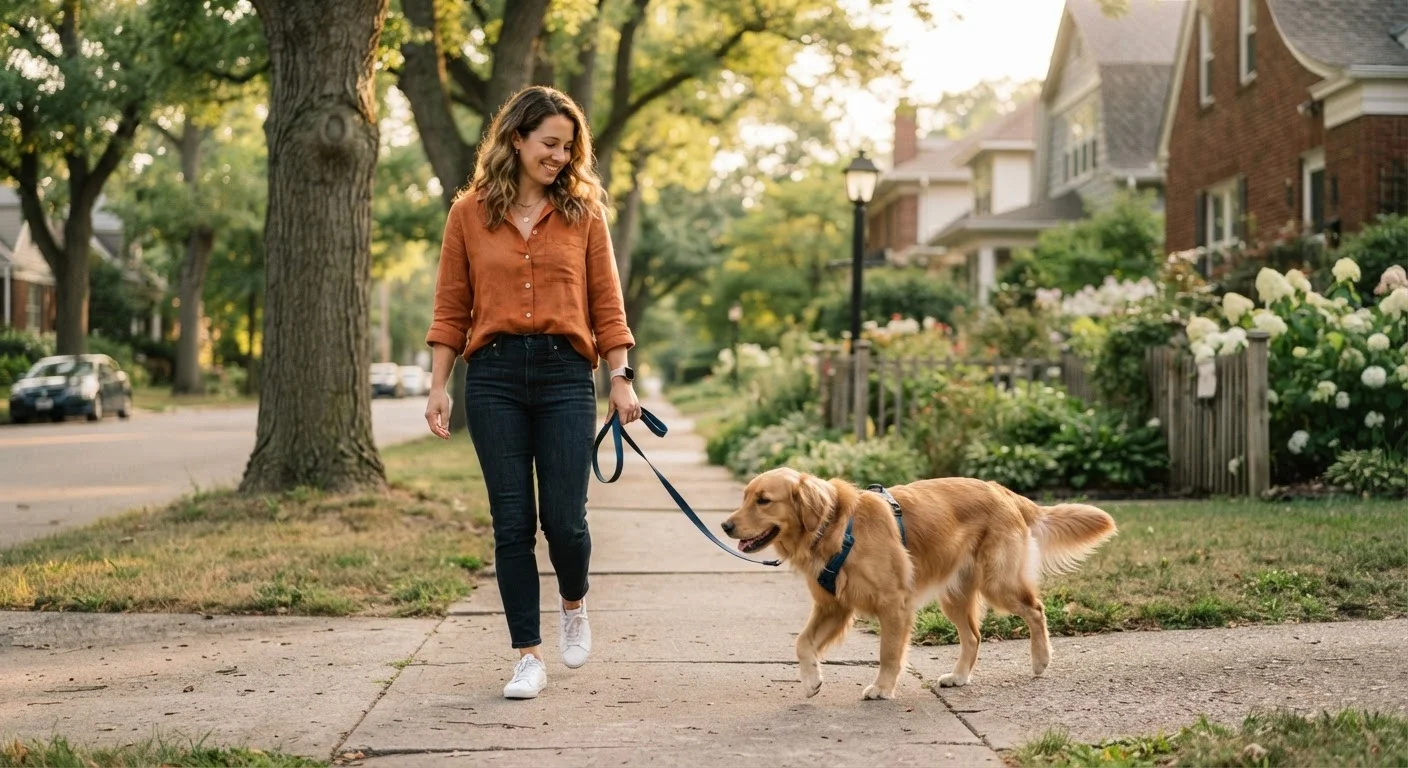
The good news is that the same learning principle works in your favor. Loose-lead walking — where the lead hangs in a relaxed J-shape with no pressure on the collar or harness — is taught by making slack rewarding and tension unrewarding. No punishment needed, and no special equipment required beyond consistent handling.
This skill also matters beyond comfort. A dog that charges ahead puts stress on its own neck and throat, can knock people over, and becomes harder to manage in an emergency. Getting this right is a genuine quality-of-life improvement for both of you. For a broader foundation, see The Complete Home Guide to Training a Well-Behaved Dog.
What you will need
Step-by-Step: Teaching the Skill
Work through the steps below in order. Each builds on the last — rushing ahead before the dog is solid at each stage is the most common reason progress stalls. If your dog struggles to respond at any point, revisit why dogs ignore commands to rule out underlying training gaps.
Establish the reward position
Choose a side — left is traditional, but pick whichever suits you and stick with it. With your dog standing beside you, hold a treat at your hip on that side. When your dog's head is level with your leg and the lead is slack, say "yes" and deliver the treat. Repeat 10–15 times in place before adding any movement. You are building an association: being at your side with a loose lead predicts good things.
Introduce movement in a low-distraction space
Take one step forward. If your dog moves with you and the lead stays slack, mark with "yes" and reward at your hip. If the lead tightens, stop immediately and stand still — no scolding, no jerking. Wait for your dog to release the pressure and return toward you, then mark and reward. Gradually increase to two steps, then five, rewarding regularly while the lead stays loose.
Practice direction changes
Unpredictable changes of direction teach your dog to pay attention to you rather than forge ahead. Without warning, turn 90 or 180 degrees. The moment your dog catches up and the lead drops slack, reward generously. This builds attentiveness and makes you the more interesting element of the walk.
Thin out the treats gradually
Once your dog is walking steadily beside you for 20–30 steps at a time with a loose lead, begin rewarding every third or fourth correct stretch rather than every few steps. This is called a variable reinforcement schedule — it actually strengthens the behavior because the dog never quite knows when the next reward is coming. Continue to mark with "yes" on every good stretch even when the treat follows less often.
Proof in increasingly distracting environments
Move practice sessions progressively from your hallway, to the front yard, to a quiet sidewalk, to a park. Each new environment effectively resets difficulty — expect more frequent rewards and shorter reward intervals when you first introduce a busier setting. This is normal and does not mean the training has failed. Build back up the same way you did indoors.
Short Sessions Beat Long Ones Every Time
Aim for two or three focused sessions of 5–10 minutes per day rather than one long walk dedicated to training. Cognitive effort tires dogs faster than physical exercise, and a mentally fresh dog learns more in five minutes than a fatigued one does in thirty. End each session on a successful note — even if that means making the last repetition easier.
Common Pitfalls and How to Handle Them
Even with a solid plan, a few patterns trip up most handlers:
- Inconsistent response to pulling: If the walk continues even occasionally when the lead is tight, the dog learns that persistence pays. Every person who walks the dog must follow the same rules — see establishing consistent house rules for strategies on aligning your household.
- Rewarding too late: Timing is everything in reinforcement. A treat delivered two seconds after the dog reached your side rewards whatever happened in those two seconds — often drifting forward again. Mark the exact moment with a word like "yes" or a clicker, then deliver the treat.
- Skipping the low-distraction phase: Jumping straight to a busy street before the behavior is fluent indoors almost guarantees failure. The environment is too stimulating for the dog to focus.
- Sessions that run too long: Mental effort tires dogs quickly. Five to ten minutes of focused practice is more productive than a 30-minute march that devolves into a pulling match.
Older dogs may take longer to unlearn existing habits, but the method is the same. Training an older dog covers the adjustments worth making for adult and senior animals.
If any training terminology in this article is unfamiliar, the Pet Training Glossary provides plain-language definitions for terms like luring, reinforcement, and desensitization.
Avoid Aversive Equipment
Choke chains, prong collars, and e-collars can suppress pulling through discomfort or pain, but they carry real risks: physical injury to the throat and spine, and behavioral fallout such as anxiety and redirected aggression. Positive-reinforcement-based loose-lead training takes longer to establish but produces a calmer, more confident dog over time. If you feel you need additional support, consult a certified, force-free trainer rather than reaching for aversive tools.