

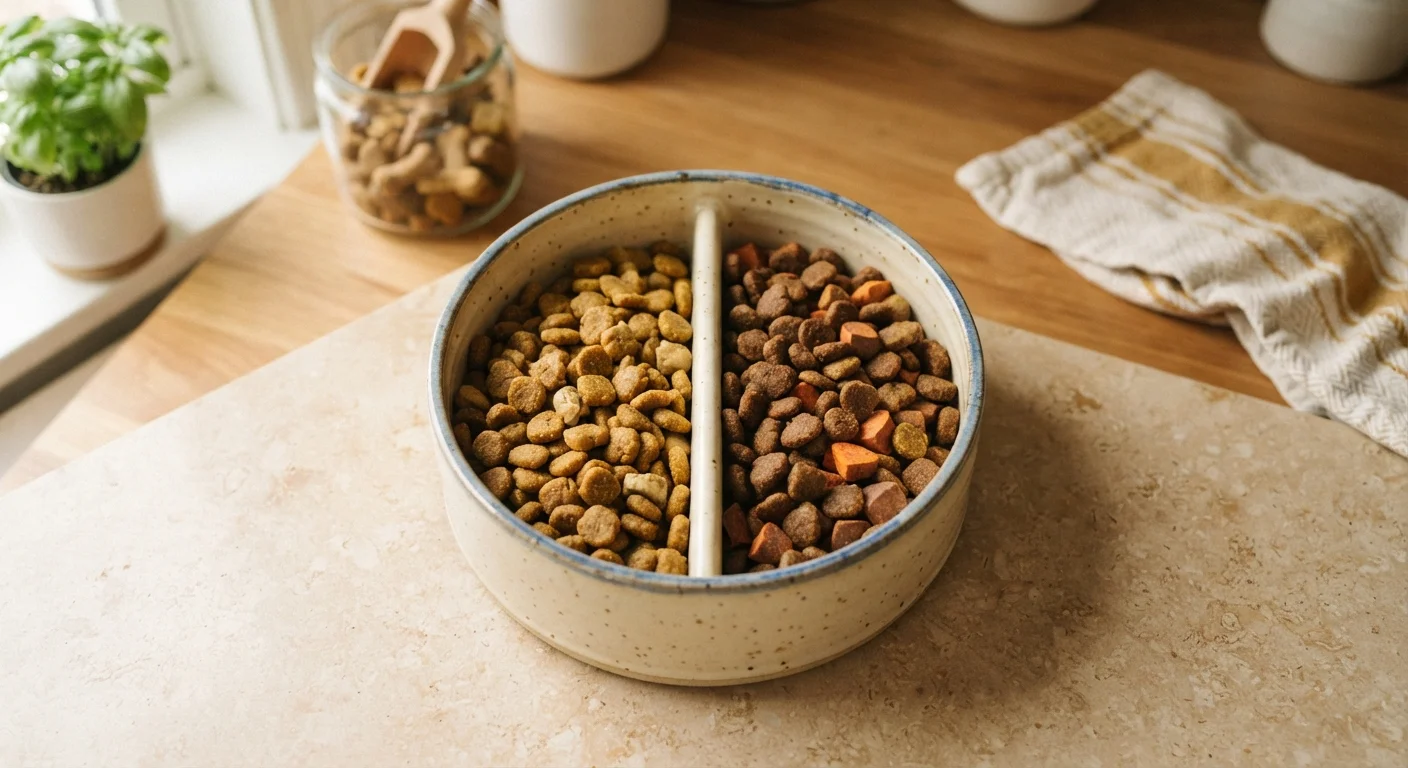
Key Takeaways
- Most pets need a 7–10 day transition period when switching to a new food.
- Abrupt diet changes are the most common cause of pet digestive upset.
- Mixing old and new food in gradually shifting ratios reduces stomach stress.
- Watch for signs like vomiting, loose stools, or refusal that signal a too-fast switch.
- Cats typically need more time and patience than dogs during food transitions.
- Consult your veterinarian before switching if your pet has a health condition.
What you will need
Why Food Transitions Need a Plan
A pet's digestive system depends on a stable community of gut bacteria to break down food efficiently. When the diet changes abruptly — even to a healthier option — those bacteria need time to adjust. Rushing the process is the single most common reason pets experience vomiting, loose stools, gas, or flat-out food refusal during a switch.
Understanding what goes wrong makes the fix straightforward. The microbiome (the population of beneficial bacteria in the gut) adapts gradually, not overnight. A phased transition gives those bacteria time to diversify and multiply in step with the new ingredients.
If you want a deeper grounding in what your pet's body actually needs from its diet before you start selecting a replacement food, see our Pet Nutrition from the Ground Up guide. And if cost is a factor in why you're switching, the budget-friendly feeding strategies article offers practical, vet-aligned ways to keep quality high without overspending.
Go Slower for Sensitive Stomachs
If your pet has a history of digestive sensitivity, consider stretching the transition to 14 days instead of 7–10, spending three days at each ratio stage rather than two. A slower pace costs nothing extra and dramatically reduces the chance of setbacks. When in doubt, slower is always safer.
What You'll Need Before You Start
Preparation is minimal, but having the right things on hand keeps the transition smooth and measurable.
What you will need
Kitchen scale or measuring cups
Ensures you mix old and new food in accurate, consistent ratios at each stage.
Pet's current food
The baseline diet that will be phased out gradually over the transition period.
New pet food
The replacement diet being introduced in progressively larger portions.
Feeding log (paper or app)
Tracks daily ratios and any digestive symptoms so you can adjust the pace if needed.
Plain canned pumpkin (100% pumpkin, no additives)
A small amount can help firm up loose stools during transitions — ask your vet if appropriate.
Step-by-Step: The Gradual Transition Method
Follow these steps in order, and give each stage the full time it deserves. Skipping ahead because your pet seems fine is a common misstep — patience here pays off in a calmer gut and a happier animal.
Start with 75% old food, 25% new food (Days 1–2)
Begin by replacing roughly one quarter of your pet's regular meal portion with the new food. Mix thoroughly so the new food is distributed evenly — this prevents your pet from eating around it. Feed this ratio for two full days and observe your pet's stools, energy level, and appetite.
Move to 50/50 (Days 3–4)
If your pet is eating well and stools remain firm and normal in color, increase the new food to half of each meal. Continue for at least two days before progressing. If you notice softer stools, hold at this ratio for an extra day or two before moving on.
Shift to 25% old food, 75% new food (Days 5–7)
Now the new food makes up three quarters of each meal. This stage is where most pets either fully accept the new diet or show any remaining resistance. Keep monitoring stool consistency and appetite closely. Some pets sail through; others need a couple of extra days at this ratio.
Complete the switch to 100% new food (Days 8–10)
Serve a full meal of only the new food. Your pet's digestive system has had enough time to adjust to the new ingredients, protein sources, and fiber levels. Continue to watch stools for another few days — a brief settling period after full transition is normal.
Monitor and document the outcome
Over the two weeks following a completed transition, note your pet's coat condition, energy, stool quality, and overall interest in meals. These are reliable indicators of whether the new food is agreeing with their system. If anything seems off — excessive gas, persistent soft stools, dull coat — revisit your choice with your vet before making it permanent.
For a structured checklist to evaluate whether the food you've chosen genuinely meets your pet's nutritional needs, see our practical evaluation guide.
Stop and Seek Veterinary Advice If Symptoms Persist
Mild, brief loose stools during a transition are common and usually resolve on their own. However, vomiting more than once, blood in the stool, complete loss of appetite lasting longer than 24 hours, or significant lethargy are not normal transition side effects. If any of these occur, pause the switch and contact your veterinarian. Do not try to push through these warning signs.
Once your pet has settled into the new food, it's worth reviewing whether the formula continues to suit their life stage. Our article on how nutritional needs shift at every life stage explains what to watch for as your pet ages. For a full checklist on evaluating any food before it becomes a regular staple, see What to Check Before Choosing a Pet Food.
Special Situations and When to Call the Vet
Some pets need extra care during a food switch. Cats are notoriously conservative eaters; they may refuse a new food entirely if the texture or aroma differs too sharply from what they know. Warming the new food slightly or mixing in a small amount of low-sodium broth (check with your vet for suitability) can encourage acceptance. Allow cats a longer window — up to 14 days — before concluding a food isn't viable.
Pets with existing health conditions — kidney disease, food allergies, inflammatory bowel disease, pancreatitis — should only change diets under direct veterinary guidance. The standard gradual method may still apply, but the specific foods involved need professional sign-off.
Puppies and kittens transitioning from a breeder or shelter diet may already be stressed by a new home environment. Give them a few days to settle before initiating a food change. For more on age-specific feeding, visit our Pet Health Basics hub for foundational guidance.
If your pet shows persistent vomiting, bloody stools, significant lethargy, or complete refusal to eat for more than 24–48 hours, stop the transition and contact your veterinarian promptly. These symptoms can occasionally signal something beyond a simple dietary reaction.
This article is for general informational purposes only and does not constitute veterinary or medical advice. Always consult a qualified veterinarian for guidance specific to your pet's health needs.