

Key Takeaways
- The AAFCO nutritional adequacy statement is one of the most important things to check on any pet food label.
- Life stage matters — a food formulated for puppies or kittens is not automatically right for adult or senior pets.
- Ingredient order on a label reflects weight before cooking, not finished nutritional content.
- A sudden food switch can cause digestive upset; always transition gradually over 7–10 days.
- No single ingredient or trend label (grain-free, raw, ancestral) replaces a complete, balanced formulation.
- When in doubt about a specific food for your pet's health condition, consult your veterinarian.
Summary
22 items · 20–40 minutes
Why a Systematic Check Matters
Walking down the pet food aisle — or scrolling through an online store — can feel overwhelming. Packaging uses terms like natural, holistic, and ancestral recipe freely, and most of them carry no regulated definition. Without a clear framework, it's easy to pay a premium for marketing language rather than nutritional substance.
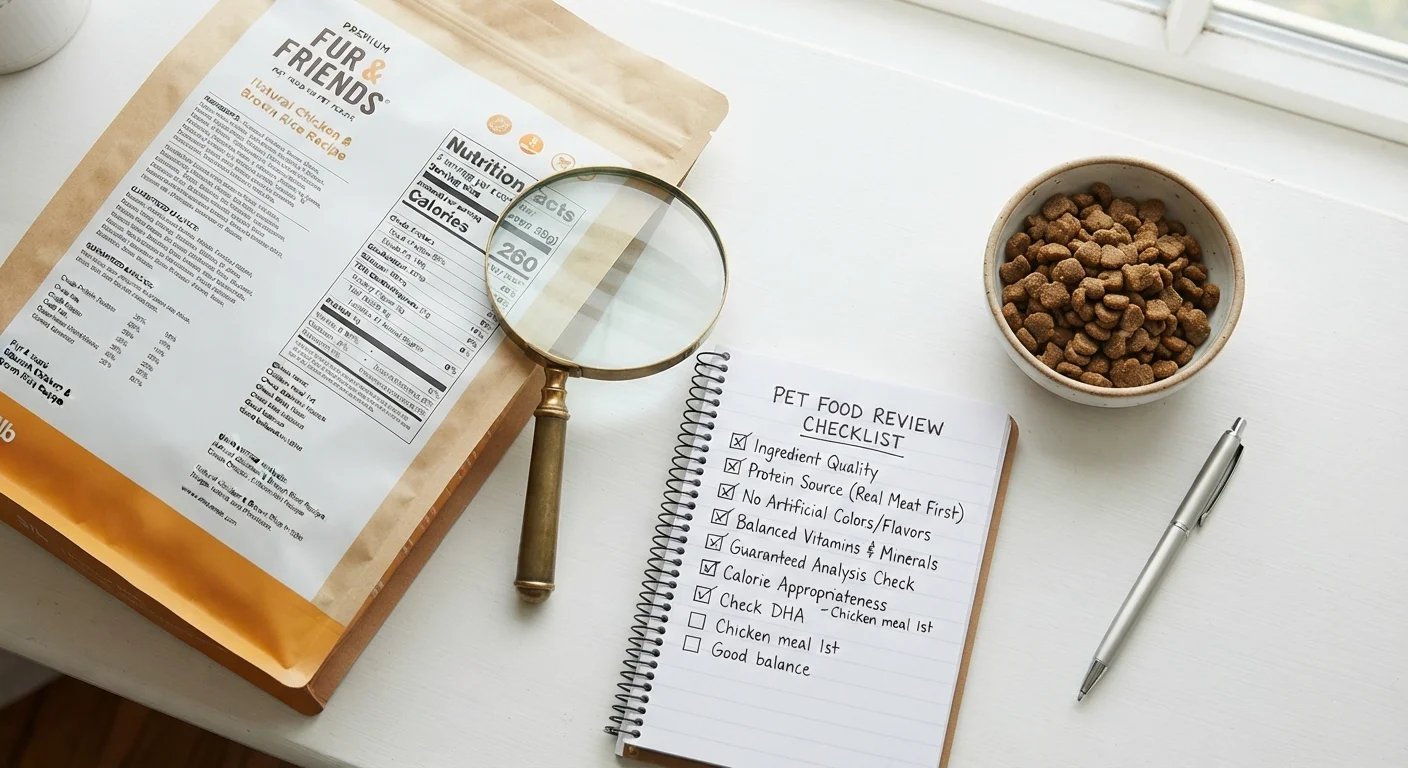
This checklist gives you a repeatable, objective process for evaluating any pet food — dry, wet, raw, or fresh — before it becomes part of your animal's regular diet. Work through it once per food you're considering, and you'll quickly develop an eye for what genuinely holds up.
For a deeper grounding in the science behind pet nutrition, see our introduction to pet nutrition before you begin. And if budget is a factor, our guide to feeding your pet well on a tighter budget pairs well with this checklist.
Label & Regulatory Basics
Life Stage & Suitability
Ingredient List Evaluation
Guaranteed Analysis & Nutrients
Safety & Manufacturer Transparency
Practical Fit for Your Household
Tools You'll Need
No specialist equipment is required. The items below help you gather the information needed to evaluate each food thoroughly and keep track of your findings across multiple options.
FDA Pet Food Recall Database
Search for any active or historical recalls associated with a food or its manufacturer before purchasing.
AAFCO Nutrient Profiles (published guidelines)
Use as a reference to verify that a food's guaranteed analysis meets minimum requirements for your pet's life stage.
Notepad or spreadsheet
Record findings for each food you evaluate so you can compare multiple options side by side.
Kitchen scale
Weigh serving sizes accurately when calculating actual daily cost and portion against feeding guidelines.
Calculator
Convert wet food nutrient values to a dry-matter basis and calculate per-day feeding cost.
Common Pitfalls to Avoid
Even well-intentioned pet owners frequently trip over a few recurring mistakes when evaluating pet food. Being aware of them in advance makes the checklist above easier to apply.
- Confusing ingredient quality signals with nutritional completeness. A food listing salmon as its first ingredient is not automatically superior if the overall formulation is unbalanced or missing key micronutrients.
- Over-indexing on trends. Grain-free, raw, and single-protein diets all have legitimate use cases — but none is universally better. Our article on grain-free diets and the evidence behind them explains the nuance.
- Ignoring the transition period. Even a nutritionally superior food can cause vomiting or diarrhea if introduced too quickly. A 7–10 day gradual transition — mixing increasing proportions of the new food into the old — is the standard recommendation.
- Skipping the vet conversation for pets with health conditions. Animals with kidney disease, diabetes, allergies, or gastrointestinal conditions often have specific dietary needs that go beyond what a general checklist can address.
Pets with Health Conditions Need Veterinary Input
This checklist is designed for generally healthy pets without diagnosed medical conditions. If your dog or cat has kidney disease, diabetes, food allergies, gastrointestinal disorders, or any other ongoing health issue, dietary choices can directly affect their condition. Do not rely solely on label evaluation — consult your veterinarian or a board-certified veterinary nutritionist before changing their food.
For pets that may benefit from additional supplementation alongside their food, our overview of when pet supplements help and when they don't is a useful companion read. And if you're curious about preparing meals at home, understand the nutritional demands of homemade pet food before making that commitment.
This article provides general educational information about pet nutrition and is not a substitute for professional veterinary advice. Always consult a qualified veterinarian before making significant changes to your pet's diet, especially if your animal has an existing health condition.