

Key Takeaways
- Chronic stress in pets can manifest as physical symptoms, not just behavioural changes.
- Common triggers include loud noises, routine disruptions, and insufficient enrichment.
- Simple environmental adjustments — safe zones, predictable routines — can significantly reduce anxiety.
- Some stress signals overlap with pain or illness, so veterinary evaluation is important.
- Positive reinforcement and calm owner behaviour directly influence a pet's anxiety levels.
What you will need
Why Pet Stress Matters More Than You Might Think
Stress isn't just a human experience. Dogs, cats, rabbits, and many other companion animals have nervous systems that respond to perceived threats in ways that closely parallel our own. When stress becomes chronic, it can suppress immune function, disrupt digestion, and contribute to behavioural problems that are often misread as stubbornness or "bad habits."
Understanding your pet's anxiety signals early puts you in a much stronger position to help — and it connects directly to the broader value of preventive care. As outlined in our guide to preventive pet care vs. reactive treatment, addressing problems before they escalate is almost always easier on both your pet and your wallet.
Common stress triggers include:
- Loud or unpredictable noises — thunderstorms, fireworks, construction
- Changes in routine — new work schedules, moving home, a new baby or pet
- Insufficient mental and physical stimulation
- Social isolation or, conversely, forced social interaction the pet hasn't chosen
- Underlying pain or illness — always rule this out first
Because pain and anxiety can look nearly identical, check our guide to recognising pain in pets if you're unsure which you're dealing with.
Rule Out Medical Causes First
Many stress and anxiety signals — appetite changes, elimination problems, lethargy — overlap directly with symptoms of illness or chronic pain. Before attributing behavioural changes to anxiety, schedule a veterinary check-up to rule out an underlying physical cause. Treating anxiety behaviourally when a medical issue is present delays necessary care.
Recognising Stress Signals in Dogs and Cats
Animals communicate discomfort through body language and behaviour long before owners typically notice something is wrong. The signals differ between species, but both dogs and cats follow recognisable patterns.
In dogs
- Yawning, lip-licking, or nose-licking out of context
- Excessive panting not related to heat or exercise
- Tucked tail, pinned ears, or a crouched posture
- Destructive chewing or digging when left alone
- Refusal to eat or sudden changes in appetite
- Increased barking, whining, or pacing
In cats
- Hiding more than usual or avoiding favourite spots
- Over-grooming leading to patchy fur or skin irritation
- Inappropriate elimination outside the litter box
- Dilated pupils, flattened ears, or a puffed tail
- Reduced interest in play or interaction
- Increased vocalisation, particularly at night
A single signal rarely confirms anxiety on its own. Look for clusters of behaviours or a noticeable change from your pet's baseline. Tracking changes over several days is far more useful than reacting to one isolated moment.
What You'll Need to Get Started
Reducing pet anxiety doesn't require expensive products. The steps below rely primarily on your time, consistency, and thoughtful arrangement of your existing home space. Here's what helps:
What you will need
Comfortable pet bed or crate with cover
Creates a dedicated safe zone where your pet can retreat and decompress without interruption.
Puzzle feeders or food-dispensing toys
Provides mental stimulation that channels anxious energy into a productive, rewarding activity.
Pheromone diffuser (species-specific)
Synthetic calming pheromones — available for dogs and cats — may reduce anxiety signals in some animals; discuss use with your vet.
White noise machine or quiet background audio
Masks startling environmental sounds like traffic or construction that can spike anxiety.
Daily behaviour log (notebook or phone notes)
Tracks which triggers, times of day, and environmental changes correlate with anxious behaviour.
Step-by-Step: Building a Calmer Environment
Work through these steps gradually rather than implementing everything at once. Sudden large changes to a pet's environment can themselves be a source of stress.
Identify your pet's specific triggers
Spend three to five days logging when anxious behaviour occurs — what time, what was happening nearby, who was present, and what the environment was like. Look for patterns: is it always when you leave? Only on garbage-truck days? After visitors arrive? Pinpointing triggers lets you address the cause rather than only the symptom.
Create a dedicated safe zone
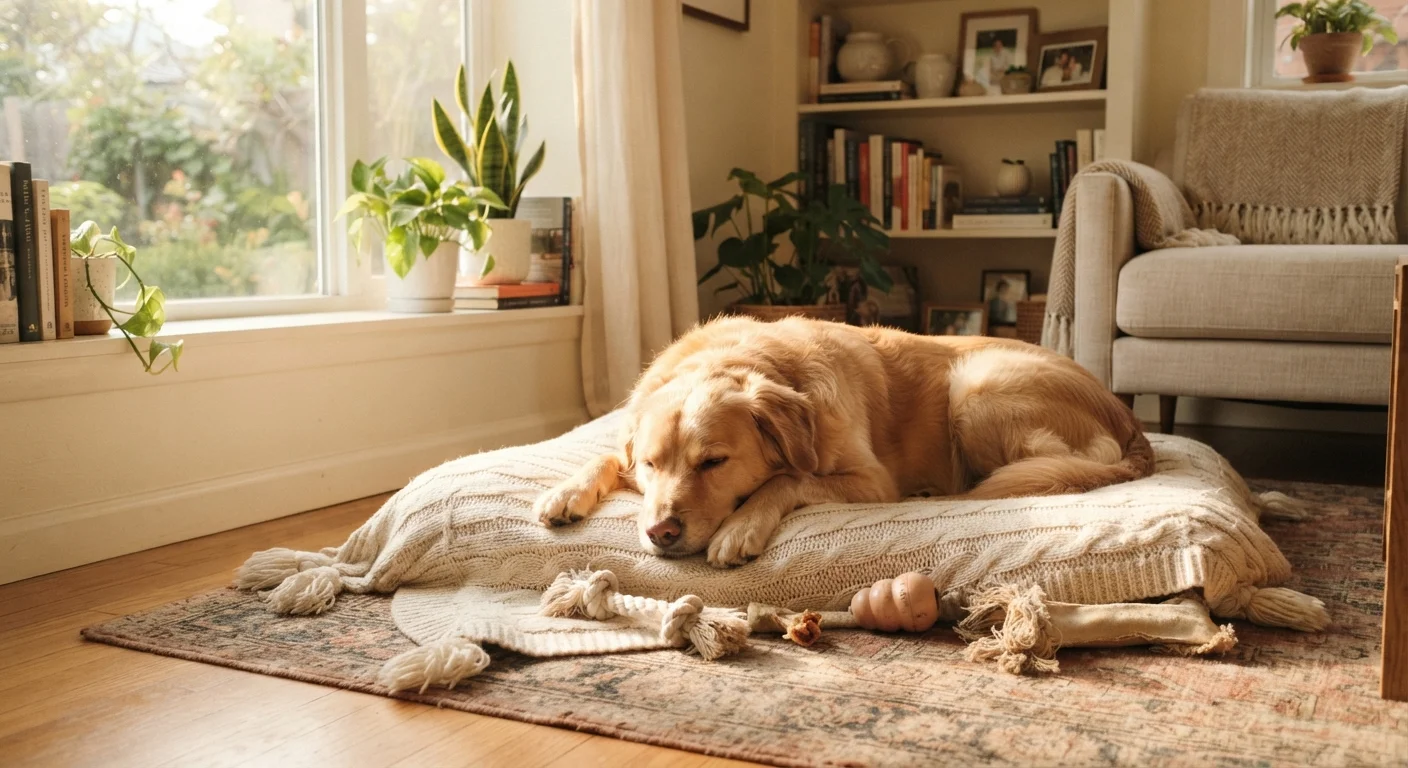
Choose a low-traffic area of your home and set it up with your pet's bed, a worn item of your clothing, and access to water. Make this space exclusively positive — never use it for time-outs or discipline. For dogs, a covered crate in a quiet corner works well. For cats, an elevated shelf or a room with a cat door allows self-regulated retreat.
Establish and protect a consistent daily routine
Feed, walk, and play with your pet at the same times each day. Predictability is one of the most powerful anxiety-reducers available to pet owners. Even a rough schedule — morning walk, midday interaction, evening feeding — gives your pet a framework that reduces uncertainty.
Increase enrichment and appropriate exercise
Under-stimulation is a surprisingly common driver of anxiety and destructive behaviour. Add puzzle feeders at mealtimes, rotate toys weekly to maintain novelty, and ensure your pet gets species-appropriate physical activity daily. For dogs, sniff-focused walks (letting them pause and explore scents) are as mentally tiring as a faster-paced walk. For cats, interactive wand-toy sessions for 10–15 minutes twice daily meet both predatory instinct and social bonding needs.
For training-based enrichment ideas, the pet training tips hub offers practical methods grounded in positive reinforcement.
Manage known trigger events proactively
For predictable stressors — fireworks holidays, vet visits, home renovations — prepare in advance. Move your pet to their safe zone before the event starts, use white noise to mask sounds, and maintain calm body language yourself. Your own emotional state is perceptible to your pet; anxious owners can inadvertently reinforce anxious behaviour.
Reassess after two to three weeks
Review your behaviour log after two to three weeks of consistent changes. If anxiety signals have reduced in frequency or intensity, continue what's working. If there's no improvement — or if symptoms have worsened — consult your veterinarian. Some animals need additional professional support beyond environmental management alone.
Your Calm Is Contagious
Research in animal behaviour consistently shows that pets attune to their owners' emotional states. Speaking in a slow, low-pitched voice, moving deliberately, and avoiding anxious fussing during stressful moments all help signal safety to your pet. This costs nothing and works immediately.
For broader ideas on structuring your home to support wellbeing — your own as well as your pet's — the home space wellness guide offers complementary, practical ideas.
When to Involve Your Veterinarian
Environmental changes can do a great deal, but they have limits. If your pet's anxiety is severe, worsening, or accompanied by physical symptoms — vomiting, significant weight loss, skin lesions from over-grooming — a veterinary evaluation is the appropriate next step. A vet can rule out medical causes, and if behavioural support is needed, they can refer you to a certified animal behaviourist.
Do not attempt to self-administer supplements or medications without professional guidance. The interaction between a pet's individual health profile and any intervention — natural or pharmaceutical — requires professional assessment. This article provides general educational information only and is not a substitute for veterinary advice tailored to your specific animal.
Keeping a seasonal record of your pet's behaviour can also help your vet identify patterns. Our seasonal pet health checklist is a useful companion tool for that kind of ongoing monitoring.
This article is for informational and educational purposes only. It is not veterinary advice. Always consult a licensed veterinarian for concerns about your pet's health or behaviour.