

Why Substitutions Work — When You Know the Role
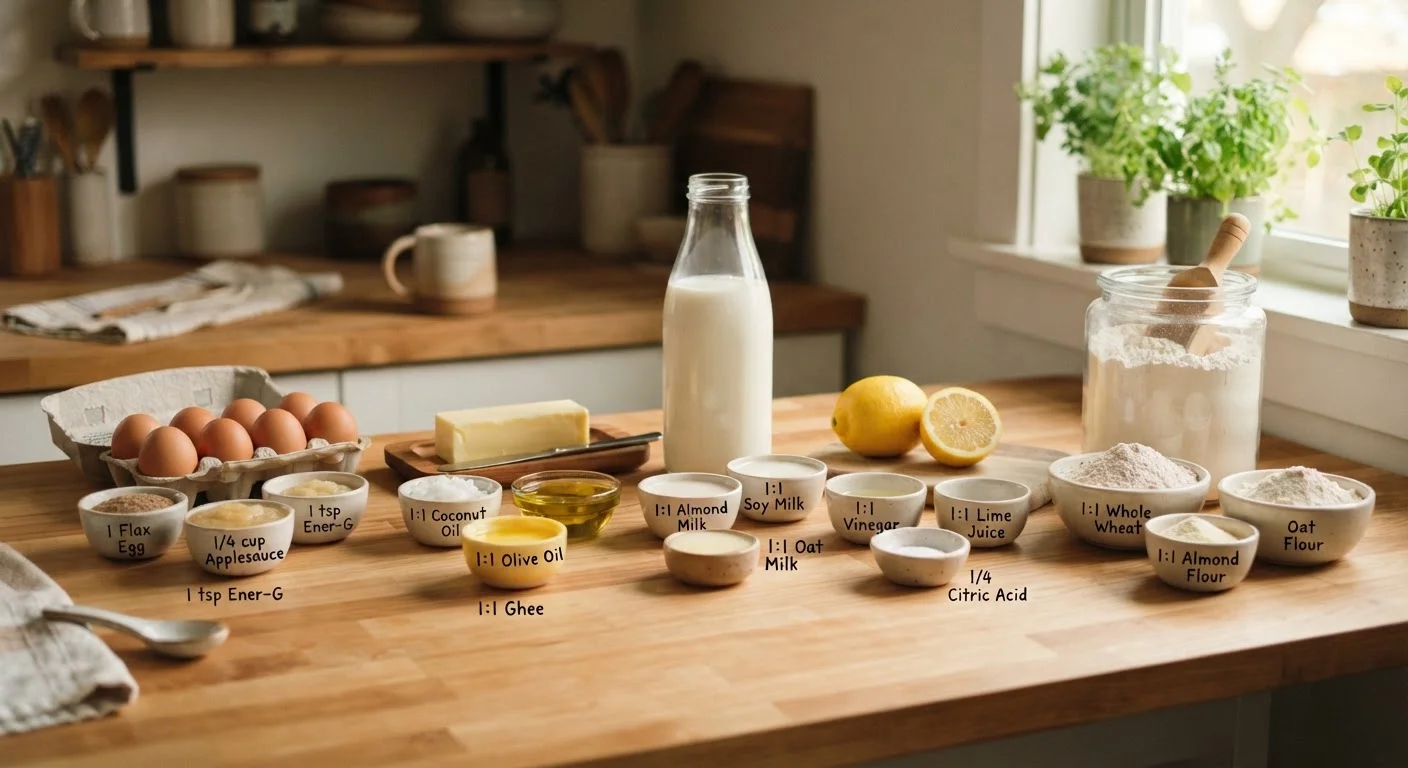
Every ingredient in a recipe serves a functional purpose: binding, leavening, adding fat, providing moisture, or building flavor. When you understand that role, a substitution becomes straightforward rather than guesswork. The goal isn't to replicate a flavor exactly — it's to preserve the dish's structure and taste profile well enough that the result still succeeds.
This reference covers the most common substitution scenarios home cooks face, from missing a single egg to running out of heavy cream on a weeknight. For a broader look at keeping costs down in your kitchen, see which pantry staples quietly inflate your grocery bill.
Common Ingredient Swaps at a Glance
Use this section as a quick lookup. Each swap notes what the original ingredient does and what to expect from the alternative.
Eggs
- 1 egg (binding): 1 tablespoon ground flaxseed + 3 tablespoons water (let sit 5 minutes). Works well in muffins, pancakes, and dense cookies. Adds a mild nutty note.
- 1 egg (moisture/binding): ¼ cup unsweetened applesauce. Best in quick breads and brownies; adds slight sweetness.
- 1 egg (leavening): 1 tablespoon white vinegar or lemon juice + 1 teaspoon baking soda. Creates lift in cakes and muffins.
Butter
- 1 cup butter (baking fat): ¾ cup neutral vegetable oil. Reduces water content, so baked goods may be slightly denser but stay moist.
- 1 cup butter (savory cooking): Equal amount of olive oil or a mix of olive oil and a small pat of any solid fat for richness.
Buttermilk
- 1 cup buttermilk: 1 cup milk + 1 tablespoon white vinegar or lemon juice. Stir and let stand 5 minutes before using. Produces the same acidic reaction that activates baking soda.
Heavy Cream
- 1 cup heavy cream (in sauces or soups): ¾ cup whole milk + 3 tablespoons melted butter. Provides comparable richness. Avoid using in whipped applications — it won't hold peaks.
- 1 cup heavy cream (dairy-free): Full-fat canned coconut cream. Works well in curries and creamy soups; adds a mild coconut undertone.
Wine in Cooking
- ½ cup dry white wine: Equal amount of low-sodium chicken or vegetable broth + 1 teaspoon white wine vinegar. Provides acidity and depth without alcohol.
- ½ cup red wine: Equal amount of beef broth + 1 teaspoon red wine vinegar or a splash of grape juice. Maintains color and savory undertone.
All-Purpose Flour (as thickener)
- 1 tablespoon flour: 1½ teaspoons cornstarch. Cornstarch thickens more efficiently and produces a clearer sauce. Add to cold liquid before heating to prevent clumping.
Binding agent
An ingredient that holds a mixture together during cooking or baking. Eggs are a common binder; flaxseed meal and applesauce can serve the same function in many recipes.
Leavening
The process by which a baked good rises. Chemical leaveners like baking soda and baking powder release gas when they contact acid or heat, creating a lighter texture.
Emulsification
The blending of fat and liquid into a stable mixture. Butter aids emulsification in sauces; without it, sauces may separate more easily.
Acidity
The tartness contributed by ingredients like lemon juice, vinegar, or buttermilk. Acidity activates baking soda and balances richness in savory dishes.
Learning to improvise with pantry staples is one of the most practical kitchen skills every home cook should build. When flavor is the priority, don't overlook how a good sauce can carry even simple substituted ingredients.
Rules That Make Any Swap More Likely to Succeed
A few guiding principles apply across nearly every substitution scenario:
- Match the moisture level. If you swap a wet ingredient for a dry one (or vice versa), adjust liquid quantities elsewhere in the recipe to compensate.
- Account for sweetness. Applesauce and coconut cream both bring natural sweetness. Reduce added sugar by 1–2 tablespoons when using these.
- Consider the texture goal. Substitutions that work in a quick bread won't always work in a delicate sponge. When precision matters — as in pastry — test first with a small batch.
- Watch acidity interactions. Swaps involving lemon juice or vinegar activate baking soda. Use the substitute immediately after mixing; don't let it sit.
If you're building kitchen confidence from scratch, a practical guide to budget cooking covers the bigger picture of meal planning and ingredient strategy. And for flavor-forward cooking on a tight budget, see how herbs and aromatics can do the heavy lifting even when main ingredients change.