

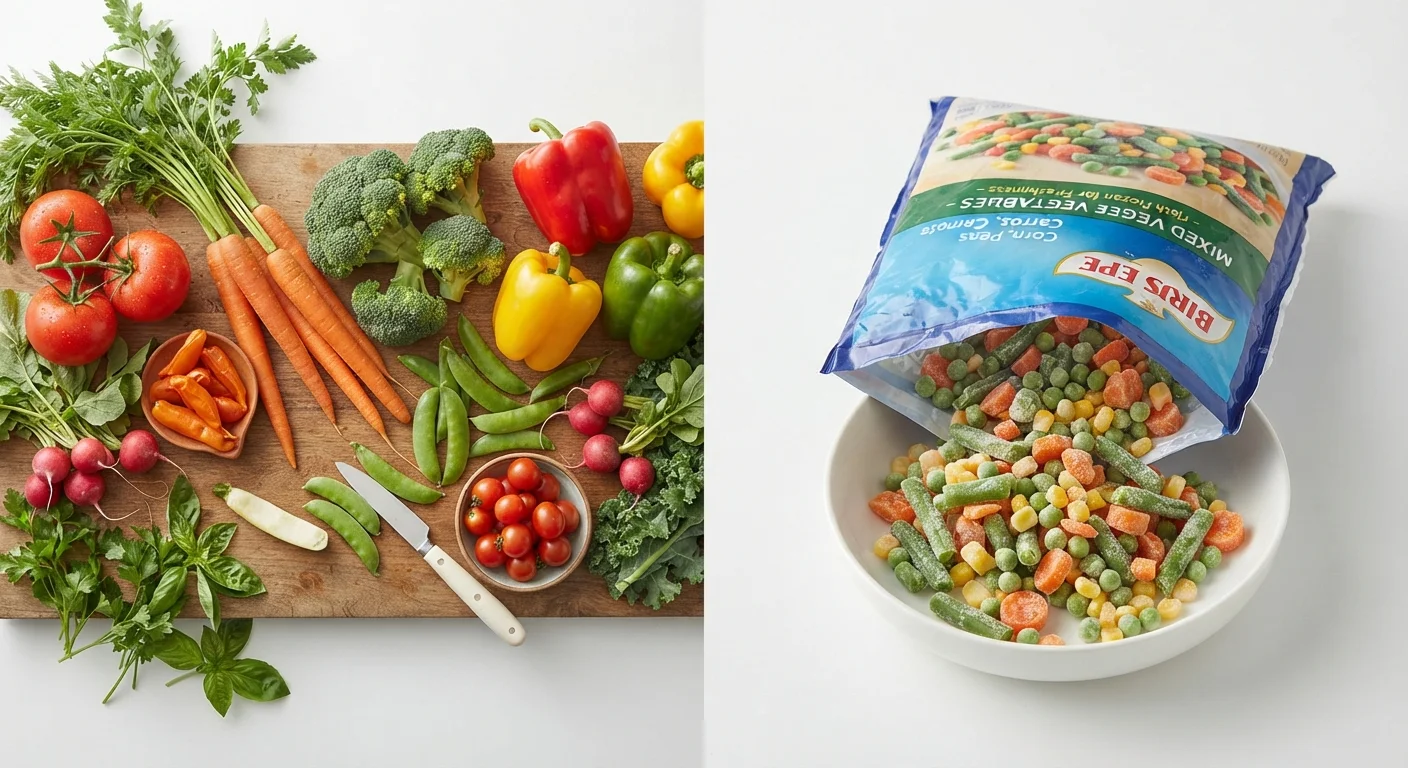
Key Takeaways
- Frozen vegetables are often nutritionally comparable — and sometimes superior — to fresh produce.
- The freezing process locks in nutrients shortly after harvest, minimizing loss during transit.
- Fresh vegetables can lose significant nutrients within days of being picked.
- Both options have practical strengths; choosing wisely depends on how and when you cook.
- Frozen vegetables typically cost less and reduce food waste, making them a smart everyday choice.
Why the "Fresh Is Best" Assumption Deserves Scrutiny
For decades, many home cooks have assumed that fresh vegetables sitting in the produce aisle are inherently more nutritious than their frozen counterparts. It's an intuitive belief — fresh looks better, it hasn't been processed, and it feels closer to nature. But nutritional science tells a more complicated story, and understanding it can meaningfully change how you shop and cook.
The key is timing. Most vegetables destined for freezing are harvested at peak ripeness and flash-frozen within hours. That rapid freeze essentially pauses nutrient degradation. Fresh vegetables, by contrast, begin losing water-soluble vitamins like vitamin C and several B vitamins the moment they're picked — and they may spend days in transit and on store shelves before reaching your kitchen. For more on how common food assumptions stack up against evidence, see our guide to kitchen myths.
Myth
Frozen vegetables have been processed and stripped of their nutrients.
Fact
Freezing is a preservation method, not a processing step that removes nutrients. Most vitamins are retained well through flash-freezing.
Flash-freezing slows or halts the enzymatic and microbial activity that causes nutrient loss. The blanching step that precedes freezing does reduce some heat-sensitive vitamins like vitamin C slightly, but the subsequent freeze locks in the remaining nutrition effectively. Fresh produce loses the same vitamins continuously during storage and transit — often for longer periods.
Myth
Fresh vegetables from the store were just recently picked.
Fact
Most supermarket produce travels significant distances and may sit in storage for days or weeks before purchase.
Depending on the season and your location, fresh vegetables can spend anywhere from a few days to several weeks in cold storage and transit before appearing on store shelves. During that time, vitamins — particularly vitamin C and folate — degrade steadily. A bag of frozen peas, frozen at the farm within hours of harvest, may actually deliver more of those nutrients than "fresh" peas that have been refrigerated for a week.
Myth
Frozen vegetables taste worse and will ruin your recipes.
Fact
For most cooked applications — soups, stir-fries, casseroles — frozen vegetables perform comparably or better than out-of-season fresh produce.
Flavor degradation in frozen vegetables is largely a texture concern, not a flavor-compound concern. When used in cooked dishes, the textural softness of frozen vegetables is either irrelevant or an advantage (they cook faster and more evenly). The real flavor variable is whether fresh produce is in peak local season — out-of-season fresh vegetables, bred for shipping durability rather than taste, often disappoint more than a quality frozen bag would.
Myth
Buying fresh vegetables is always the healthier choice for your family.
Fact
Health outcomes depend on actually eating vegetables consistently — and frozen options make that far easier and more affordable long-term.
A fresh head of broccoli that wilts before you get around to cooking it delivers no nutrition at all. The practical case for frozen vegetables includes reduced spoilage, lower cost per serving, and the convenience that makes weeknight vegetable consumption realistic for busy households. Consistently eating adequate vegetables — regardless of whether they're fresh or frozen — is what research associates with better diet quality.
Myth
Frozen vegetables contain added salt, sugar, or preservatives.
Fact
Plain frozen vegetables typically contain only one ingredient: the vegetable itself. No preservatives are needed because freezing is the preservation method.
The ingredient label on a standard bag of frozen peas, spinach, or broccoli florets usually reads simply "peas," "spinach," or "broccoli." Freezing eliminates the need for chemical preservatives. The important caveat is frozen vegetable blends or meals — products with sauces, seasonings, or cheese — which can contain significant sodium and added ingredients. Always read labels and choose plain frozen vegetables when you want maximum control over what you're eating.
What the Evidence Actually Shows
Studies published in peer-reviewed food science journals have consistently found that frozen vegetables retain levels of vitamins and antioxidants that are broadly comparable to — and in some cases higher than — fresh produce that has been stored for several days. This doesn't mean frozen vegetables are universally superior; it means the gap people assume exists often isn't there in practice.
~25%
Vitamin C loss in refrigerated fresh broccoli
Research published in food science literature suggests fresh broccoli can lose roughly a quarter of its vitamin C within a few days of refrigerated storage.
1–3 days
Time to significant nutrient loss in leafy greens
Studies on post-harvest nutrient retention indicate that spinach and similar greens begin losing folate and vitamin C measurably within one to three days at refrigerator temperatures.
$1.50
Estimated average cost per serving, frozen vegetables
USDA Economic Research Service data consistently shows frozen vegetables cost less per edible cup than fresh equivalents across most vegetable categories.
Texture is a legitimate area where fresh holds an edge for certain preparations. Vegetables with high water content — like zucchini, lettuce, or cucumber — do not freeze well and become mushy after thawing. For raw salads or dishes where crunch matters, fresh is the right call. But for soups, stir-fries, casseroles, grain bowls, and roasted dishes, frozen vegetables perform just as well and sometimes better, since they're already partially softened. You can explore which foods genuinely don't benefit from freezing in our article on foods your freezer quietly ruins.
Watch for Added Ingredients in Flavored Frozen Products
Plain frozen vegetables are minimally processed and additive-free. However, frozen vegetable blends marketed with sauce, seasoning packets, or cheese can contain high levels of sodium and saturated fat. Always check the nutrition facts panel and ingredient list before assuming a frozen vegetable product is as simple as it appears on the front of the package.
From a budget perspective, frozen vegetables consistently cost less per serving than fresh equivalents, and because they don't spoil, they dramatically cut down on food waste — one of the most overlooked drains on a household grocery budget. For a broader look at how spending assumptions mislead shoppers, the common grocery saving myths article is worth reading alongside this one.
Putting Both to Work in Your Kitchen
The most practical approach isn't choosing a side — it's knowing which option fits which situation. Keep a core stock of frozen vegetables (peas, corn, edamame, broccoli, spinach, mixed stir-fry blends) for weeknight meals when time is short and waste needs to be minimized. Reserve fresh produce for dishes where texture, raw preparation, or presentation matter most.
When cooking frozen vegetables, avoid boiling them in large amounts of water, which leaches water-soluble vitamins into liquid you'll discard. Steaming, roasting, or sautéing preserves more nutrients and delivers better flavor. For more everyday cooking strategies that hold up under scrutiny, visit the Home Cooking Tips hub. And if you want a deeper dive specifically into frozen vegetable use, The Frozen Vegetable Myth covers technique and common misuse in more detail.