

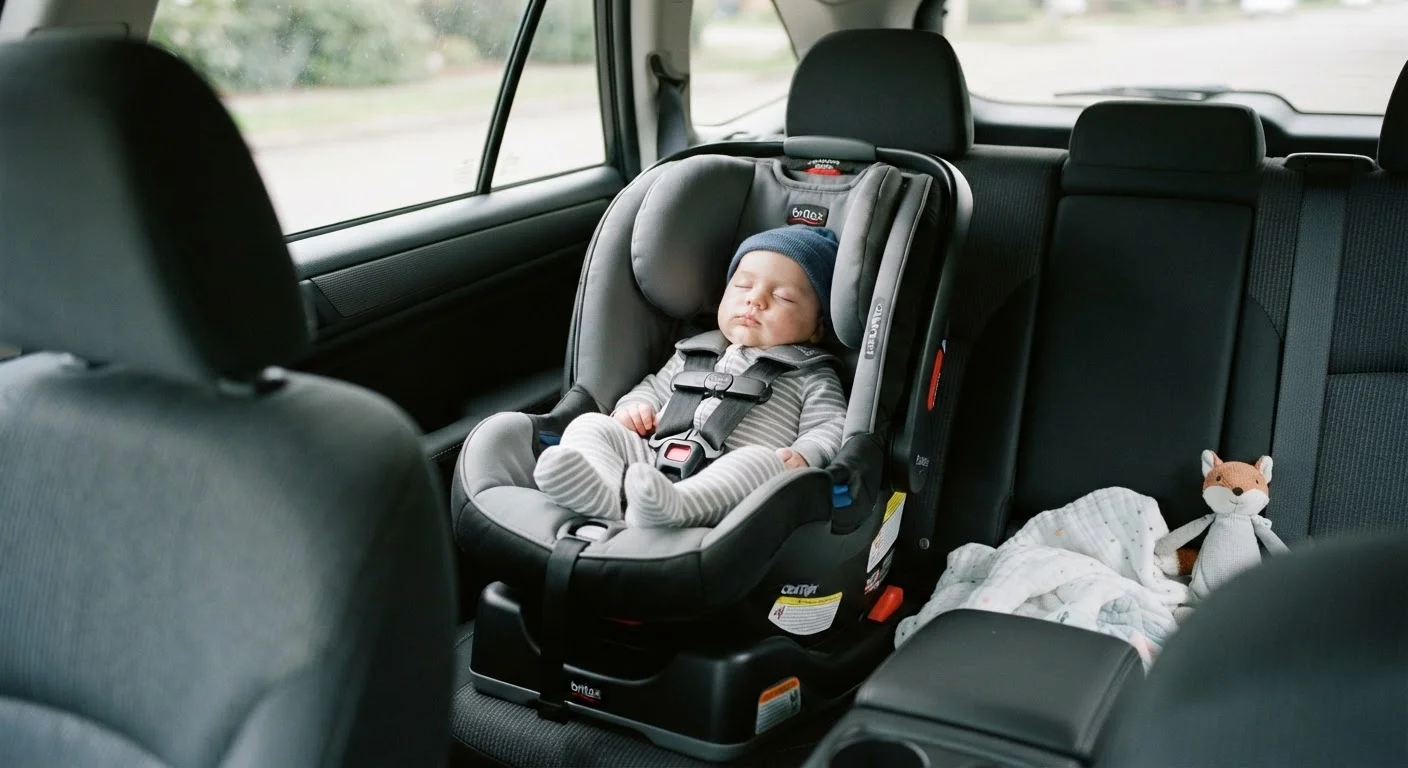
Key Takeaways
- State car seat laws set a minimum — best practice often extends well beyond the legal requirement.
- Rear-facing is the safest position for young children; most can stay rear-facing longer than parents realize.
- A correctly installed seat should not move more than one inch in any direction at the belt path.
- The harness chest clip should sit at armpit level, not on the stomach or throat.
- Having a seat checked by a certified Child Passenger Safety Technician is free and widely available.
Child Passenger Safety
Child passenger safety refers to the practices, equipment, and positioning standards that protect children riding in vehicles. It goes beyond simply buckling a child in — it includes selecting the right seat for a child's age, weight, and height; installing it correctly; and keeping children in each seat stage for as long as safely possible. State laws set a legal floor, but meeting the legal minimum doesn't always mean a child is as protected as they could be.
The National Highway Traffic Safety Administration (NHTSA) estimates that car seats, when used correctly, can reduce the risk of death by up to 71% for infants and 54% for toddlers in passenger vehicles.
Why the Law Is a Starting Point, Not a Finish Line
Every U.S. state has car seat laws, but they vary significantly — and even the strictest ones describe a legal minimum, not an optimal safety standard. A child can be perfectly legal and still be in a seat that's too small, facing the wrong direction for their size, or strapped in with a harness that's too loose to do its job in a crash.
Understanding the gap between legal and safest is one of the most important things a parent or caregiver can do. The rules on the box and the rules in your state law are floors. Safety experts, pediatricians, and NHTSA guidance consistently recommend keeping children in each seat stage as long as the seat's weight and height limits allow — not just until a birthday.
For broader road safety context, see our complete road safety reference for everyday drivers.
Up to 71%
Reduction in infant death risk when car seats are used correctly
According to NHTSA data on restraint effectiveness in passenger vehicles.
~46%
Car seats estimated to have at least one misuse error
Research cited by the American Academy of Pediatrics based on observed installation checks at inspection stations.
4'9"
Typical height at which seat belt alone fits correctly
Cited by NHTSA and the AAP as a general readiness benchmark for transitioning out of a booster seat.
The Four Stages — and the Mistakes Made at Each One
Child passenger safety guidance generally follows four seat stages. Each comes with its own set of common errors.
Stage 1: Rear-Facing Infant or Convertible Seat
This is the safest position for young children because it distributes crash forces across the back, shoulders, and head. The most common mistake: transitioning forward-facing too early. A child can stay rear-facing until they hit the seat's height or weight maximum — which for many convertible seats is 40 lbs or more.
Stage 2: Forward-Facing Seat with Harness
Once a child genuinely outgrows rear-facing limits, a forward-facing seat with a five-point harness is next. Common errors include a chest clip positioned too low (it should sit at armpit level), harness straps routed below the shoulders rather than at or above them, and straps that are too loose. The pinch test helps: if you can pinch harness webbing at the collarbone, it needs tightening.
Stage 3: Belt-Positioning Booster
Boosters exist because vehicle seat belts are designed for adults. Without a booster, the lap belt can ride across a child's soft abdomen instead of the strong hip bones — a serious injury risk in a crash. Children should stay in a booster until the seat belt fits correctly on its own.
Stage 4: Seat Belt Alone
The move to seat belt only is about fit, not age. Use the five-step test: back flat against the seat, knees bent at the seat edge, lap belt on upper thighs, shoulder belt across the chest and shoulder (not the neck), and the child can stay positioned that way for the whole trip.
Seatbelt fit misconceptions are more common than most drivers expect — common seatbelt myths are worth reading alongside this guide.
Installation: Where Most Problems Actually Live
Studies have found that a substantial majority of car seats are used incorrectly in some way — and installation errors are among the most common. A seat doesn't have to look wrong to be wrong.
Two installation systems exist in most modern vehicles: LATCH (Lower Anchors and Tethers for Children) and the vehicle seat belt. Either can provide a secure installation when used correctly. LATCH has weight limits — check both your vehicle manual and the car seat manual, since combined child-plus-seat weight may exceed the anchor limit sooner than you expect.
Get a Free Seat Inspection
Certified Child Passenger Safety Technicians (CPSTs) offer free car seat checks at inspection stations across the country. They can identify installation errors, confirm fit, and walk you through your specific seat. You can find a local station through NHTSA's website or SafeKids.org — no appointment is required at many locations.
After installation, test by grabbing the seat at the belt path and pushing firmly side to side, then front to back. If it moves more than one inch, it isn't secure. Angle also matters for rear-facing seats: most have a built-in indicator to confirm the correct recline angle, which keeps the airway open for infants who can't yet hold their heads up.
A free resource many parents don't know about: certified Child Passenger Safety Technicians (CPSTs) can inspect your installation at no cost. Find a local inspection station through NHTSA's website or SafeKids.org.
Details That Make a Real Difference
Several smaller factors add up to meaningful protection:
- Expiration dates: Car seats have them — typically 6 to 10 years from manufacture. Plastic degrades, and older seats may predate updated safety standards.
- After a crash: NHTSA guidance distinguishes between minor and moderate-to-severe crashes. For anything beyond a very minor fender-bender, the seat should generally be replaced even if it looks intact.
- Registration: Register your seat with the manufacturer so you receive recall notices. This takes two minutes and costs nothing.
- Vehicle placement: The back seat is safest for all children under 13. If the center rear position allows a secure install, it puts the child farthest from side-impact zones.
Safe driving habits compound with safe seating. Understanding safe following distance reduces the likelihood of a crash reaching your child's seat in the first place.