

Key Takeaways
- A pet's number on the scale is not a reliable indicator of whether they are at a healthy weight.
- Body condition scoring uses visual and hands-on cues to assess fat coverage and muscle mass.
- Both overweight and underweight pets face meaningful health risks that owners can help prevent.
- You can learn to do a basic BCS check at home between vet visits.
- Weight management works best when diet and exercise are adjusted with veterinary guidance.
Body Condition Score (BCS)
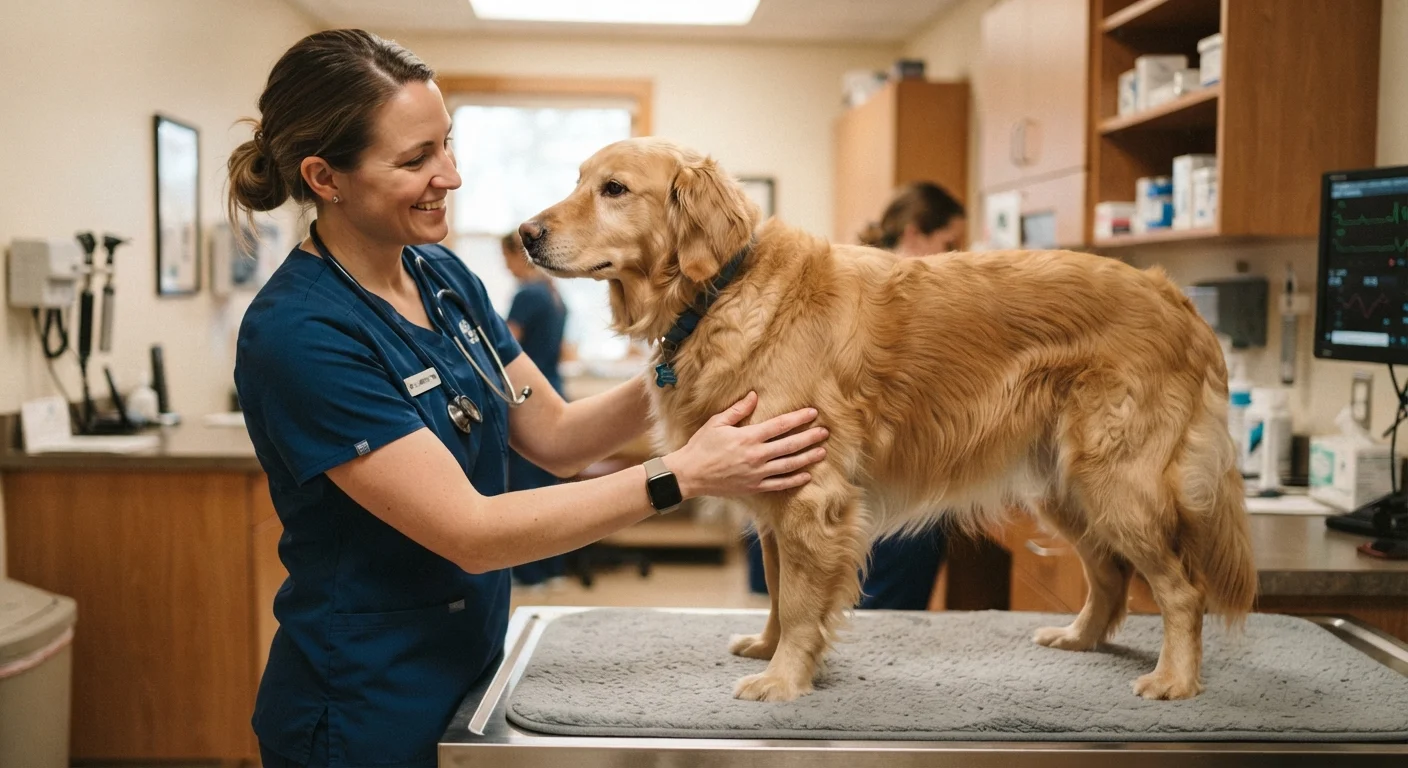
A body condition score is a standardized system veterinarians use to evaluate whether a pet carries an appropriate amount of body fat and muscle. Unlike weight alone, it accounts for each animal's individual frame size and build. Vets assess it by looking at and gently feeling key areas of the body — such as the ribs, waist, and spine — and assign a score on a numbered scale.
Most veterinary practices use either a 5-point or 9-point BCS scale. On the 9-point version, a score of 4–5 is considered ideal; scores of 6–9 indicate varying degrees of excess weight, while 1–3 suggest underweight.
Why Weight Alone Misleads
Imagine two Labrador Retrievers, both weighing exactly 75 pounds. One has a lean, muscular build with clearly defined ribs just beneath the skin. The other has a thick layer of fat obscuring those same ribs and no visible waist. The scale reads the same number — but these two dogs are in very different physical condition.
This is the core problem with relying on weight as the primary health indicator for pets. Body weight doesn't account for frame size, bone density, or the ratio of muscle to fat. A small-framed dog can be overweight at a number that looks fine on a breed chart, while a large-boned dog may appear heavy but actually carry very little excess fat.
Veterinarians have long recognized this limitation, which is why body condition scoring has become a standard part of routine care. It shifts the focus from a number to a physical profile — and that distinction matters for your pet's long-term health.
~60%
US dogs and cats estimated to be overweight or obese
According to survey data from the Association for Pet Obesity Prevention, a majority of companion animals in the US carry excess body weight.
2–2.5 years
Potential reduction in lifespan linked to obesity in dogs
Research published in veterinary journals has associated chronic excess weight with meaningfully shorter lifespans in dogs compared to lean counterparts.
9-point
Scale used in the most common BCS system
The Purina Body Condition System, widely adopted in veterinary practice, uses a 9-point scale where 4–5 represents ideal condition.
How Body Condition Scoring Works
A body condition score (BCS) is determined through a combination of visual observation and gentle physical palpation — meaning your vet looks at and feels your pet's body in specific places. The key areas assessed include:
- Ribs: Should be easily felt with light pressure, with minimal fat covering
- Waist: When viewed from above, a visible indentation should appear behind the rib cage
- Abdominal tuck: Viewed from the side, the belly should rise upward toward the hind legs, not hang level or drop
- Spine and hip bones: Shouldn't be sharply prominent, but also shouldn't require deep pressure to locate
Using those cues, a vet assigns a score — typically on a 9-point scale. A score of 4 or 5 reflects ideal body condition. Scores climbing toward 7, 8, or 9 signal increasing excess fat, while scores of 1, 2, or 3 indicate the pet is underweight.
This system works across species and breeds because it's based on relative body composition rather than fixed weight targets. You can review the BCS system more broadly in the context of your pet's overall diet by reading our introduction to pet nutrition.
Health Risks at Both Ends of the Scale
Pet obesity is one of the most common preventable health conditions in companion animals. Excess body fat is associated with joint disease, insulin resistance, breathing difficulties, and increased surgical risk. In cats specifically, obesity is a significant risk factor for hepatic lipidosis — a serious liver condition — and feline diabetes.
But underweight pets face their own serious risks. Low body condition can indicate chronic illness, dental pain preventing adequate eating, parasites, or malabsorption disorders. Muscle wasting — a separate concern from fat loss — can occur even in pets that appear a normal weight, particularly in older animals or those with chronic disease.
Because the risks run in both directions, the goal isn't simply "less weight" — it's appropriate body composition for that individual animal. Spaying or neutering can influence metabolism and contribute to gradual weight gain if diet isn't adjusted; our article on spaying and neutering health considerations covers that relationship in more detail.
What You Can Do Between Vet Visits
You don't need a clinic scale to stay informed about your pet's body condition. A simple at-home check takes less than a minute and can help you notice gradual changes before they become significant problems.
Place both hands on your pet's rib cage with light pressure. You should feel individual ribs without digging in, and without a thick, spongy layer between skin and bone. Step back and look down at your pet from above — a healthy waist should be visible as a narrowing between the ribs and hips. From the side, the belly line should slope upward, not hang flat or balloon outward.
If something seems off, document it and bring it to your vet's attention. Many clinics welcome weight check drop-ins between annual visits at no charge. For practical guidance on adjusting how much your pet eats, our article on portion sizes and feeding schedules is a useful next step. And if you want to understand what a routine wellness exam actually involves, see our overview of annual vet visits.
Make Body Checks a Monthly Habit
Set a recurring reminder to do a quick rib and waist check on your pet once a month. It takes under a minute and helps you catch gradual changes — which can be hard to notice day-to-day when you're with your pet constantly. Snap a photo from above and from the side each time to track changes visually over months.
This article is for general informational purposes only and is not a substitute for professional veterinary advice. Always consult your veterinarian regarding your pet's health, weight management, or dietary needs.