

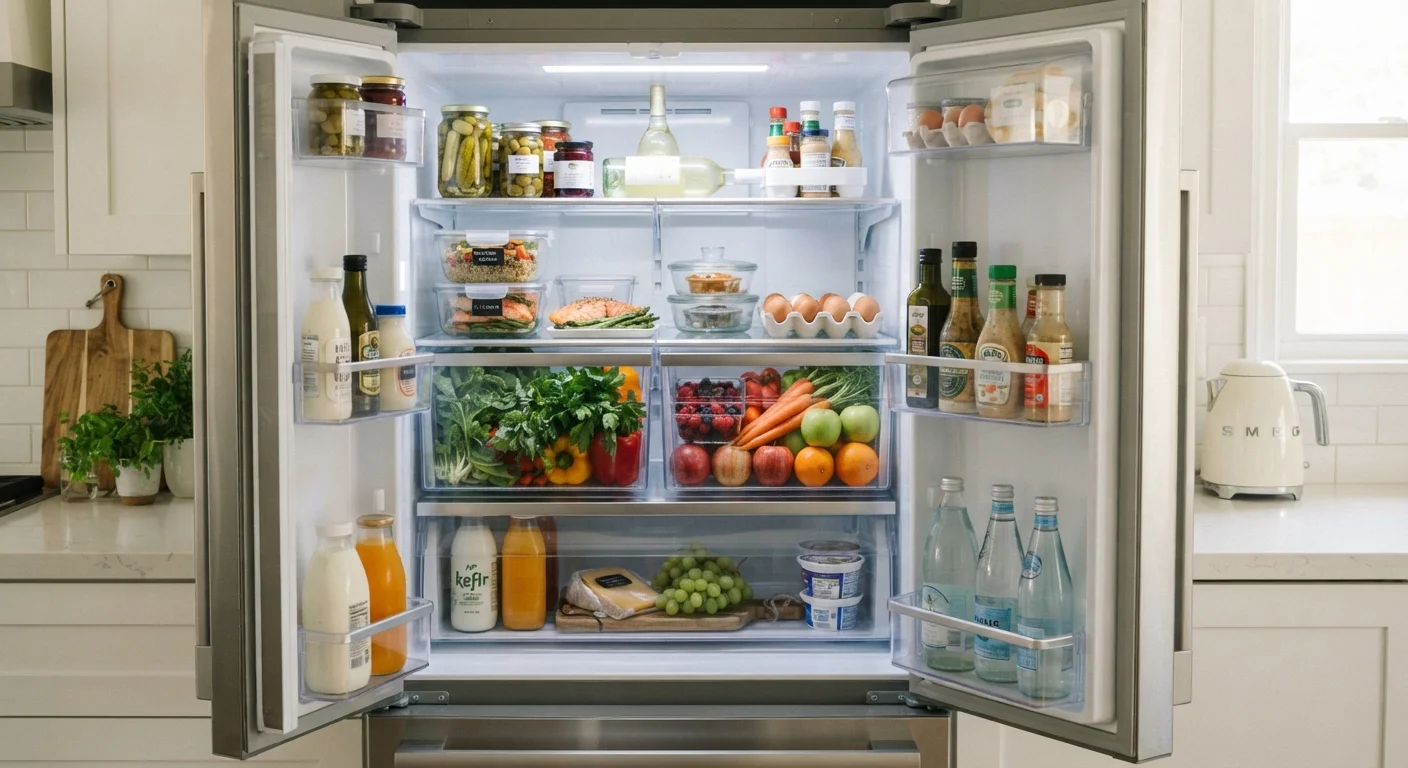
Key Takeaways
- The built-in door egg tray is one of the worst spots to store eggs due to temperature swings.
- Crisper drawers are humidity-controlled zones — mixing produce types defeats their purpose.
- Overpacking your fridge restricts airflow and causes uneven cooling throughout.
- Leftovers stored in airtight containers last longer and take up less space than bowls covered with plastic wrap.
- Not all foods belong in the fridge — some items are degraded by cold temperatures.
Why Common Fridge Habits Backfire
Most of us organize our refrigerators the way we were taught — eggs in the door tray, leftovers under plastic wrap, fruit and vegetables both jammed into the crisper. These habits feel logical, but many of them actively work against food freshness and kitchen efficiency. The result: food spoils faster, space gets wasted, and the fridge becomes a source of daily frustration rather than a useful tool.
The good news is that rethinking a few core habits — without buying any new products — can meaningfully extend how long your food stays fresh and how easy your fridge is to navigate. These aren't arbitrary rules; they're grounded in how cold air moves, how produce behaves, and what food storage science actually shows.
For a broader look at how common kitchen assumptions fall apart under scrutiny, see our roundup of kitchen myths.
Myth
The door is the best place to store eggs because there's a built-in tray designed for them.
Fact
The door is the warmest, most temperature-variable spot in your fridge — the worst place for eggs.
That molded egg tray in the door is a design legacy, not a food science recommendation. Every time you open the fridge, door-shelf temperatures fluctuate significantly. Eggs are porous and absorb odors and temperature changes easily, which can shorten their shelf life and compromise quality. Store eggs on a middle or upper shelf toward the back, where temperatures stay most consistent.
Myth
A full fridge stays colder and uses less energy than a half-empty one.
Fact
Overcrowding blocks airflow and forces your fridge to work harder, leading to uneven temperatures.
While it's true that thermal mass helps a fridge recover after the door opens, jamming shelves full is counterproductive. Refrigerators cool by circulating cold air. When items are packed tightly, vents get blocked and air can't move freely — meaning some areas stay warm while others are over-chilled. Aim for a fridge that is comfortably stocked, not stuffed. Leaving visible space between items keeps everything at a safe, even temperature.
Myth
The crisper drawer is just extra storage space — it doesn't matter what goes in there.
Fact
Crisper drawers are humidity-controlled zones engineered to extend the life of specific produce types.
Most refrigerators have two crisper settings: high humidity (for leafy greens, herbs, and vegetables that wilt) and low humidity (for fruits that emit ethylene gas, like apples and pears). Mixing fruits and vegetables in the same high-humidity drawer speeds up spoilage, because ethylene gas from fruit causes nearby greens to yellow and deteriorate faster. Check your drawer controls and separate produce by type to actually get the benefit these drawers offer. For more on where produce belongs, see our guide to food storage locations.
Myth
Covering leftovers with plastic wrap over a bowl is just as effective as using a sealed container.
Fact
Loosely draped plastic wrap allows air exchange, drying food out and exposing it to odors from other items.
A proper airtight container creates a sealed environment that slows oxidation, moisture loss, and cross-contamination of smells. Plastic wrap stretched over a bowl is rarely airtight — it lifts, shifts, and creates gaps. Transferring leftovers into appropriately sized, lidded containers also helps reduce wasted fridge space, since bowls take up far more room than their contents require.
Myth
Everything perishable belongs in the fridge.
Fact
Several common foods are actually degraded by refrigerator temperatures and belong at room temperature.
Tomatoes lose flavor and develop a mealy texture when chilled below about 55°F. Whole onions and garlic become soft and moldy faster in a humid, cold environment — they prefer a cool, dry, dark cupboard. Bread goes stale faster in the fridge due to a process called retrogradation, where starch molecules crystallize more quickly at refrigerator temperatures. Knowing what not to refrigerate clears space and improves food quality. Learn which foods belong on the counter or in the cupboard to make smarter storage decisions.
Smarter Habits That Actually Stick
Correcting these myths isn't about a dramatic weekend overhaul. Small, specific changes make the biggest difference:
- Move eggs to a middle shelf. This single swap protects one of the most temperature-sensitive items in your fridge from constant fluctuation.
- Use your crisper drawers intentionally. High humidity for leafy greens and vegetables, low humidity for fruits. Keep the two categories separate.
- Don't refrigerate tomatoes, whole onions, garlic, or bread unless they're already cut or cooked. You'll free up shelf space and get better-tasting food.
- Switch to airtight containers for leftovers. They stack better, seal properly, and keep food fresh longer than covered bowls.
- Leave breathing room on shelves. Airflow matters more than maximizing every cubic inch.
Don't Ignore Fridge Temperature Settings
Many households run their refrigerator warmer than recommended. The FDA advises keeping your refrigerator at or below 40°F (4°C) to slow bacterial growth. A simple, inexpensive refrigerator thermometer can confirm your actual temperature — the built-in dial is often imprecise. Consistently warm fridges accelerate spoilage regardless of how neatly everything is arranged.
Poor organization habits compound over time — and so do good ones. The same principles that apply inside the fridge extend to adjacent storage. Understanding why kitchen clutter returns can help you build systems that hold up past the initial cleanup.
Food Safety Comes Before Organization
No organizing system matters if it puts food safety at risk. Raw meat should always be stored on the lowest shelf, in a sealed container, to prevent drips contaminating other food. When in doubt about whether a food is still safe to eat, discard it — food poisoning is never worth the saved cost.
Reducing food waste starts with storage. The USDA estimates that US households waste 30–40% of their food — much of it due to improper storage. Better fridge habits aren't just tidier; they're genuinely more economical.
30–40%
Food wasted by US households annually
According to the USDA, American households waste roughly 30–40% of their food supply, much of it due to improper storage at home.
40°F
Maximum safe refrigerator temperature
The FDA recommends keeping refrigerators at or below 40°F (4°C) to inhibit the growth of harmful bacteria.