

Key Takeaways
- Dry heat methods like roasting and searing create browning and concentrated flavor through the Maillard reaction.
- Moist heat methods like steaming and braising preserve moisture and break down tough connective tissue gently.
- Tender, lean ingredients generally do best with dry heat; tough, collagen-rich cuts benefit from moist heat.
- Some foods — like pork shoulder or chicken thighs — can handle both methods, unlocking deeper complexity.
- Matching method to ingredient structure, not just recipe habit, is the single biggest upgrade most home cooks can make.
Our Verdict
Neither dry nor moist heat is universally superior — each excels in specific conditions. Dry heat maximizes surface flavor and texture; moist heat tenderizes and preserves delicate moisture. Understanding the logic behind each method lets you cook any ingredient with intention rather than guesswork.
| Best for | Recommended |
|---|---|
| Developing rich, browned crust and concentrated flavor | Dry Heat (roasting, searing, grilling) |
| Tenderizing tough, collagen-rich cuts over time | Moist Heat (braising, simmering, slow-cooking) |
| Cooking delicate fish, eggs, or vegetables without drying them out | Moist Heat (steaming, poaching) |
| Quick weeknight proteins and crispy-edged vegetables | Dry Heat (pan-searing, roasting) |
What Actually Separates Dry Heat from Moist Heat
The distinction is simpler than culinary terminology makes it sound. Dry heat transfers energy to food through hot air, direct contact with a hot surface, or radiation — with no water involved. Moist heat uses water, steam, or liquid as the medium that carries heat to the food.
That difference in medium isn't trivial. Water caps the maximum cooking temperature at around 212°F (100°C) at sea level, the boiling point of water. Dry heat environments — an oven set to 425°F, a screaming-hot cast iron pan — can far exceed that ceiling. The result: only dry heat can trigger the Maillard reaction, the chemical process that browns proteins and sugars to create that deeply savory crust on a seared steak or a roasted chicken skin. Moist heat simply cannot reach those temperatures, so browning doesn't happen — but what it can do instead is equally valuable.
For a deeper look at how surface temperature drives those chemical reactions, see our guide to pan temperature — it explains what's happening at the molecular level and how to control it without specialized equipment.
When Dry Heat Is the Right Call
Use dry heat when your goal is flavor concentration, textural contrast, or speed with lean, tender ingredients.
| Dry Heat | Moist Heat | |
|---|---|---|
| Temperature range | Up to 500°F+ (oven/grill) | Max ~212°F (water's boiling point) |
| Browning/Maillard reaction | Yes — crust and caramelization | No — surface stays pale and soft |
| Best for | Tender cuts, vegetables, quick proteins | Tough cuts, grains, delicate poaching |
| Moisture outcome | Can dry out food if overcooked | Retains or adds moisture throughout |
| Common methods | Roasting, searing, grilling, broiling | Braising, steaming, simmering, poaching |
| Time requirement | Often shorter; high-heat, fast cook | Often longer; low-and-slow preferred |
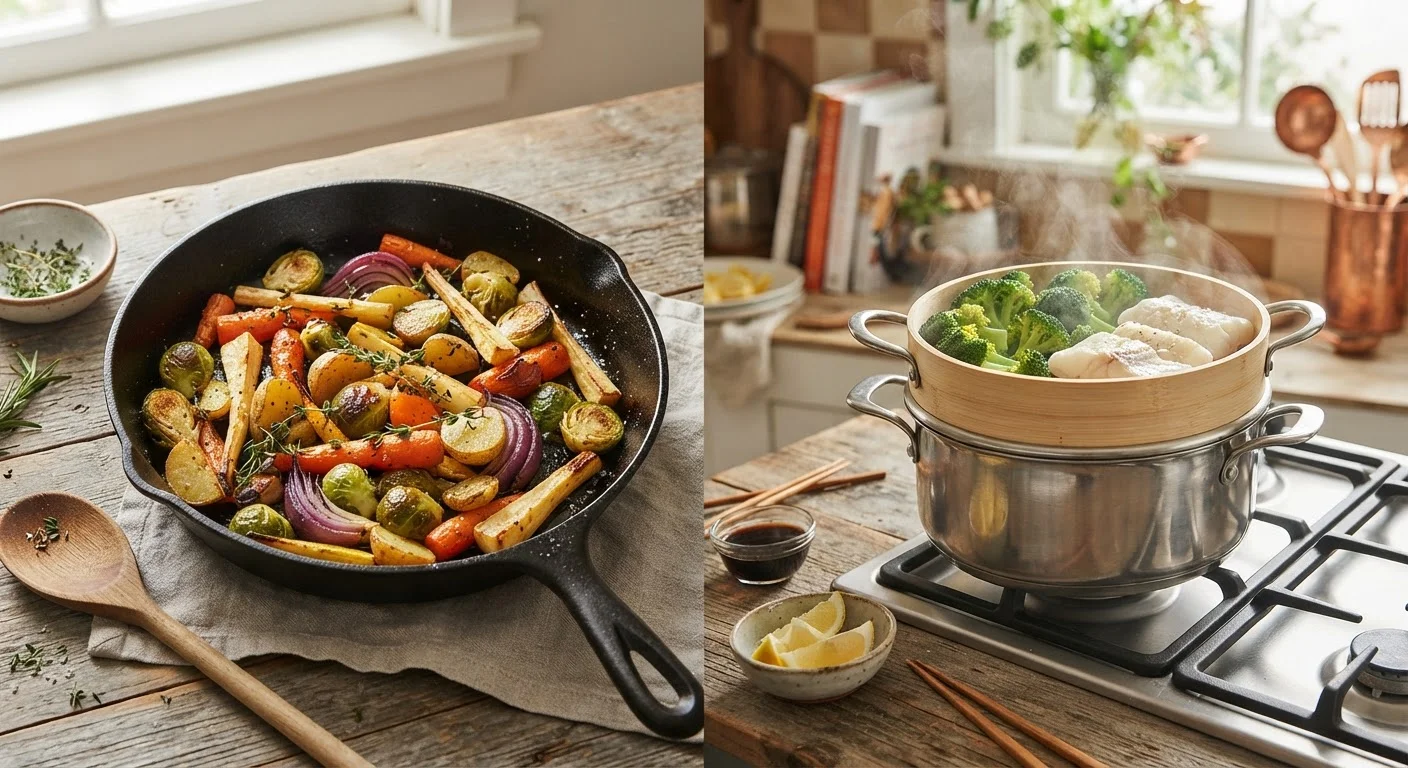
- Roasting works well for vegetables, whole birds, and tender cuts. Hot circulating air evaporates surface moisture quickly, concentrating sugars and creating caramelization on vegetables like carrots or Brussels sprouts.
- Searing and pan-frying suit individual steaks, fish fillets, and chops. High surface contact heat builds a flavorful crust fast — often in under five minutes per side.
- Grilling and broiling add radiant heat from below or above. Useful for quick-cooking proteins and thin cuts where you want char and smoke character without extended cook times.
The key caveat: lean proteins cooked too long with dry heat become dry and tough. Chicken breast, pork loin, and fish fillets have little fat or connective tissue to protect them — they need precise timing, not prolonged exposure.
When Moist Heat Does the Heavy Lifting
Moist heat earns its place with tough cuts, starchy vegetables, legumes, grains, and anything that benefits from slow, gentle coaxing.
Collagen — the connective tissue in cuts like beef chuck, short ribs, lamb shanks, and pork shoulder — only converts to soft, silky gelatin when held at moderate temperatures over extended time in liquid. That's braising. That's why a short rib braised for three hours becomes fork-tender while the same cut grilled on high heat would be almost inedibly chewy.
Combine Both Methods for Maximum Flavor
Braising and other hybrid techniques intentionally use dry heat first to build a sear, then switch to moist heat for tenderization. If you're cooking a tough cut, don't skip the sear — those few minutes in a hot, dry pan add a depth of flavor that no amount of braising liquid alone can replicate. Pat meat dry before searing for the best surface contact and crust.
- Steaming is ideal for fish fillets, dumplings, and green vegetables. Because the food never contacts boiling water directly, water-soluble nutrients like vitamin C and B vitamins are better retained compared to boiling.
- Poaching (submerging in liquid below a boil, roughly 160–180°F) suits eggs, chicken breasts, and delicate fish. The lower temperature keeps proteins from seizing and toughening.
- Braising combines a dry-heat sear first (for Maillard browning), then a long moist-heat braise. It's the best of both: flavor development plus tenderization.
For recipes that rely on braising liquid — whether that's stock, broth, or something richer — understanding what's in your pot matters. Our article on stock, broth, and bone broth breaks down what each contributes to a braise or stew.
Matching Method to Ingredient: A Practical Framework
Rather than memorizing rules, think about the structure of what you're cooking:
- Lean, tender proteins (fish, chicken breast, eggs)
- Low-and-slow moist heat (poaching, steaming) or fast dry heat with careful timing. Avoid prolonged dry heat.
- Tough, collagen-rich cuts (chuck, short rib, lamb shank)
- Long moist heat — braising, slow-cooking, or pressure cooking. Collagen needs time and moisture to break down.
- Root vegetables (carrots, potatoes, parsnips)
- Either method works, with different results. Roasting concentrates and caramelizes; boiling or steaming keeps them mild and soft.
- Leafy and delicate vegetables (spinach, asparagus, peas)
- Quick dry heat (a hot pan, brief roast) or brief steaming. Both preserve color and texture if timed correctly.
- Grains and legumes (rice, lentils, beans)
- Moist heat only — they require hydration and sustained heat to become edible.
Cooking smarter also means thinking about how your prep fits your schedule. Our piece on batch cooking vs. cooking fresh explores how different cooking methods affect which approach makes more practical sense on weeknights.
For more foundational kitchen techniques, the Kitchen Skills & Tips hub covers everything from knife work to heat management in one place.