

Key Takeaways
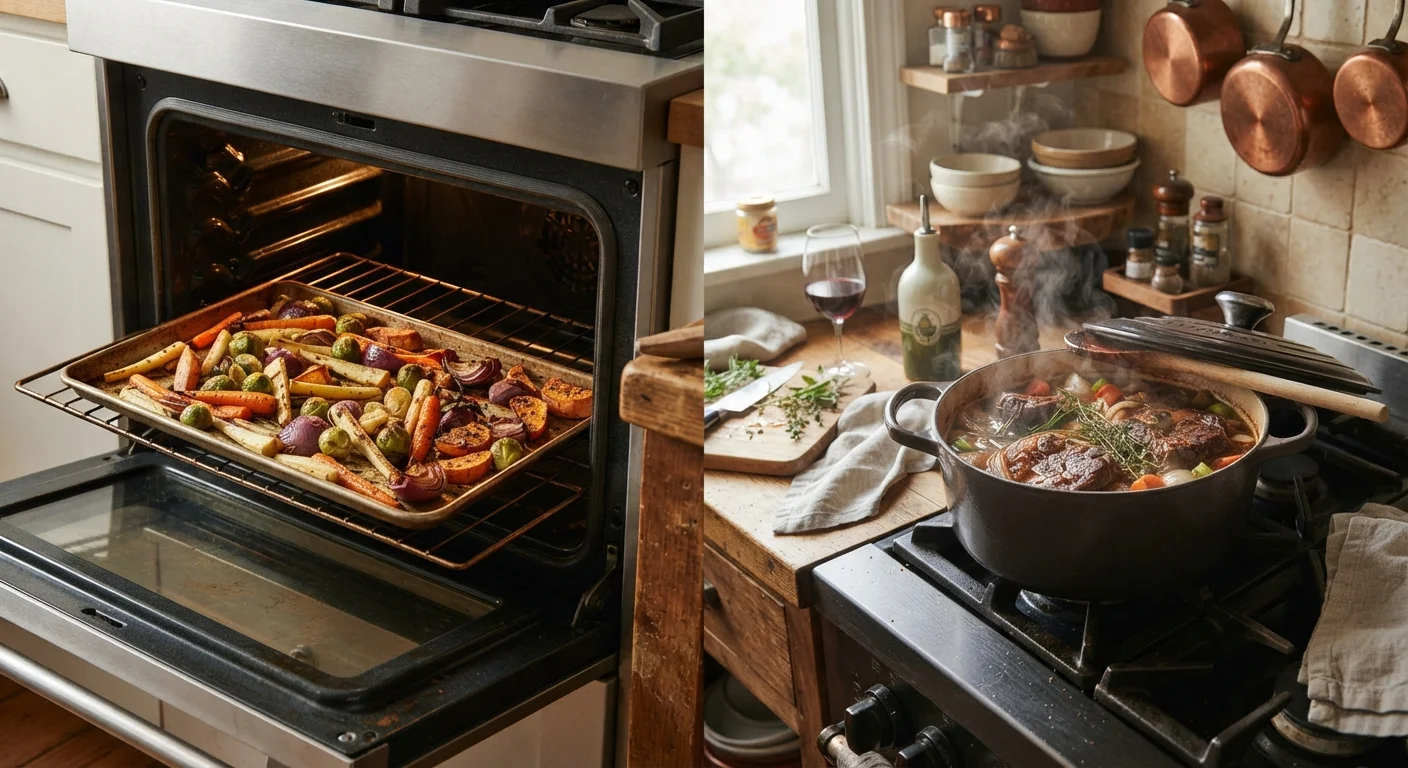
- Dry heat methods like roasting and grilling create browning and concentrated flavor through surface caramelization.
- Moist heat methods like braising and steaming use liquid or steam to tenderize tough fibers gently over time.
- Tender, lean ingredients generally suit dry heat; tough, collagen-rich cuts benefit most from moist heat.
- Combining both methods — searing then braising — unlocks the best qualities of each technique.
- Matching method to ingredient is a foundational skill that improves results across virtually every recipe.
Our Verdict
Neither dry heat nor moist heat is universally superior — the right choice depends entirely on what you're cooking and the texture you want to achieve. Dry heat excels at building bold, browned flavors in tender ingredients, while moist heat unlocks richness and tenderness in tougher cuts and dense vegetables. Learning to match method to ingredient is one of the highest-leverage skills a home cook can develop.
| Best for | Recommended |
|---|---|
| Lean proteins, tender vegetables, and dishes where browning matters | Dry Heat |
| Tough cuts, root vegetables, beans, and budget-friendly ingredients | Moist Heat |
| Dishes where deep flavor and tender texture are both priorities | Combined Method (Sear then Braise) |
What Separates Dry Heat from Moist Heat
Every cooking method falls into one of two categories: dry heat or moist heat. The distinction isn't just academic — it determines how food browns, how moisture behaves, and whether tough fibers soften or stay chewy.
Dry heat transfers energy without added liquid. Methods like roasting, grilling, broiling, sautéing, and pan-frying expose food directly to hot air, a hot surface, or radiant heat. Temperatures typically run high — often 300°F to 500°F — and the defining result is browning. That's the Maillard reaction at work: surface proteins and sugars transform under heat into hundreds of new flavor compounds. The crust on a roasted chicken, the char on a grilled steak, the golden edge on a sautéed mushroom — all dry heat results.
Moist heat uses water or steam as the medium. Braising, steaming, poaching, stewing, and simmering all qualify. Because water caps out at 212°F at sea level, moist heat operates at lower temperatures, but it penetrates food thoroughly and excels at breaking down collagen — the connective tissue in tougher cuts — into gelatin. The payoff is silky, fork-tender texture that no amount of dry-heat cooking can replicate in those same cuts.
For a deeper look at how heat intensity affects outcomes, see our guide to low, medium, and high heat for real kitchens.
Matching the Method to the Ingredient
The practical question every cook faces is simple: which method does this ingredient need? A few guiding principles make that decision much easier.
| Dry Heat | Moist Heat | |
|---|---|---|
| Primary methods | Roasting, grilling, broiling, sautéing, pan-frying | Braising, steaming, poaching, stewing, simmering |
| Temperature range | 300°F–500°F+ | Up to 212°F (water-based) |
| Key result | Browning, crust, concentrated flavor | Tender texture, hydrated, gentle cooking |
| Best proteins | Lean, tender cuts (chicken breast, fish, steak) | Tough, collagen-rich cuts (chuck, shoulder, shanks) |
| Best vegetables | Delicate or dense veg for caramelization | Dense root vegetables for even softness |
| Works for grains/legumes | No | Yes — requires liquid absorption |
| Typical cook time | Minutes to 1 hour | 30 minutes to several hours |
Proteins
Tender cuts — chicken breasts, fish fillets, pork tenderloin, ribeye steak — have little connective tissue. High, dry heat cooks them quickly and creates a desirable browned exterior before the interior overcooks. Roast, grill, or pan-sear these cuts.
Tough cuts — chuck roast, pork shoulder, chicken thighs, lamb shanks — are loaded with collagen. Dry heat alone would leave them tough and dry. These cuts need the slow, sustained moisture of braising or stewing to convert collagen to gelatin and become tender over two to three hours.
Vegetables
Dense root vegetables like carrots, potatoes, and beets respond beautifully to either method. Roasting concentrates their natural sugars and builds caramelized edges; steaming or simmering preserves more water-soluble nutrients and delivers a softer, more even texture. Delicate vegetables — spinach, peas, asparagus — benefit from brief steaming or a quick sauté: both are fast enough to preserve color and avoid mushiness.
Grains and Legumes
Rice, lentils, dried beans, and similar ingredients rely entirely on moist heat. They need to absorb liquid to cook through. No dry heat method will hydrate a dried bean.
When Combining Both Methods Makes Sense
Some of the most satisfying dishes use both methods in sequence. Braised short ribs are a classic example: sear the meat in a hot, dry pan first to develop a brown crust and deep flavor, then add liquid and transfer to a low oven to braise for hours. The dry heat phase builds flavor; the moist heat phase builds texture. Neither alone achieves both.
The same logic applies to pot roast, osso buco, and even hearty vegetable stews where you first sweat aromatics in a dry pan before adding stock. Understanding this sequence — dry first, moist second — is one of the most transferable skills in home cooking.
The Sear-Then-Braise Sequence
For tough cuts destined for braising, always sear in a hot, lightly oiled pan until deeply browned on all sides before adding liquid. This step takes only 8–10 minutes but adds layers of flavor that liquid alone cannot produce. Don't crowd the pan — work in batches if needed so the meat browns rather than steams.
Pan temperature plays a key role in how effectively that initial sear develops. Our article on why pan temperature matters more than your recipe explains how to read the heat without a thermometer.
Practical Guidance for Everyday Cooking
Applying this knowledge doesn't require memorizing every method. Ask two quick questions before you cook:
- Is this ingredient naturally tender or tough? Tender = dry heat candidate. Tough = moist heat candidate.
- Do I want browning and concentrated flavor, or soft and juicy texture? Browning = dry heat. Tender and moist = moist heat (or a combination).
Budget-conscious cooks especially benefit from moist heat techniques. Tougher, less expensive cuts — the ones that often cost significantly less per pound than premium cuts — become genuinely delicious through braising and stewing. Learning to work with them confidently is one of the most practical skills you can build. For related strategies on planning your cooking week efficiently, see our piece on batch cooking versus cooking fresh each night.
Once you internalize the logic behind each method, you'll find yourself reading ingredient labels and recipe instructions with a different eye — not just following steps, but understanding why each step works. That shift is what separates a confident cook from someone just getting by.