

Key Takeaways
- SPF measures UVB protection only — it says nothing about UVA coverage.
- SPF 30 blocks about 97% of UVB rays; SPF 50 blocks about 98% — a small but meaningful difference.
- "Broad-spectrum" on a label means the sunscreen also protects against UVA rays that cause aging and deeper skin damage.
- PA ratings (PA+, PA++, PA+++) are a separate UVA-grading system common on Asian-market products.
- No sunscreen is truly waterproof — "water-resistant" means tested for 40 or 80 minutes of water exposure.
- Applying enough sunscreen matters as much as the SPF number itself.
SPF (Sun Protection Factor)
SPF is a number that tells you how well a sunscreen filters ultraviolet B (UVB) rays — the rays most responsible for sunburn. The number indicates how much longer you can stay in the sun before burning compared to wearing no sunscreen at all. A higher SPF blocks a greater percentage of UVB rays, but the difference between numbers narrows as the SPF climbs.
SPF is measured under standardized lab conditions using 2 mg/cm² of product — roughly a teaspoon for the face alone — which most people apply far less of in practice, meaning real-world protection is typically lower than the label suggests.
The SPF Number: What It Measures and What It Doesn't
SPF stands for Sun Protection Factor, and it measures one specific thing: how well a product blocks UVB radiation — the wavelength primarily responsible for sunburn and a key contributor to skin cancer risk. It does not measure protection from UVA rays, which penetrate more deeply and drive premature aging and longer-term skin damage.
The math behind SPF is straightforward. SPF 15 filters about 93% of UVB rays. SPF 30 filters about 97%. SPF 50 reaches roughly 98%. Notice that the gap between SPF 30 and SPF 50 is just one percentage point — meaningful at the margins, but not a dramatic leap. What this tells you is that no sunscreen blocks 100% of UV rays, and the returns diminish as numbers climb higher.
The bigger practical variable isn't the number on the bottle — it's how much you apply. Lab SPF ratings assume a generous, even layer. Most people use far less, which can drop real-world protection substantially.
97%
UVB rays blocked by SPF 30
According to the Skin Cancer Foundation, SPF 30 filters approximately 97% of UVB rays when applied in sufficient quantity.
2 mg/cm²
Application amount used in SPF lab testing
FDA testing standards require this application density, which is significantly more than most people apply in daily use.
95%
Of UV radiation that is UVA
UVA rays make up the vast majority of UV radiation reaching the earth's surface, underscoring the importance of broad-spectrum coverage.
Broad-Spectrum: The Label That Covers UVA
Because SPF only measures UVB protection, the term broad-spectrum was introduced to signal UVA coverage as well. In the United States, the Food and Drug Administration (FDA) requires sunscreens to pass a specific critical wavelength test before they can use the broad-spectrum designation.
UVA rays account for the majority of the UV radiation that reaches earth's surface. They penetrate clouds and glass and are present throughout daylight hours year-round. Prolonged UVA exposure is associated with photoaging — the cumulative skin damage that shows up as wrinkles, uneven tone, and changes in texture over time.
If a product only displays an SPF number without "broad-spectrum," it is only tested and verified against UVB. For comprehensive daily sun protection, look for both an SPF of at least 30 and the broad-spectrum designation. To understand how sunscreen fits into a broader skincare approach, see our guide on common skincare ingredients and what they actually do.
PA Ratings and Other UVA Systems
If you shop for sunscreen from Asian markets or brands, you may encounter a different UVA grading system: the PA rating. Developed in Japan and widely adopted across East and Southeast Asia, PA ratings use plus signs to grade UVA protection level.
- PA+ — Some UVA protection
- PA++ — Moderate UVA protection
- PA+++ — High UVA protection
- PA++++ — Extremely high UVA protection (used in some markets)
PA ratings are based on a measure called the Persistent Pigment Darkening (PPD) factor, which tests how much UVA causes visible skin darkening. They are not a replacement for SPF — they work alongside it. A product might show "SPF 50 PA+++" to communicate both UVB and UVA protection levels on the same label.
Decoding product labels across categories is a skill worth building. Just as sunscreen labels have their own shorthand, so do hair and body care labels — understanding both helps you make more confident everyday choices.
Choosing the Right Format for Your Routine
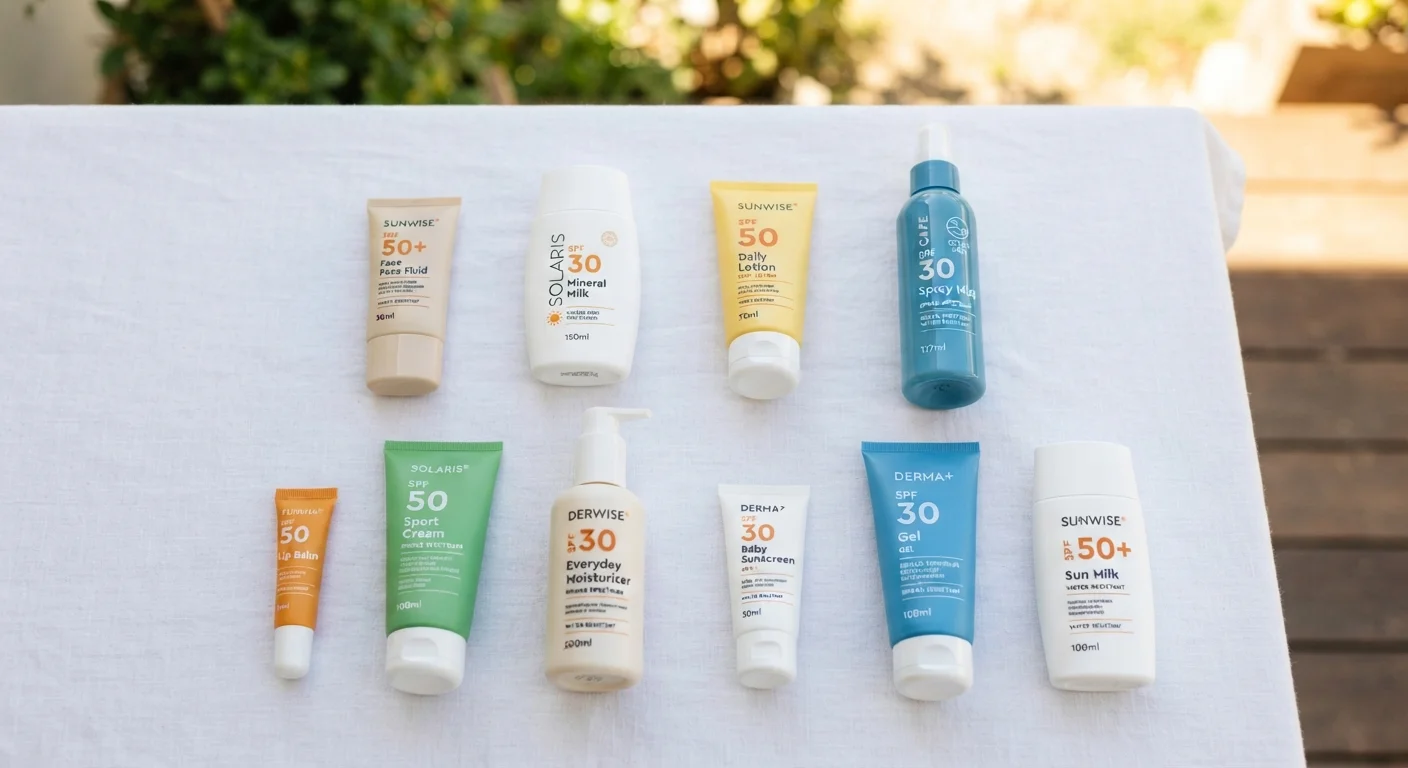
Sunscreen comes in lotions, gels, sticks, sprays, and tinted formulas. If texture or finish has kept you from applying sunscreen consistently, experimenting with different formats can help. A product you'll actually use daily at the right amount will outperform a high-SPF product applied sparingly or skipped altogether.
Water Resistance, Reapplication, and What the Fine Print Means
"Waterproof" sunscreen doesn't exist — at least not by FDA standards. Any sunscreen sold in the US that claims water resistance must specify whether it's been tested for 40 minutes or 80 minutes of water exposure. After that time in water or after heavy sweating, it must be reapplied to maintain effectiveness.
The same logic applies generally: even without water, sunscreen breaks down through UV exposure, skin contact, and heat. Reapplying every two hours during extended outdoor time is a widely recommended practice regardless of SPF level.
A few other label terms worth knowing:
- Chemical sunscreens
- Absorb UV rays and convert them to heat. Common active ingredients include avobenzone and octocrylene.
- Mineral sunscreens
- Sit on the skin's surface and physically deflect UV rays. Active ingredients are zinc oxide and titanium dioxide.
- Combination formulas
- Many products blend both types for broader coverage and improved cosmetic feel.
This article is for general informational purposes only and is not a substitute for advice from a qualified dermatologist or healthcare professional. Consult a professional for personalized skincare guidance, particularly if you have skin conditions or sensitivities.