

Key Takeaways
- Drinking more water does not directly clear acne or eliminate dry skin patches.
- Higher product prices do not reliably signal better ingredients or results.
- Sunscreen is necessary daily, even on overcast or indoor-heavy days.
- Natural and DIY skincare ingredients can irritate or damage skin if used incorrectly.
- Oily skin still needs moisturizer — skipping it can worsen oil production.
Why Skincare Myths Are So Hard to Shake
Skincare advice travels fast — through social media, family routines, and decade-old magazine features. The problem is that much of it is either outdated, oversimplified, or based on anecdote rather than evidence. Dermatologists report correcting the same handful of misconceptions in consultation after consultation, which means many people are making daily skincare decisions based on faulty assumptions.
Understanding what the evidence actually supports — not what feels intuitively true — can save money, prevent skin damage, and simplify a routine that's often made far more complicated than it needs to be. For a practical look at where lower-cost options hold up just as well as expensive ones, see our guide to affordable skincare swaps.
Myth
Drinking more water will clear your skin and fix dryness.
Fact
Hydration supports overall health, but there is no strong clinical evidence that increasing water intake directly improves skin appearance or resolves dry patches.
The skin's moisture barrier is primarily maintained by lipids (fats) in the outer skin layer, not by how much water you drink. When skin feels dry, the cause is usually barrier dysfunction, environmental exposure, or the wrong cleanser — not inadequate fluid intake. Moisturizers that contain humectants (like glycerin or hyaluronic acid) and occlusives (like petrolatum) address surface dryness far more directly than drinking extra glasses of water.
Myth
Expensive skincare products work better than affordable ones.
Fact
Price reflects branding and packaging costs far more reliably than ingredient quality or clinical efficacy.
Many active ingredients that have genuine research support — such as niacinamide, glycerin, and ceramides — are found in moderately priced and drugstore formulations at effective concentrations. Dermatologists consistently note that the ingredient list and formulation matter far more than the brand name or cost. Before assuming a higher price means better results, check whether the key ingredients and their concentrations are actually present.
Myth
You don't need sunscreen on cloudy days or when you're mostly indoors.
Fact
UV radiation — particularly UVA — penetrates cloud cover and glass, causing cumulative skin damage even without direct sun exposure.
UVA rays, which are associated with premature aging and skin cancer risk, pass through window glass and are not significantly blocked by overcast skies. The American Academy of Dermatology recommends daily broad-spectrum SPF 30 or higher as a baseline, regardless of weather or whether you plan to spend time outdoors. Consistent daily application is one of the most evidence-supported habits in preventive skincare.
Myth
Natural or DIY ingredients are safer than synthetic skincare formulations.
Fact
Natural origin does not equal safe or gentle — many plant-derived substances are potent irritants or allergens when applied directly to skin.
Lemon juice, for example, is highly acidic and can cause chemical burns or increase photosensitivity. Essential oils, despite their popularity, are a common source of contact dermatitis. Professionally formulated products — whether they use natural or synthetic ingredients — are pH-tested, stability-tested, and formulated to minimize irritation. The word "natural" on a label carries no regulatory definition and should not be treated as a safety signal.
Myth
Oily skin doesn't need moisturizer.
Fact
All skin types benefit from moisturizer; skipping it when skin is oily can prompt the skin to produce more oil as a compensatory response.
Oily skin and dehydrated skin are not mutually exclusive. When the skin's moisture barrier is compromised — often by over-washing or harsh cleansers — it can signal increased sebum production. Lightweight, non-comedogenic moisturizers (meaning they are formulated not to clog pores) can help balance the skin without contributing to breakouts. The goal is supporting the barrier, not stripping it.
Myth
Pores open and close with hot and cold water.
Fact
Pores do not have muscles and cannot open or close — their appearance can be temporarily altered, but the mechanism is not temperature-based.
The idea that steaming the face "opens" pores and cold water "closes" them is a persistent but anatomically inaccurate claim. What warm water and steam can do is soften debris and make cleansing more effective. Cold water may temporarily reduce the appearance of pores by causing mild vasoconstriction in surrounding tissue, but it does not change pore size. Consistent cleansing and ingredients like salicylic acid have a more meaningful effect on keeping pores clear.
Building Habits Around Evidence, Not Marketing
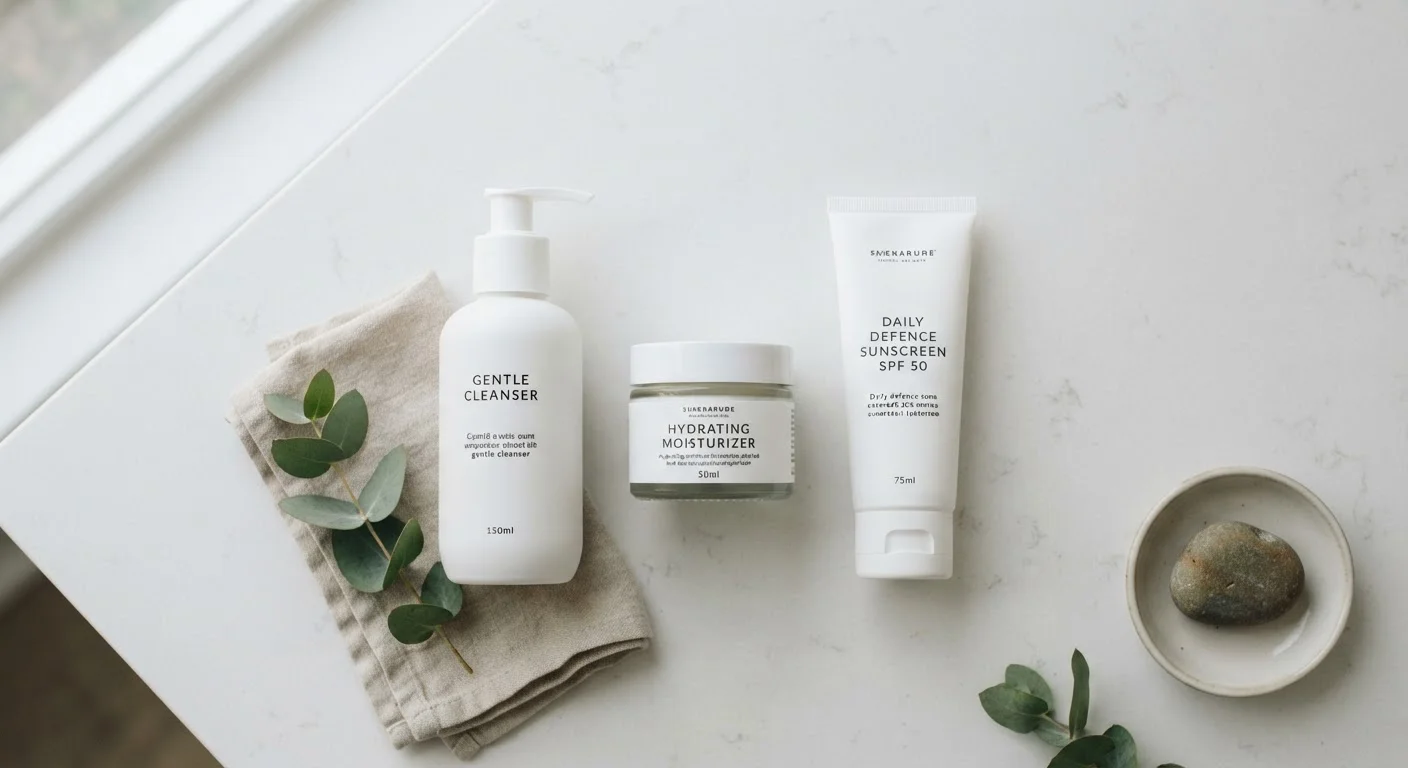
Once you strip away the myths, an effective daily skincare routine is surprisingly simple: a gentle cleanser, a moisturizer appropriate for your skin type, and a broad-spectrum sunscreen. Those three steps, done consistently, address the majority of what dermatologists recommend for general skin health.
Sunscreen Is Not Optional
Daily broad-spectrum sunscreen use is one of the few skincare habits with robust, consistent evidence behind it — for both skin cancer prevention and reducing premature aging. Dermatologists consider skipping SPF one of the most consequential skincare mistakes, regardless of skin tone or age. If you're uncertain which formulation suits your skin, a dermatologist can guide you toward an appropriate option.
Active ingredients like retinoids do have meaningful research behind them, but they also come with real trade-offs — particularly for sensitive skin or people who are pregnant. Our balanced look at retinol covers what the evidence says and who should use caution before adding it to a routine.
Hydration also plays a supporting role in overall wellness, though its effect on skin is more indirect than popular belief suggests. What most people get wrong about daily water intake unpacks the real relationship between drinking water and how your body — including your skin — uses it.
This article is for general informational purposes only and does not constitute medical or dermatological advice. For personal skin concerns, consult a qualified healthcare professional or board-certified dermatologist.