

Key Takeaways
- DIY hair masks from kitchen ingredients can provide real moisture and shine benefits for some hair types.
- Protein-heavy ingredients like egg can cause brittleness if overused, especially on low-porosity hair.
- Sticky or oil-rich ingredients are harder to rinse out and may require extra shampooing to remove fully.
- Patch testing and ingredient awareness are essential before applying anything new to your scalp.
- Kitchen masks work best as occasional supplements, not replacements, for a consistent hair care routine.
Low cost compared to salon treatments
Most kitchen mask ingredients — eggs, honey, olive oil — cost a fraction of commercial deep-conditioning products, making them accessible for budget-conscious households.
Transparent ingredient list
You know exactly what's in the mask, which is useful for anyone trying to avoid specific allergens or synthetic additives found in commercial formulas.
Moisturizing benefit for dry hair types
Humectants like honey and emollients like avocado oil have real, if temporary, moisturizing effects on dry or coarse hair when used correctly.
Customizable for individual needs
You can adjust the ingredient ratio — more oil for dryness, less protein for fine hair — in a way that's difficult to do with pre-made products.
No preservatives or synthetic fragrances
For people with sensitivities to common cosmetic additives, a simple kitchen mask can sidestep those irritants entirely, provided no individual food allergy is present.
Protein overload can cause brittleness
Egg and yogurt-based masks are high in protein. Overuse — particularly on low-porosity hair — can make strands stiff and prone to breakage rather than softer.
Difficult to fully rinse out
Oil-heavy or sticky ingredients like honey and coconut oil often require multiple shampoo passes to remove, which can strip natural moisture in the process.
Risk of allergic reactions
Food allergies don't always stay contained to digestion. Applying egg or nut-derived oils to the scalp can trigger contact reactions in sensitive individuals.
Inconsistent results across hair types
An ingredient that deeply conditions one person's coarse, dry hair may cause buildup or limpness in someone with fine, low-porosity strands.
No stabilizers or pH-balancing agents
Commercial conditioners are pH-adjusted to work with the hair's natural acid mantle. Kitchen masks skip this step, which can leave the cuticle less effectively smoothed.
Short shelf life and hygiene concerns
Homemade masks contain no preservatives, so any leftover mixture must be discarded promptly. Applying a mask that has sat out can introduce bacteria to the scalp.
Our Verdict
DIY hair masks made from kitchen ingredients can be a genuinely useful, low-cost addition to your hair care routine — particularly for adding moisture or shine between washes. However, they come with real limitations: inconsistent results, potential scalp reactions, and formulation challenges that commercial products are specifically engineered to solve. Used occasionally and with ingredient awareness, they're worthwhile. Relied upon exclusively, they may underperform or cause frustration.
Best for budget-conscious individuals with normal to dry hair who want to experiment with occasional deep conditioning treatments and are willing to do a little research on which ingredients suit their hair type.
Why Kitchen Hair Masks Have Stayed Popular
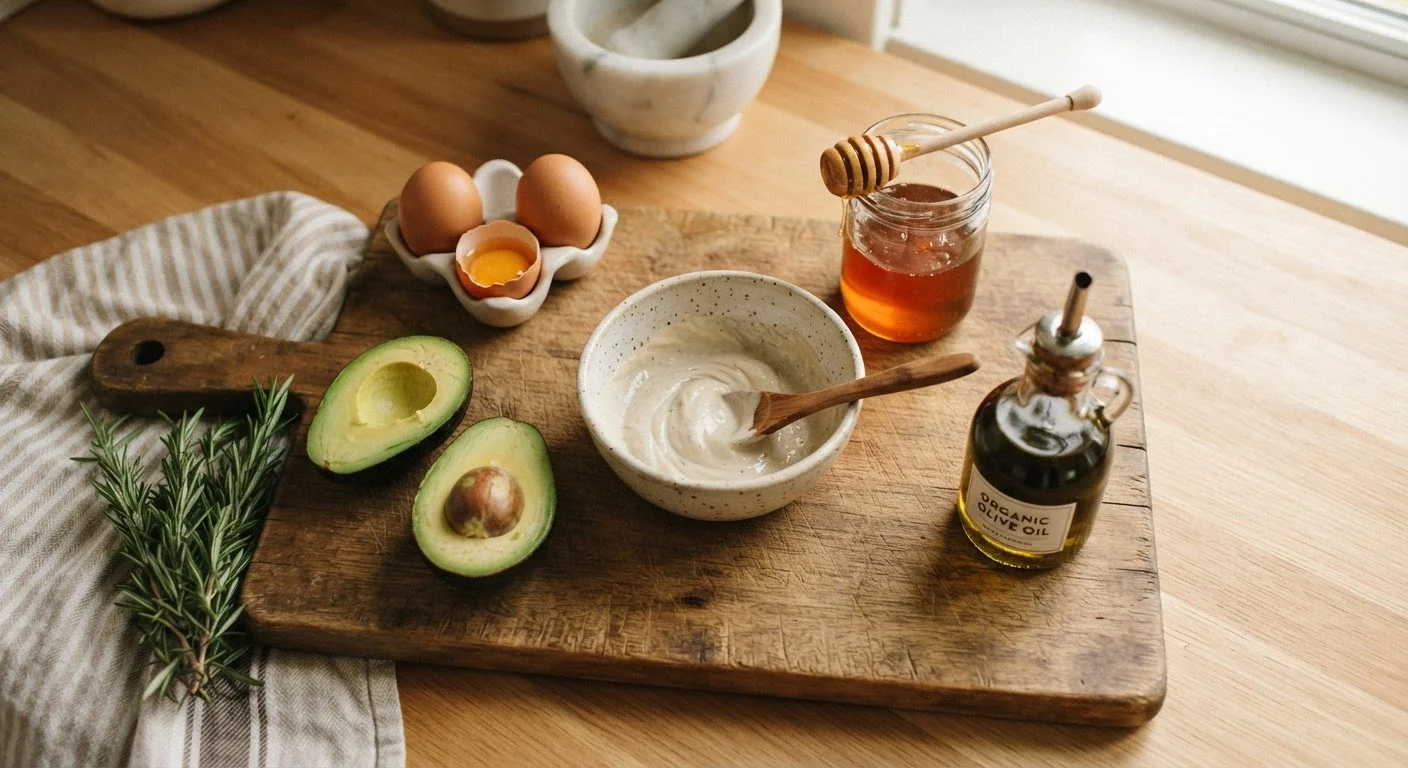
The appeal is straightforward: ingredients like honey, egg yolk, avocado, and coconut oil are already in most kitchens, cost far less than salon treatments, and carry a sense of transparency — you know exactly what's going in. For everyday homeowners looking to stretch their beauty budget, that combination is genuinely attractive.
These ingredients aren't without merit. Honey is a humectant, meaning it draws moisture into the hair shaft. Avocado contains fatty acids and vitamins that can soften dry strands. Egg yolk supplies proteins and fats that may temporarily smooth the cuticle. The chemistry isn't invented — it's just unrefined.
That said, the gap between "contains beneficial compounds" and "works reliably as a hair treatment" is wider than many tutorials acknowledge. Understanding what you're working with helps you make smarter choices. For a parallel look at how budget substitutions play out in skincare, see our guide on affordable skincare swaps.
The Genuine Advantages
When the right ingredient meets the right hair type, kitchen masks can deliver noticeable results.
Low cost compared to salon treatments
Most kitchen mask ingredients — eggs, honey, olive oil — cost a fraction of commercial deep-conditioning products, making them accessible for budget-conscious households.
Transparent ingredient list
You know exactly what's in the mask, which is useful for anyone trying to avoid specific allergens or synthetic additives found in commercial formulas.
Moisturizing benefit for dry hair types
Humectants like honey and emollients like avocado oil have real, if temporary, moisturizing effects on dry or coarse hair when used correctly.
Customizable for individual needs
You can adjust the ingredient ratio — more oil for dryness, less protein for fine hair — in a way that's difficult to do with pre-made products.
No preservatives or synthetic fragrances
For people with sensitivities to common cosmetic additives, a simple kitchen mask can sidestep those irritants entirely, provided no individual food allergy is present.
~$0.50
Estimated cost per DIY egg-and-oil mask
Based on average US retail prices for eggs and olive oil, a single-use mask uses a fraction of commercially sold deep conditioners.
1–2x
Recommended monthly frequency for protein masks
Hair care educators and trichologists generally advise limiting protein treatments to once or twice per month to avoid moisture-protein imbalance.
The cost difference is also real. A single-use egg-and-olive-oil mask might cost pennies compared to a salon conditioning treatment. For readers managing tight household budgets, that matters — provided the results are actually worth the effort.
The Limitations Worth Knowing
The downsides tend to be underreported in enthusiast tutorials, but they're significant enough to factor in before you commit to a routine.
Protein overload can cause brittleness
Egg and yogurt-based masks are high in protein. Overuse — particularly on low-porosity hair — can make strands stiff and prone to breakage rather than softer.
Difficult to fully rinse out
Oil-heavy or sticky ingredients like honey and coconut oil often require multiple shampoo passes to remove, which can strip natural moisture in the process.
Risk of allergic reactions
Food allergies don't always stay contained to digestion. Applying egg or nut-derived oils to the scalp can trigger contact reactions in sensitive individuals.
Inconsistent results across hair types
An ingredient that deeply conditions one person's coarse, dry hair may cause buildup or limpness in someone with fine, low-porosity strands.
No stabilizers or pH-balancing agents
Commercial conditioners are pH-adjusted to work with the hair's natural acid mantle. Kitchen masks skip this step, which can leave the cuticle less effectively smoothed.
Short shelf life and hygiene concerns
Homemade masks contain no preservatives, so any leftover mixture must be discarded promptly. Applying a mask that has sat out can introduce bacteria to the scalp.
Food Allergies and Scalp Applications
A food allergy doesn't have to be severe to cause a skin or scalp reaction. Egg, dairy (from yogurt-based masks), and tree nuts (from oils like almond) are common allergens that can cause contact dermatitis when applied topically. If you have a known food allergy, avoid using that ingredient in any topical application and consult a dermatologist if you're unsure about a specific ingredient's safety for your situation.
Hair porosity is perhaps the most overlooked factor. Low-porosity hair — strands with tightly packed cuticles — struggles to absorb protein-heavy ingredients like egg, and repeated use can lead to product buildup or stiffness rather than softness. High-porosity hair (common after bleaching or heat damage) may absorb these ingredients more readily but can also react unpredictably to acidic ingredients like lemon juice, which some recipes include.
How to Use Kitchen Masks Safely and Effectively
If you want to try a DIY hair mask, a few straightforward practices reduce the risk of disappointment or irritation.
- Patch test first. Apply a small amount to your inner wrist or behind your ear and wait 24 hours before applying anything to your scalp or full hair length.
- Know your hair type. Moisturizing masks (avocado, honey, aloe vera) generally suit dry or coarse hair. Protein-based masks (egg, Greek yogurt) may benefit damaged or fine hair — but less frequently is usually better.
- Rinse thoroughly. Oil-based masks in particular require a proper shampoo rinse. Residue left on the scalp can clog follicles or cause irritation over time.
- Limit frequency. Once or twice a month is a reasonable starting point for most people. Daily or weekly use of protein masks in particular can tip the balance toward brittle hair.
- Consult a professional for scalp conditions. If you have dandruff, psoriasis, eczema, or any other scalp condition, speak with a dermatologist before applying any DIY treatment.
This article is for general informational purposes only and is not a substitute for professional medical or dermatological advice. If you have concerns about your scalp health or a pre-existing condition, consult a qualified healthcare provider.