

Key Takeaways
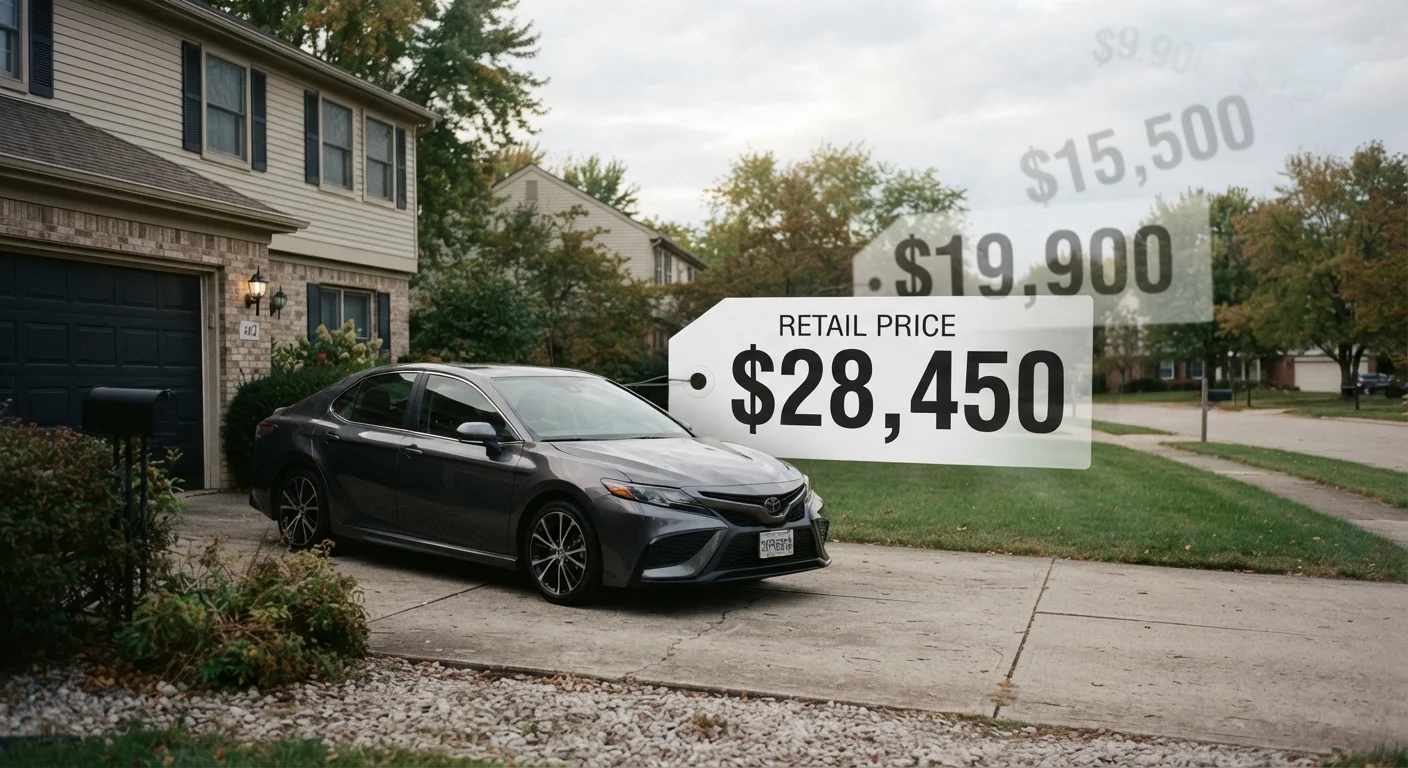
- New cars typically lose 15–25% of their value within the first year alone.
- Depreciation is usually the largest single cost of owning a vehicle over time.
- Factors like mileage, condition, and vehicle type all affect how fast a car loses value.
- Buying a used car lets you avoid the steepest part of the depreciation curve.
- Keeping a car well-maintained can slow its rate of value loss.
Car Depreciation
Car depreciation is the drop in a vehicle's market value over time. It's the difference between what you paid for a car and what it's worth when you sell or trade it in. Every vehicle depreciates — it's a normal part of ownership, not a defect.
Depreciation is often expressed as a percentage of the vehicle's original value lost over a set period, commonly measured at 1, 3, and 5 years post-purchase.
What Depreciation Actually Means for Car Owners
When you buy a car, you're not just paying for transportation — you're also absorbing a cost that never shows up on a fuel receipt or repair invoice. Depreciation is the decline in your car's market value from the day you buy it to the day you sell or trade it. It's invisible while you're driving, but it becomes very real the moment you try to recoup your money.
For most owners, depreciation outpaces every other ownership expense — more than fuel, insurance, or maintenance combined. Understanding it doesn't require a finance background. You just need to know where the biggest drops happen and what influences them.
~20%
Average value lost in year one
Industry estimates suggest a new vehicle loses roughly 15–25% of its value within the first 12 months of ownership.
40–60%
Value lost over five years
Many new vehicles lose nearly half their original purchase price within five years, according to widely cited automotive valuation benchmarks.
#1
Largest single cost of ownership
For most vehicle owners, depreciation represents a greater lifetime expense than fuel, insurance, or maintenance over a typical ownership period.
When Depreciation Hits Hardest
The steepest drop in value happens early. A new vehicle typically loses a significant chunk of its value in the first one to three years, then the rate gradually flattens out. By year five, many vehicles have lost 40–60% of their original price.
This curve is important for buyers. If you purchase a vehicle that is two or three years old with moderate mileage, you're essentially letting the first owner absorb the sharpest loss. You still face depreciation from that point forward, but the rate is considerably slower.
As part of understanding the full cost of car ownership, depreciation deserves a spot in any honest budget — even if it doesn't come due until you sell.
What Speeds Up or Slows Down Value Loss
Not all vehicles depreciate at the same rate. Several factors push the number up or down:
- Mileage: Higher mileage signals more wear. A car with 80,000 miles at age four will typically be worth less than a comparable model with 40,000 miles.
- Condition: Dents, interior damage, and deferred maintenance all reduce what a buyer will pay.
- Vehicle type: Market demand matters. Vehicles with strong utility or low running costs often hold value better than niche models with fewer interested buyers.
- Color and features: Unusual colors or outdated technology packages can limit the pool of interested buyers and push the price down.
- Accident history: A vehicle with a reported accident typically sells for less, even if the repair was thorough.
Regular car maintenance — oil changes, tire rotations, keeping service records — won't stop depreciation, but it can slow it and strengthen your negotiating position at resale.
How to Factor Depreciation Into Your Ownership Budget
Most people think of car costs as monthly expenses: loan payment, insurance, gas. But depreciation is a cost that accumulates silently and surfaces when you sell. A practical way to account for it is to estimate how much value you expect to lose over your ownership period and divide that by the months you plan to keep the vehicle.
For example, if a vehicle is worth $28,000 today and you expect it to be worth $16,000 in five years, that's $12,000 in depreciation — roughly $200 per month. That number belongs in your real cost-of-ownership calculation alongside fuel and insurance.
For a more complete picture of all the costs that add up, see our annual car ownership cost overview and the comprehensive ownership cost guide.
If you're also weighing whether to lease or buy, keep in mind that depreciation is baked into lease pricing — you're paying for the value the car loses during your lease term. There's no free pass, just a different structure.
This article is for general informational purposes only. Vehicle values vary based on market conditions, location, and individual vehicle history. Consult automotive valuation resources and a financial professional for guidance specific to your situation.